How to Cut Stainless Steel Sheet Metal? In modern manufacturing, stainless steel, due to its superior corrosion resistance and mechanical properties, has become the material of choice for many precision components and structural parts. However, cutting thin stainless steel sheets with maximum efficiency, minimum cost, and optimal precision remains a core challenge for manufacturers.
This article is designed for those seeking reliable stainless steel cutting solutions. We will provide an in-depth analysis of several mainstream cutting technologies, comparing them across multiple dimensions, including cost-effectiveness, cutting accuracy, and mass production capabilities, to help you make the most informed business decision.
6 Ways to Cut Stainless Steel
Cutting stainless steel sheets can be a bit challenging, as it is a hard and durable material. However, there are several methods that can be used to cut stainless steel sheet metal, depending on the tools and equipment available. Here are some common methods:
Cutting Shears:
Cutting shears are hand-held tools that can be used to cut thin stainless steel sheets. They work by applying pressure along a straight line to cut through the metal. This method is best suited for thinner sheets of stainless steel.
Circular Safor Cut Stainless Steel Sheet Metal:
A circular saw with a carbide-tipped blade can be used to cut through thicker stainless steel sheets. This method is best suited for straight cuts, and the use of a clamp or jig can help ensure accurate cuts.
Jigsawmfor Cut Stainless Steel Sheet Metal:
A jigsaw with a metal-cutting blade can be used to cut stainless steel sheets of curves and shapes. This method is best suited for thinner sheets of stainless steel.
Plasma Cutting:
Plasma cutting uses a high-temperature plasma torch to cut through stainless steel sheets. This method is best suited for thicker sheets of stainless steel and can produce precise cuts.
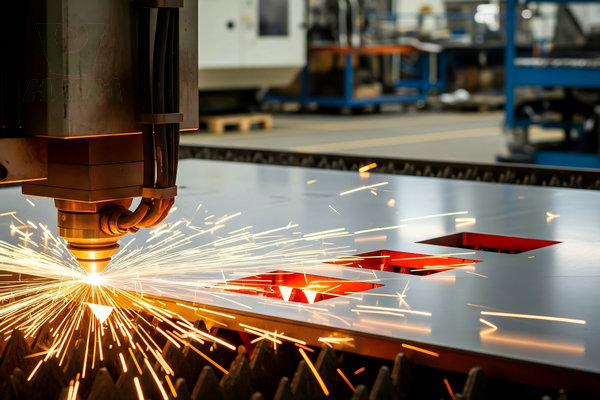
Laser Cutting:
Laser cutting uses a focused beam of light to cut through stainless steel sheets. This method is highly accurate and can produce intricate cuts, but it requires specialized equipment and can be more expensive.
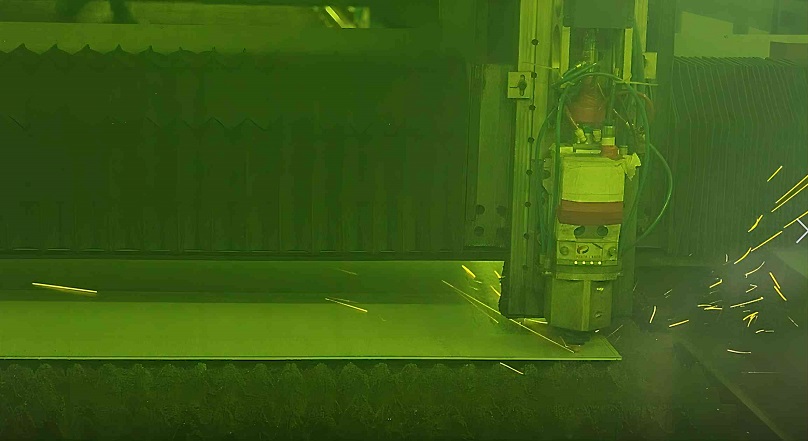
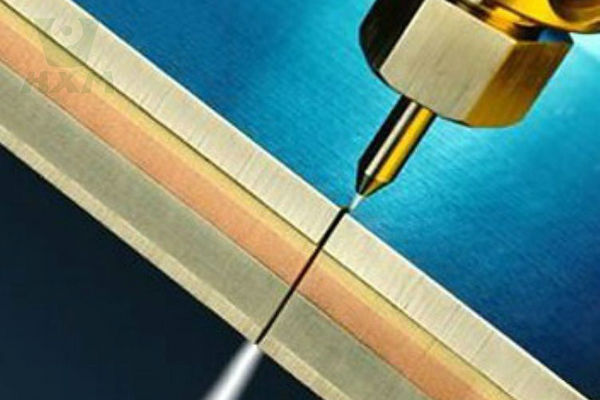
Waterjet Cutting: Cold Cutting, No Thermal Deformation
Technical Principle: Utilizes a high-pressure water jet (often mixed with abrasives) to physically scour and cut stainless steel.
Commercial Advantages:
- No Heat-Affected Zone (HAZ): Waterjet cutting is “cold cutting,” generating no heat and, therefore, does not alter the physical properties of stainless steel or cause thermal deformation, making it particularly suitable for applications sensitive to material properties.
- Versatility: Suitable for cutting not only stainless steel but also a variety of non-metallic materials such as glass, stone, and composites.
Applicable Industries: Art processing, aviation composites, food processing machinery components, etc.
Regardless of the method chosen to cut stainless steel sheet, it is important to wear appropriate safety gear, such as eye and ear protection and gloves, and to follow all manufacturer’s instructions for the tool or equipment being used.
How do you choose the best cutting service for your project?
Before making your selection, consider the following key factors:
-
Project Scale: For small-batch, high-precision prototypes, laser cutting is the best option. For large-scale, thick plate parts with regular shapes, plasma cutting may offer a cost advantage.
-
Precision Requirements: What are your product tolerance requirements? If micron-level precision is required, laser cutting is the only technology that can meet it.
-
Budget Considerations: Different technologies have different cost structures, ranging from equipment investment to unit processing price.
If you have any questions, please contact us directly.
Why choose us as your stainless steel cutting service provider?
We boast industry-leading laser and plasma cutting equipment, along with a team of professional engineers who can precisely understand your technical drawings and project requirements. We not only provide efficient and high-quality cutting services, but also offer comprehensive solutions, including material selection and design optimization, to help you reduce costs and enhance product competitiveness.
FAQ
What thickness of stainless steel sheet can you cut?
The range of stainless steel thicknesses we can cut depends on the technology used. Our fiber laser cutting machines can accurately cut stainless steel sheet from as thin as 0.5mm to as thick as 30mm. If your project requires thicker sheet, our plasma cutting equipment can handle thicknesses up to 50mm. Please send us your specific requirements and drawings, and we will evaluate the most suitable solution.
Which is better for my project, laser or plasma?
It depends on your project requirements. If you require extreme precision, smooth cut edges, and intricate patterns, and require large-scale batch production, we strongly recommend laser cutting. If you are more concerned with cost-effectiveness and cutting speed, especially for medium-thick sheet and less critical edge requirements, plasma cutting may be a better choice. Our technical experts can provide professional advice based on your drawings and budget.
Does laser cutting change the physical properties of stainless steel?
Conventional laser cutting creates a small heat-affected zone (HAZ) in the material, but this generally does not significantly affect the overall physical properties of the stainless steel. For applications requiring strict thermal deformation and material properties, we can also use nitrogen as an assist gas for oxygen-free cutting, or recommend water jet cutting (cold cutting) to ensure the original properties of the material are not affected.
What stainless steel grades do you offer cutting services?
We can process a variety of common stainless steel grades, including but not limited to 304, 316, 301, and 430. 304 and 316 are the most common grades, widely used in various industries. If you require a special grade of stainless steel, please specify this when inquiring, and we will provide a professional evaluation.