Quick Answer: Why Does 62% of Canned Food Use Tinplate?
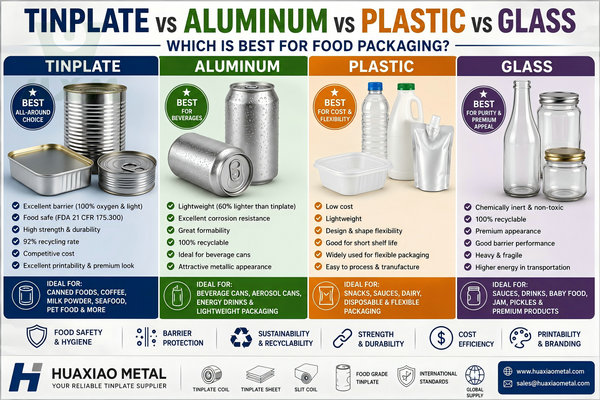
Tinplate dominates global canned food packaging with a 62% market share because it uniquely combines the structural strength needed for retort sterilization (121°C, 30+ min), 100% oxygen and light barrier for 2–5 year shelf life without refrigeration, FDA/EU food contact safety with differential coating for acidic foods, high-speed manufacturing compatibility (200–400 cans/min), and a 92% recycling rate. No alternative material — aluminum, plastic, glass, or composite — can simultaneously deliver all five requirements. This guide provides the technical selection matrix, 3-piece vs 2-piece can type decisions, and specialized solutions for acidic food, aerosol, and pet food applications.
Last updated: July 2026 | Reviewed by Huaxiao Metal Quality Team | ISO 9001 & SGS Certified
The 62% Figure — Data Sources and Market Analysis
The 62% figure for tinplate’s share of global metal food packaging is sourced from the World Metal Packaging Association (WMPA) 2025 annual report and corroborated by multiple independent data sources. Here’s the breakdown:
| Metal Food Packaging Segment | Global Market Share | Annual Volume (billion units, 2025) | Material | Growth Trend (2020–2025) |
|---|---|---|---|---|
| Tinplate food cans (all types) | 62% | ~310 billion | Tin-coated steel (ETP + HDT) | +2.1% CAGR (stable mature market) |
| Aluminum food cans/trays | 18% | ~90 billion | Aluminum alloy (3xxx/5xxx) | +4.3% CAGR (growing in pet food, ready meals) |
| TFS/ECCS (tin-free steel) | 12% | ~60 billion | Chromium-coated steel (TFS) | +1.5% CAGR (growth in ends, closures) |
| Aluminum/steel composite (laminated) | 5% | ~25 billion | Steel base + Al/PE laminate | +8.2% CAGR (growing in retort pouches for premium) |
| Other (tinplate beverage, EOE lids) | 3% | ~15 billion | Mixed — primarily steel food can ends | −1.5% CAGR (shifting to aluminum EZO in beverages) |
Why Tinplate Maintains 62% Despite Competition: Tinplate’s market share is structurally protected by three factors: (1) Retort requirement — the vast majority of canned food (vegetables, meat, seafood, soup, prepared meals) requires retort sterilization at 121°C for 30–90 minutes. Plastic cannot withstand retort temperatures without deforming, and aluminum’s thinner walls (0.10–0.15 mm) risk vacuum collapse. (2) Cost-performance ratio — at $850–1,100/ton FOB Shanghai, tinplate is 20–40% cheaper than lacquered aluminum for equivalent barrier performance, and 60–80% cheaper than glass jar per unit. (3) Existing manufacturing infrastructure — the global installed base of 3-piece welding lines and 2-piece DRD/DWI presses represents $50B+ in capital investment optimized for tinplate. Switching to alternative materials requires substantial retooling costs.
Geographic Variation in Tinplate Share: Tinplate’s market share is not uniform globally. It reaches ~70% in developing markets (Africa, Southeast Asia, South America) where cost sensitivity and informal food preservation favor tinplate. In developed markets (EU, North America, Japan), share is ~55–60% due to aluminum tray penetration in pet food and ready meals, and TFS/ECCS share in can ends. The global 62% represents a weighted average — stable overall, with regional shifts reflecting economic development and packaging format innovation.
Food Can Tinplate Selection Matrix — Complete Specification Guide
Selecting the correct tinplate specification for food can manufacturing requires matching five interdependent parameters to the can type, food contents, and production process. The following matrix provides the comprehensive selection reference:
| Can Type | Typical Contents | Recommended Tinplate Type | Temper Grade | Coating Class | Surface Finish | Lacquer System |
|---|---|---|---|---|---|---|
| 3-piece welded cylindrical can | Vegetables, meat, fish, soup, pasta sauce | CA ETP (DR8 or TH550) | DR8 (HR30T 63±3) or TH550 (HR30T 55±3) | #50/#50 same both sides; #75/#25 for acidic differential | Bright or Stone | Epoxy-phenolic gold (standard); Polyester (BPA-free); Oleoresinous (fish/meat) |
| 3-piece welded tall can (diameter <73mm) | Juice, coconut milk, condensed milk | CA ETP (TH550 or TH620) | TH550 for standard; TH620 for tall/narrow (axial stiffness) | #50/#50; #75/#50 for acidic juice | Bright | Epoxy-phenolic gold; Acrylic (BPA-free for dairy); Vinyl organosol (for aggressive products) |
| 2-piece DRD (draw-redraw) can | Pet food, tuna, salmon, corned beef | BA ETP (T3 or T4) | T3 (HR30T 57±3) standard; T4 (HR30T 61±3) for shallow draw | #50/#50; #75/#50 for pet food (high protein) | Stone or Bright | Epoxy-phenolic gold + meat release; Polyester white interior; Aluminum-pigmented for sulfur staining |
| 2-piece DWI (draw-wall-ironed) can | Carbonated beverages, beer (limited food use) | BA ETP (T3 or T4) | T3 for deep draw; T4 for moderate draw | #25/#25 (beverage) or #50/#50 (food) | Bright | Epoxy-phenolic spray lining (beverage); Gold lacquer (food) |
| Aerosol can (food-grade, whipped cream) | Whipped cream, cheese spray, cooking oil spray | CA ETP (TH660) | TH660 (HR30T 70±3) for pressure resistance >12 bar | #50/#50 (outside #50 for decoration; inside #50 for product) | Bright (for decoration) | Polyester (BPA-free for dairy); Epoxy-phenolic gold |
| Aerosol can (non-food, industrial) | Paint, insecticide, lubricant, deodorant | CA ETP (TH660 or DR9) | TH660 (HR30T 70±3); DR9 (HR30T 70±3) for max pressure | #50/#50; #25 outside / #50 inside (differential) | Matte or Stone | Epoxy-phenolic; Vinyl organosol (solvent-resistant) |
| Rectangular/ham-shaped can | Corned beef, luncheon meat, ham | BA ETP (T2 or T3) key-open type; CA ETP (DR8) with EZO end | T2/T3 for formability; CA DR8 for EZO end can | #50/#50; #75/#25 for meat (sulfur staining) | Stone or Bright | Epoxy-phenolic gold + aluminum pigment (sulfur-resistant); Meat release coating (silicone-modified) |
| Decorative/embossed can | Cookies, tea, confectionery, gift items | BA ETP (T2 or T3) | T2 (HR30T 53±3) for deep embossing; T3 for moderate | #25/#25 (no food contact requirement for dry goods) | Bright (printed) | No interior lacquer (dry goods); optional gold lacquer for premium |
Note: Coating class designations follow ASTM A624 standard — #25 = 2.8 g/m² Sn per side, #50 = 5.6 g/m², #75 = 8.4 g/m², #100 = 11.2 g/m². Differential coating (e.g., #75/#25) means 8.4 g/m² inside (food contact side) and 2.8 g/m² outside (for cost optimization while maintaining sufficient exterior protection).
3-Piece vs 2-Piece Food Cans — Selection and Manufacturing Differences
Food cans are manufactured in two fundamentally different formats, each with distinct tinplate specification requirements and production economics:
| Parameter | 3-Piece Welded Can | 2-Piece DRD Can | 2-Piece DWI Can |
|---|---|---|---|
| Construction | Cylindrical body (welded seam) + separate bottom end + separate top end (3 pieces) | Single piece — body and bottom drawn from one blank; separate top end (2 pieces) | Single piece — body and bottom drawn and wall-ironed from one blank; separate top end (2 pieces) |
| Manufacturing process | Body blank → roll form → resistance weld seam → side stripe lacquer → flanging → end seaming | Circular blank → cupping press → 1st draw → 2nd draw (redraw) → flanging → end seaming | Circular blank → cupping press → body maker (draw + 3-stage ironing) → trimming → washing → flanging → end seaming |
| Best tinplate type | CA ETP (DR8, TH550, TH620) — consistent hardness for stable welding parameters | BA ETP (T3, T4) — superior ductility for deep drawing without cracking | BA ETP (T3, T4) — excellent formability for draw-wall-ironing process |
| Key tinplate requirement | Consistent HR30T (±1 HR30T) for uniform weld quality; low carbon (0.03–0.08%) for ductility | Luders-free — no yield-point elongation; good plastic strain ratio (r-value >1.5); fine surface for lubricant retention | Excellent formability (elongation >25%); uniform grain structure; low earing (<4%) |
| Production speed | 200–400 cans/min (body welder speed); overall line 150–300 cans/min | 100–200 cans/min (press speed); limited by draw stages | 800–2,000 cans/min (beverage); 200–400 for food |
| Can body thickness | 0.20–0.30 mm (uniform wall) | 0.20–0.28 mm (bottom thicker than wall after drawing) | 0.15–0.22 mm (wall thinned by ironing); bottom 0.30–0.35 mm |
| Tooling cost | $50K–200K per can size (body welder, flanger, seamer) | $100K–500K per can size (draw tooling set, transfer press) | $500K–2M per can size (body maker, trimmer, multiple ironing dies) |
| Can size flexibility | Excellent — diameter 52–153mm; height 30–250mm; easy to change height only (same tooling) | Moderate — diameter fixed by tooling; height adjustable within range; diameter change requires new tooling | Limited — diameter fixed; height within narrow range; tooling change is expensive and time-consuming |
| Side seam | Welded seam visible inside and out; requires side stripe lacquer coverage (8–12mm wide) | None — seamless body has superior aesthetics and can interior uniformity | None — seamless body; ideal for lithography and all-over decoration |
| Typical applications | Vegetables, soup, meat, fish, fruit, pasta sauce, beans, pet food (high volume, standard sizes) | Pet food, tuna, salmon, corned beef, specialty shapes (shallow, wide format) | Beverage (primary); limited food use (soup, pet food in wide-format) |
| Tinplate cost sensitivity | Thinner CA grades (DR8 at HR30T 63) optimize material usage; tight hardness tolerance reduces rejects | BA grades have ~5–8% cost premium vs CA; offset by seamless body advantage for premium products | Lowest material cost per can (thin wall + high speed); requires very tight gauge tolerance (±0.005mm) |
Selection Decision Rule: Choose 3-piece CA tinplate for high-volume standard food cans where production speed and material cost are priorities. Choose 2-piece BA tinplate for premium products where seamless appearance, no side stripe, and superior draw quality justify the ~5–8% tinplate premium. Choose 2-piece DWI only for beverage or high-speed food lines where the capital investment ($2M+ per line) can be amortized over very high volumes (>100M cans/year).
Acidic Food Tinplate Solution — Differential Coating and Lacquer Science
Acidic foods (pH 3.0–4.5) — tomato products, fruit, pickled vegetables, citrus — present the most demanding corrosion environment for tinplate food cans. The solution involves a multi-layer protection strategy:
1. Differential Coating — More Tin Where It Matters:
Acidic food cans use differential coating, typically #100/#25 or #75/#25 (inside/outside):
- Inside (#100 = 11.2 g/m² Sn): Heavy tin coating on the food contact side provides sacrificial protection. Tin’s electrochemical potential (−0.14 V vs SHE) makes it cathodic to steel (−0.44 V vs SHE) in most food environments — meaning tin protects steel sacrificially where the coating is exposed (scratches, flange area). In acidic conditions (citric, malic, acetic acids), tin slowly dissolves (Sn²⁺ at <100 ppm, well below WHO toxicity threshold of 200+ ppm) while protecting the steel base.
- Outside (#25 = 2.8 g/m² Sn): Light tin coating on the exterior provides sufficient atmospheric corrosion resistance for warehouse storage and retail display while optimizing cost — the exterior doesn’t contact acidic food, so heavy coating is unnecessary.
2. Interior Lacquer — The Primary Corrosion Barrier:
| Lacquer Type | Chemistry | Best For | Limitations | Shelf Life Performance |
|---|---|---|---|---|
| Epoxy-phenolic gold | Epoxy resin + phenolic hardener; gold pigment (aluminum flake or iron oxide) | Standard acidic food — tomatoes, fruit, pickles, citrus | Contains BPA historically; BPA-free epoxy formulations now available; sulfur staining with meat/fish | 18–24 months for tomato products; 24–36 months for fruit |
| Polyester (BPA-free) | Thermoplastic polyester resin (PET-based); no BPA, no epoxy | BPA-free required products; dairy, fruit, acidic beverages | Higher cost (15–25% premium vs epoxy-phenolic); slightly lower acid resistance at elevated temperatures | 18–24 months; slightly reduced vs epoxy-phenolic for very acidic (pH <3.5) at >35°C storage |
| Acrylic (BPA-free) | Thermoset acrylic resin; good clarity, excellent adhesion | Acidic fruit (peaches, pears, fruit cocktail); clear lacquer for natural appearance | Lower sulfur resistance than epoxy; not for tomato products above 24-month shelf life | 18–24 months for fruit; 12–18 months for tomato |
| Vinyl organosol | PVC-based dispersion lacquer; high film thickness (8–12 μm) | Very aggressive acidic products; high-temperature retort; drawn can side walls | Contains PVC (not BPA-free for some brand policies); higher cost; requires special application equipment | 24–36 months for aggressive products; best-in-class for acid resistance |
| Oleoresinous (C-enamel) | Natural oil + resin polymerized film; traditional technology | Canned fish, meat products; sulfur staining resistance (zinc oxide pigmented) | Not for acidic food — saponification risk; limited retort resistance; declining usage | 24–36 months for non-acidic meat/fish; poor for acidic food |
3. Shelf Life Data for Acidic Food in Tinplate Cans:
| Food Product | pH Range | Tinplate Spec | Lacquer System | Shelf Life (25°C) | Shelf Life (35°C) | Failure Mode |
|---|---|---|---|---|---|---|
| Canned tomatoes (whole/chopped) | 3.9–4.6 | BA T3, #100/#25 differential, Bright | Epoxy-phenolic gold, 6–8 μm DFT | 24–30 months | 18–24 months | Lacquer blistering at flange area; tin dissolution accelerates above 30°C |
| Tomato paste/puree (concentrated) | 3.5–4.2 | BA T3, #100/#50 differential, Bright | Vinyl organosol, 10–12 μm DFT | 18–24 months | 12–18 months | Concentrated acid attacks lacquer faster; pitting corrosion at coating defects |
| Canned pineapple (citric acid) | 3.3–3.7 | BA T3, #100/#25 differential, Bright | Epoxy-phenolic gold + acrylic topcoat, 8–10 μm | 24–36 months | 18–24 months | Tin dissolution; color change in fruit; metallic taste after 24 months |
| Canned peaches/pears (mild acid) | 3.7–4.2 | BA T3, #75/#25 differential, Bright | Acrylic (BPA-free), 6–8 μm DFT | 30–36 months | 24–30 months | Lacquer delamination at score lines; mild tin pickup |
| Pickled vegetables (acetic acid) | 3.0–3.8 | BA T3, #100/#50 differential, Stone | Vinyl organosol, 10–12 μm DFT | 24–36 months | 18–24 months | Aggressive acid + salt = high corrosion; vinegar accelerates tin dissolution |
| Canned citrus (grapefruit, mandarin) | 3.3–3.8 | BA T3, #100/#50 differential, Bright | Epoxy-phenolic gold, 8–10 μm DFT | 24–30 months | 18–24 months | Citric acid + ascorbic acid combination; pitting at flange |
Aerosol Tinplate — TH660, #50 Coating, and Weldability Requirements
Aerosol cans for food and industrial products demand the highest strength tinplate grades due to internal pressure requirements (typically 4–12 bar at 50°C):
Why TH660 (CA Grade) Is the Standard:
- Hardness: TH660 achieves HR30T 70±3 — the highest hardness in the standard tinplate range. This provides the structural rigidity needed to resist internal pressure without bulging (permanent deformation) or bursting.
- Pressure resistance: A 53mm diameter TH660 aerosol can with 0.35mm wall thickness withstands 16–18 bar burst pressure (design safety factor 1.5× for 12 bar maximum service pressure). BA T5 (HR30T 65±3) is occasionally used for lower-pressure aerosols (4–8 bar).
- Weldability: Aerosol cans are typically 3-piece welded construction. TH660’s consistent hardness (±1 HR30T) enables stable resistance welding at 150–250 cans/min. Weld current: typically 190–220A for 0.35mm wall; weld pressure: 35–50 daN for 0.35mm. Peel test target: >3.5 kg (25mm strip).
- Dome and bottom strength: The aerosol can dome (top) and bottom must withstand pressure without buckling. TH660’s high yield strength (550–660 MPa) provides dome reversal pressure of >18 bar for standard 53mm diameter.
Aerosol Tinplate Specification Standard:
| Parameter | Food Aerosol (whipped cream, oil spray) | Industrial Aerosol (paint, insecticide, lubricant) |
|---|---|---|
| Tinplate type | CA ETP, TH660 | CA ETP, TH660 or DR9 |
| Can body thickness | 0.30–0.35 mm | 0.35–0.40 mm (higher pressure; larger diameter) |
| Dome/bottom thickness | 0.35–0.40 mm | 0.40–0.45 mm |
| Coating class | #50/#50 (equal both sides); food contact side may increase to #75 | #50/#50; #25 outside/#50 inside for cost optimization |
| Surface finish | Bright (for high-quality lithography decoration) | Matte or Stone (for solvent-based product resistance) |
| Interior lacquer | Polyester (BPA-free) or epoxy-phenolic gold; food-grade certification required | Epoxy-phenolic or vinyl organosol; solvent-resistant formulation |
| Side stripe lacquer | Polyester (BPA-free) powder stripe; 10–12mm width; must be food-grade | Epoxy-phenolic powder stripe; 8–12mm width; solvent-resistant |
| Weld seam requirement | Overlap 1.0–1.2 mm; wire speed 40–60 m/min; no burn-through; 100% light test | Overlap 1.0–1.5 mm; wire speed 35–50 m/min; peel test >3.5 kg per 25mm |
| Pressure test standard | Burst >16 bar (for 12 bar service); DOT 2P/2Q specification | Burst >18 bar (for 13.8 bar at 50°C); FEA (European Aerosol Federation) standard |
Pet Food Tinplate — High-Protein Content and Special Lacquer Requirements
Pet food (wet dog/cat food) represents a growing segment (12% of global tinplate food can volume) with unique technical requirements driven by high protein, high fat, and sulfur-containing ingredients:
Pet Food Chemistry Challenges:
- Sulfur staining: Animal protein contains cysteine and methionine amino acids that release hydrogen sulfide (H₂S) during retort heating. H₂S reacts with tin and iron to form dark-colored tin sulfide (SnS, brown-black) and iron sulfide (FeS, black) stains on the can interior — harmless to pets but visually unacceptable to consumers.
- Fat adhesion: High fat content (8–15% for dog food, 5–10% for cat food) causes product adhesion to the can wall, making emptying difficult for consumers — a major complaint category for pet food packaging.
- Protein corrosion: Amino acids and peptides in meat protein can complex with tin ions, accelerating tin dissolution beyond the 100 ppm migration limit. Meat protein also creates a more aggressive corrosion environment than vegetable-based foods.
Pet Food Tinplate Specification Matrix:
| Pet Food Type | Tinplate Spec | Can Type | Lacquer System | Lacquer Features | Shelf Life |
|---|---|---|---|---|---|
| Standard wet dog food (loaf/paté) | BA T3, #75/#50 differential, Stone finish | 2-piece DRD or 3-piece welded | Epoxy-phenolic gold + aluminum pigment (sulfur-resistant) | Aluminum pigment reacts with H₂S to form white Al₂S₃ (invisible) instead of dark SnS/FeS; 6–8 μm DFT; meat release agent (silicone-modified) | 24–36 months |
| Premium wet dog food (chunks in gravy) | BA T3, #50/#50 or #75/#50, Bright finish | 3-piece welded (premium lithography exterior) | 2-coat: epoxy-phenolic gold base + polyester white topcoat (BPA-free) | White interior for premium visual appeal; double-coat for aggressive gravy (pH 5.0–6.0, high salt); BPA-free for brand commitment | 24–36 months |
| Wet cat food (fish-based, high taurine) | BA T3, #75/#50 differential, Stone finish | 2-piece DRD (small format — 85g, 156g) | Epoxy-phenolic gold + zinc oxide pigment | Fish protein generates more H₂S than poultry/beef; zinc oxide reacts to form white ZnS (invisible); additional barrier for aggressive fish oil | 24–30 months |
| Semi-moist pet food (pouch alternative) | CA DR8, #50/#50, Bright finish | 3-piece welded (85g, 100g mini format) | Polyester (BPA-free) with easy-release additive | Semi-moist content (20–30% moisture) less aggressive than full wet (78% moisture); BPA-free for premium brand positioning; easy-release for consumer convenience | 18–24 months |
| Veterinary/prescription diet | BA T3, #100/#50 differential, Bright finish | 2-piece DRD or 3-piece (small batch, multiple SKUs) | Vinyl organosol (PVC-based) or high-build epoxy-phenolic | Prescription diets may contain unusual ingredients or supplements with unknown corrosivity; maximum protection approach; PVC-based lacquer provides highest chemical resistance | 24–36 months |
Contact our technical team for pet food tinplate specification recommendations →
Tinplate Manufacturing Process for Food Cans
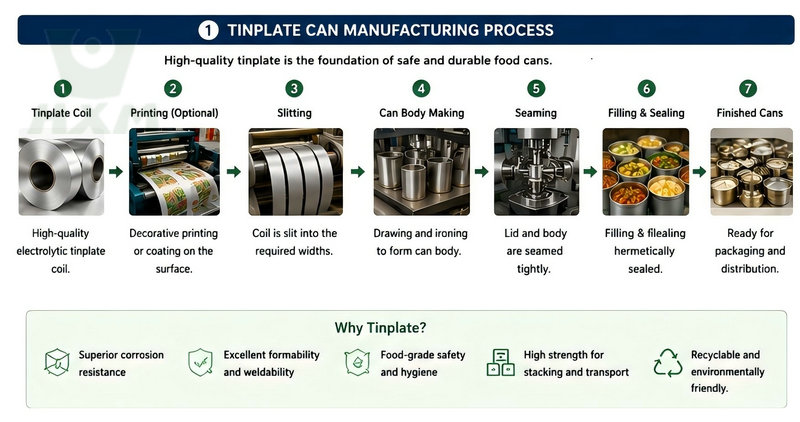
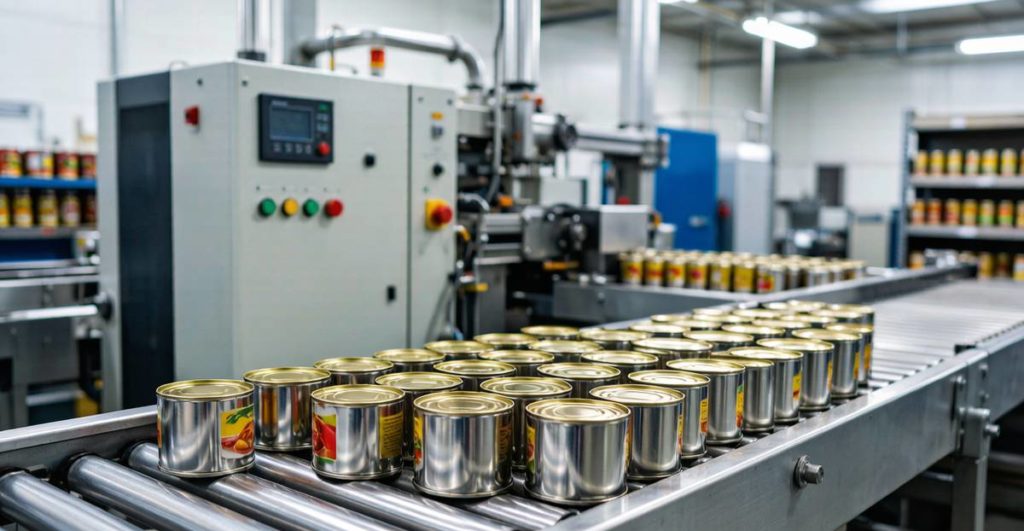
Food-grade tinplate undergoes a series of precision manufacturing processes before becoming finished food cans. Each step is carefully controlled to ensure excellent corrosion resistance, dimensional accuracy, airtight sealing, and food safety.
The typical manufacturing process includes:
Tinplate Coil Preparation – High-quality electrolytic tinplate coils are inspected and prepared for production.
Printing & Coating – Decorative graphics and protective coatings are applied according to packaging requirements.
Slitting & Cutting – Tinplate coils are slit into the required widths or cut into sheets for can production.
Can Body Forming – Sheets are formed into two-piece or three-piece can bodies through drawing, ironing, or rolling processes.
Welding or Seaming – The can body is welded or mechanically seamed to ensure structural integrity.
Food Filling & Sterilization – Food products are filled, sealed, and sterilized to meet food safety standards.
Quality Inspection & Packaging – Finished cans undergo leakage testing, appearance inspection, and packaging before shipment.
Huaxiao Metal supplies premium food-grade tinplate coils and sheets that meet international standards, ensuring stable performance throughout the entire food can manufacturing process.
How to Choose the Right Tinplate for Different Food Cans
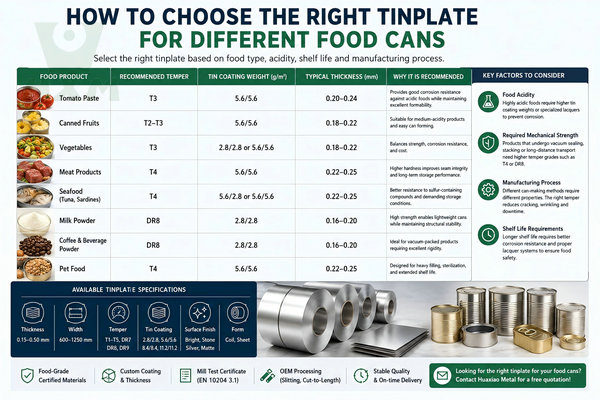
Choosing the right tinplate depends on the type of food, the acidity of the product, the required shelf life, and the manufacturing process. Selecting an inappropriate temper or tin coating may lead to corrosion, reduced can strength, or higher production costs. The table below provides practical recommendations commonly used by food can manufacturers.
Recommended Tinplate Specifications by Food Type
| Food Product | Recommended Temper | Tin Coating Weight | Typical Thickness | Why It Is Recommended |
|---|---|---|---|---|
| Tomato Paste | T3 | 5.6/5.6 g/m² | 0.20–0.24 mm | Provides good corrosion resistance against acidic foods while maintaining excellent formability. |
| Canned Fruits | T2–T3 | 5.6/5.6 g/m² | 0.18–0.22 mm | Suitable for medium-acidity products and easy can forming. |
| Vegetables | T3 | 2.8/2.8 or 5.6/5.6 g/m² | 0.18–0.22 mm | Balances strength, corrosion resistance, and cost. |
| Meat Products | T4 | 5.6/5.6 g/m² | 0.22–0.25 mm | Higher hardness improves seam integrity and long-term storage performance. |
| Seafood (Tuna, Sardines) | T4 | 5.6/2.8 or 5.6/5.6 g/m² | 0.22–0.25 mm | Better resistance to sulfur-containing compounds and demanding storage conditions. |
| Milk Powder | DR8 | 2.8/2.8 g/m² | 0.16–0.20 mm | High strength enables lightweight cans while maintaining structural stability. |
| Coffee & Beverage Powder | DR8 | 2.8/2.8 g/m² | 0.16–0.20 mm | Ideal for vacuum-packed products requiring excellent rigidity. |
| Pet Food | T4 | 5.6/5.6 g/m² | 0.22–0.25 mm | Designed for heavy filling, sterilization, and extended shelf life. |
Huaxiao Metal Can Help You Select the Right Tinplate
Not every food can requires the highest tin coating or the hardest temper. Choosing the correct combination of temper, coating weight, thickness, surface finish, and lacquer compatibility can significantly reduce production costs while ensuring food safety and long-term package performance.
At Huaxiao Metal, we supply food-grade electrolytic tinplate in both coils and sheets with:
Thickness: 0.15–0.50 mm
Width: 600–1250 mm
Temper: T1, T2, T3, T4, T5, DR7, DR8, DR9
Tin Coating: 2.8/2.8, 5.6/5.6, 8.4/8.4, 11.2/11.2 g/m²
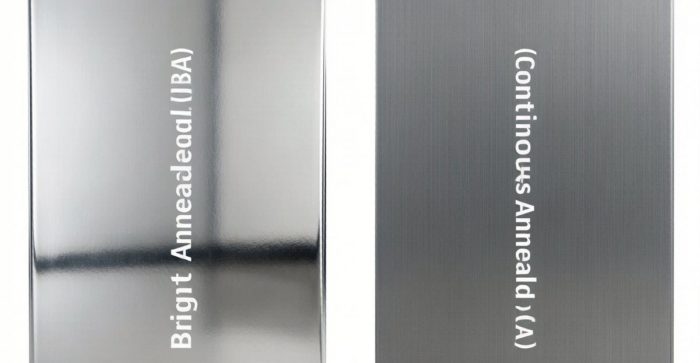
Surface Finish: Bright, Stone, Silver, Matte
Standards: JIS G3303, ASTM A623, EN 10202
Services: Slitting, Cut-to-Length, Custom Sizes, OEM Export Packaging
Certification: Mill Test Certificate (EN 10204 3.1) and Third-Party Inspection Available
If you are unsure which specification best fits your application, our technical team can recommend the most cost-effective tinplate solution based on your food type, production process, and packaging requirements.
Frequently Asked Questions
Why is tinplate the dominant material for food cans rather than aluminum?
Tinplate dominates food cans for three structural reasons:
(1) Retort capability — food cans undergo retort sterilization at 121°C for 30–90 minutes, subjecting the package to extreme thermal cycling and internal pressure. Tinplate’s steel strength (tensile 330–450 MPa, 0.20–0.30mm wall) maintains structural integrity through retort. Aluminum’s lower strength (110–290 MPa for can alloys) and thinner walls (0.10–0.15mm) risk paneling (vacuum collapse) and permanent deformation.
(2) Cost — tinplate at $850–1,100/ton is 20–40% cheaper than lacquered aluminum can stock ($1,600–2,200/ton). For a factory producing 100 million cans/year using 25g material per can, the annual savings from tinplate vs aluminum exceed $1.5–2.5 million.
(3) Existing manufacturing infrastructure — the global installed base of tinplate-optimized 3-piece welding lines represents decades of capital investment. Aluminum cans require different tooling, welding parameters, and lacquer chemistries, making material switching cost-prohibitive for existing lines.
What is differential coating and when should I use it for food cans?
Differential coating means applying different tin coating weights on the inside (food contact) and outside (atmosphere contact) surfaces of tinplate. For example, #100/#25 means 11.2 g/m² tin on the inside and only 2.8 g/m² on the outside. Use differential coating when:
(1) The food product is acidic (pH 3.0–4.5) — heavier inside coating (#100 or #75) provides sacrificial protection, while lighter outside (#25 or #50) is sufficient for warehouse/retail atmospheric exposure.
(2) Cost optimization — tin is a significant cost element ($25–35/kg); reducing outside coating weight from #100 to #25 saves ~$0.003–0.005 per can (based on 25g can body), which translates to $300,000–500,000 annual savings for a 100M can/year line.
(3) Product requires different interior vs exterior protection — pet food needs high sulfur-resistant lacquer inside but only standard exterior decoration; the tin underneath supports each function differently. Differential coating is available on both BA and CA ETP tinplate, enabled by separate anode controls in the electrolytic plating line.
How do I choose between 3-piece welded and 2-piece drawn food cans?
Use this decision framework: Choose 2-piece DRD (draw-redraw) when — (a) premium brand positioning requires seamless body (no side stripe visible, superior lithography), (b) product is high-protein pet food or tuna-style fish where side stripe interaction is a concern, (c) can diameter is large and shallow (aspect ratio diameter:height >1.5, e.g., tuna can 86mm × 30mm), or (d) production volume is moderate (20–50M cans/year) where tooling amortization is manageable.
Choose 3-piece welded when — (a) high production volume (50M+ cans/year) justifies investment in high-speed welding lines at 200–400 cans/min, (b) multiple can heights from the same diameter (same body welder, just change body blank length), (c) cost sensitivity requires thinner CA tinplate (DR8 at 0.20–0.25mm vs BA T3 at 0.22–0.28mm for equivalent can), or (d) product is standard vegetables/soup/fruit where side stripe appearance is acceptable. The 3-piece welded can accounts for ~70% of global tinplate food can volume due to its cost-performance advantage at scale.
What lacquer should I use for acidic tomato products in tinplate cans?
For tomato products (pH 3.5–4.6), the standard recommendation is epoxy-phenolic gold lacquer at 6–8 μm dry film thickness (DFT) applied in two coats (primer + topcoat) with total 10–14 μm for extended shelf life. The gold pigment (aluminum flake) provides a visual quality check — lacquer coverage is visible and uniform. For BPA-free requirements, polyester-based lacquers with acid-resistant additives achieve comparable performance at 15–25% higher lacquer cost. For tomato paste/concentrate (higher acidity, lower pH 3.5–4.2), vinyl organosol at 10–12 μm provides best-in-class acid resistance for 24–30 month shelf life.
The tinplate itself should be #100/#25 differential coating (BA T3 temper for 2-piece DRD; CA DR8 for 3-piece) — the heavy inside tin coating provides sacrificial cathodic protection at any microscopic lacquer defect. Key quality control: lacquer porosity test (enamel rater, maximum 5mA for 6V test on 400ml can), impact resistance (no cracking after 6.5 N·m Gardner impact), and retort resistance (no blistering after 90 min at 121°C).
What tinplate specifications are required for pet food cans to prevent sulfur staining?
Pet food cans require a multi-layer strategy against sulfur staining:
(1) Tinplate spec — BA T3 temper with #75/#50 differential coating (Stone finish) for 2-piece DRD cans; CA DR8 with #50/#50 (Bright) for 3-piece welded cans. The higher inside coating provides sacrificial tin to react with H₂S before it reaches the steel.
(2) Lacquer system — epoxy-phenolic gold lacquer pigmented with aluminum flake (5–10% pigment loading). Aluminum reacts with H₂S to form white aluminum sulfide (Al₂S₃) which is invisible, rather than the dark brown tin sulfide (SnS) or black iron sulfide (FeS) that would form on unprotected tin/steel. Zinc oxide pigmentation is an alternative for fish-based pet food.
(3) Meat release coating — a silicone-modified topcoat (usually 1–2 μm applied over the base lacquer) reduces fat and protein adhesion, improving consumer emptying experience.
(4) Quality verification — pack test: fill cans with product, retort at 121°C for 60 minutes, store at 37°C for 90 days, then inspect for staining, lacquer blistering, and tin migration (<100 ppm). Sulfur staining is cosmetic (not a food safety hazard), but consumer perception makes it a critical quality parameter.
Need Tinplate Specification for Your Food Can Production Line?
Our technical team can recommend the optimal tinplate grade, temper, coating class, and lacquer system for your specific food product, can type, and production process. Includes MTC per EN 10204 3.1 and SGS food safety migration testing on request.
Last updated: July 2026 | Reviewed by Huaxiao Metal Quality Team
Data sources: World Metal Packaging Association Annual Report 2025, ASTM A624/A624M-20, EN 10203:2024, FDA 21 CFR 175.300, EU 1935/2004/EC, FEA Aerosol Standard 643-2024, APEAL Steel Packaging Data 2024
ISO 9001:2015 Certified | SGS Verified | 500+ tons delivered to 27 countries