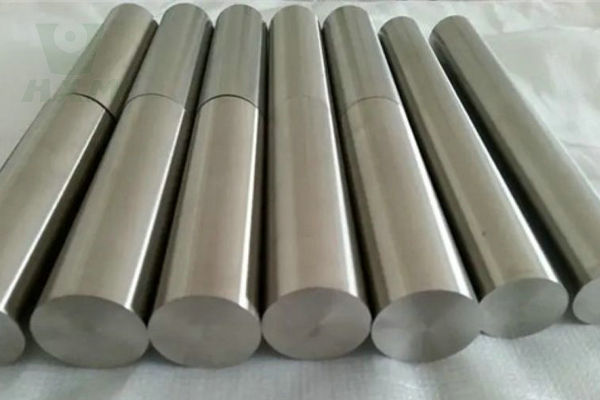
Titanium, due to its extremely strong and corrosion-resistant properties, is widely used in high-tech fields such as aerospace, medical equipment, and military technology. Despite its wide range of uses in various industries, titanium is generally much more expensive than other metals. So, what factors have led to such a high price for titanium? This article will reveal the five key reasons behind the high price of titanium.

Titanium Alloy
Titanium Alloy Supplier: Grade 1-5 & Ti-6Al-4V Bars, Sheets, Plates | Huaxiao Metal Huaxiao Metal is a premier titanium alloy manufacturer and supplier with ISO9001
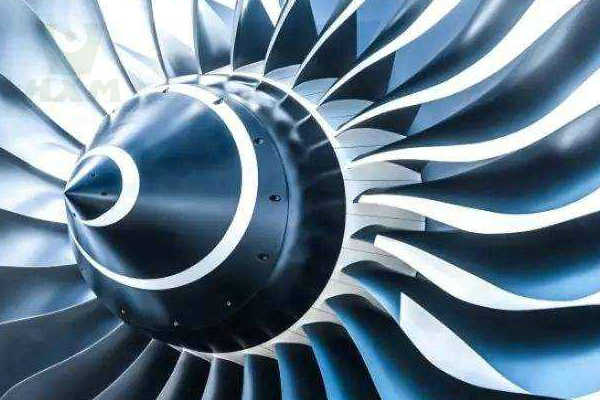
Reasons why titanium is expensive
1. Scarcity of titanium ore and complex extraction process
Although titanium is one of the most widely distributed elements in the earth’s crust, it mostly exists in the form of minerals in nature, and common minerals include rutile and ilmenite. The process of refining these minerals into pure titanium is quite complicated and energy-consuming.
The main extraction process is the Kroll Process, which involves converting ti ore into titanium tetrachloride, then reducing it with magnesium to extract sponge titanium, and then further purifying it. This process is time-consuming and requires a high-temperature environment, which increases production costs.
2. High difficulty in the manufacturing process
The processing difficulty of ti is much higher than that of other common metals. Due to titanium’s high melting point (about 1668°C) and strong chemical reactivity, special equipment and processes are required during manufacturing and processing to prevent titanium from reacting with elements such as oxygen and nitrogen to form brittle compounds. These special requirements greatly increase processing costs.
3. High strength and light weight properties
Ti is known for its excellent strength-to-weight ratio, which makes it indispensable in fields such as aerospace, military industry and high-performance automobiles. Ti has the same strength as steel, but weighs only about half as much, so it can significantly reduce the weight of equipment and improve fuel efficiency. However, this high-performance material also comes with a high price.
4. Corrosion resistance
Titanium has excellent corrosion resistance in many harsh environments and can even remain stable in seawater or highly acidic environments. This makes titanium a preferred material in fields such as chemical industry, marine engineering and medical devices. However, titanium’s corrosion resistance also means more complex production and processing requirements, further pushing up costs.
5. Limited supply chain and market demand
The global supply chain of titanium metal is relatively limited, while demand is growing. The increasing demand for high-purity titanium, especially in the high-tech field, has led to high prices for titanium metal in the market. In addition, the mining and extraction of titanium are often concentrated in a few countries, and supply chain uncertainties may also affect prices.
Titanium Data Sheet
Chemical Composition (Based on ASTM B265 Standard)
| Element | Ti | Fe | C | N | H | O |
|---|---|---|---|---|---|---|
| Gr1 Pure Ti | ≥99.5% | ≤0.20% | ≤0.08% | ≤0.03% | ≤0.015% | ≤0.18% |
| Gr2 Pure Ti | ≥99.2% | ≤0.30% | ≤0.08% | ≤0.03% | ≤0.015% | ≤0.25% |
| Gr5 Titanium Alloy (Ti-6Al-4V) | Balance | ≤0.40% | ≤0.08% | ≤0.05% | ≤0.015% | ≤0.20% |
Mechanical Properties
| Grade | Tensile Strength (MPa) | Yield Strength (MPa) | Elongation (%) | Reduction of Area (%) |
|---|---|---|---|---|
| Gr1 | ≥240 | ≥170 | ≥24 | ≥30 |
| Gr2 | ≥345 | ≥275 | ≥20 | ≥30 |
| Gr5 | ≥895 | ≥825 | ≥10 | ≥25 |
Physical Properties
| Property | Value |
|---|---|
| Density | 4.51 g/cm³ |
| Melting Point | 1668°C |
| Thermal Conductivity | 15.6 W/(m·K) |
| Specific Heat Capacity | 0.523 J/(g·K) |
| Elastic Modulus | 105-120 GPa |
| Hardness (HV) | 120-160 (Pure Titanium), ≥300 (Alloys) |
| Coefficient of Thermal Expansion | 8.6 × 10⁻⁶ /K |
Cost
Gr1 (Pure Ti): Most affordable, ideal for basic corrosion resistance applications.
Gr2 (Pure Ti): Moderately priced, offering a balance of strength and corrosion resistance.
Gr5 (Ti-6Al-4V): Premium-grade ti with superior performance but significantly higher cost.
Let me know if you’re looking for bulk pricing or supplier quotes, and I can provide additional guidance!
Corrosion Resistance
- Ti and its Ti alloys exhibit exceptional corrosion resistance to seawater, acids, alkalis, and chlorides.
- In highly oxidative environments, ti forms a stable oxide passivation layer on its surface, enhancing its corrosion resistance.
The data given by each ti and titanium alloy manufacturer will be a little different. If you need a more detailed data sheet or information about a specific titanium alloy, you can contact us directly and tell us your specific needs!
From titanium to titanium composite plates
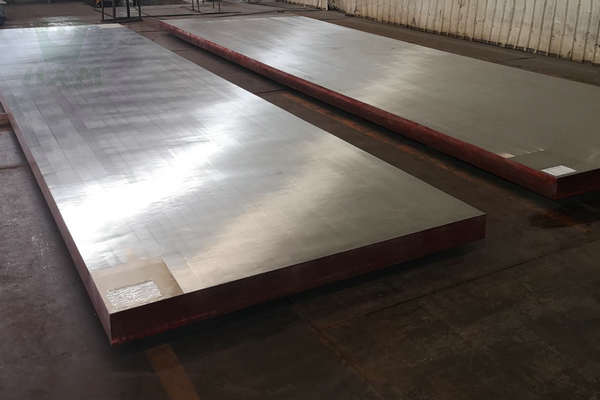
Because titanium is expensive, to reduce costs, we can choose titanium composite plates, which provide a cost-effective alternative. Titanium composite plates combine titanium with other metals (such as stainless steel, carbon steel, etc.), retaining the core advantages of titanium, such as high strength and corrosion resistance, while significantly reducing material costs.
This composite material is widely used in chemical equipment, marine engineering, and aerospace fields, meeting high-performance requirements while reducing budget pressure.

Titanium Composite Plate
Titanium Composite Plate Suppliers and Manufacturers As one of the professional titanium composite plate manufacturers and suppliers in China, we are committed to providing customers
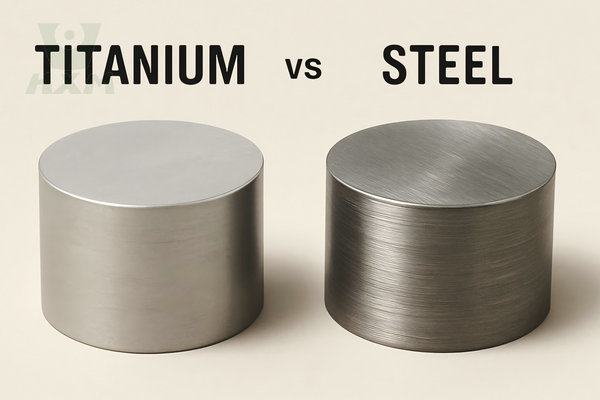
Titanium vs Steel vs Aluminum — Cost and Performance Comparison
| Material | Density (g/cm³) | Tensile Strength (MPa) | Corrosion Resistance | Approximate Price (USD/kg) | Typical Applications |
|---|---|---|---|---|---|
| Titanium (Ti-6Al-4V) | 4.43 | 900–950 | Excellent | 25–50 | Aerospace, Medical, Marine |
| Stainless Steel 304 | 8.0 | 520–750 | Good | 3–5 | Construction, Kitchenware |
| Aluminum 6061 | 2.7 | 310–350 | Moderate | 3–4 | Automotive, Aerospace Frames |
Although titanium is more expensive, its strength-to-weight ratio and durability often make it more cost-effective in the long term for critical applications.
Huaxiao Metal Titanium Products & Services
Huaxiao Metal is a trusted titanium supplier, offering:
Titanium Plates, Sheets, Bars, and Pipes
Custom Machining & Fabrication Services
Quality Assurance & Certifications
Export Packaging & Shipping Support
Ready to purchase ti alloy products? Contact Huaxiao Metal today for the latest prices, inventory checks, and to discuss custom processing solutions. Our team will assist you throughout the entire process, from material selection to delivery, ensuring you get the most suitable titanium solution at the best price.
FAQ
Is titanium rarer than gold?
No, titanium is not rarer than gold. Surprisingly, titanium is one of the most abundant elements in the Earth’s crust. Its high cost comes from the difficult and expensive process of extracting it from its ore, not from rarity.
Is titanium worth the high price?
For many applications, yes. Its unmatched strength-to-weight ratio, extreme temperature resistance, and superior corrosion resistance make it indispensable in aerospace, medical implants, and high-performance sports, where failure is not an option.
Why is titanium so expensive?
The high price of titanium is primarily due to several factors: scarcity, a complex extraction process, difficulty in production, superior performance, and supply chain constraints. Titanium’s distribution in the Earth’s crust is limited, and its extraction requires high energy consumption and costs. However, its corrosion resistance and high strength make it in high demand in aerospace, medical, and military applications.
Why is titanium so hard to machine and work with?
Titanium has low thermal conductivity, meaning heat doesn’t dissipate quickly during machining. This can damage cutting tools and make the fabrication process slow and costly, adding to the final price.
How does the price of titanium compare to aluminum?
Titanium is substantially more expensive than aluminum. Both are lightweight, but titanium is much stronger and more resistant to heat and corrosion. The cost difference is due to the far more complex and energy-intensive refining process for titanium.
What is the difference between titanium and stainless steel?
Both titanium and stainless steel offer excellent corrosion resistance, but titanium is lighter, stronger, and more resistant to high temperatures. However, titanium is significantly more expensive than stainless steel, primarily due to its complex production process and scarcity.
How tight is the titanium supply chain?
The titanium supply chain is relatively concentrated, with major global titanium ore producers including China, Australia, and Russia. Due to the complex titanium refining process, supply chain disruptions can lead to price fluctuations, especially due to factors such as global political tensions and natural disasters.
Why are titanium alloys so important in the aerospace industry?
Titanium alloys are widely used in aerospace due to their high strength, lightweight, high-temperature resistance, and corrosion resistance. They are often used in critical components such as aircraft structures and engine parts, ensuring aircraft safety and efficiency with their high performance.
Will the price of titanium fall in the future?
Due to the limitations of titanium refining technology and the global supply chain, titanium prices are expected to remain high. While new technologies may reduce some costs, continued growth in demand and limited resource availability mean that titanium prices are unlikely to fall significantly in the short term.
What is the difference between pure titanium and titanium alloys?
Pure titanium (CP-Ti) has excellent corrosion resistance but lower strength. Titanium alloys (e.g., Ti-6Al-4V) combine high strength and corrosion resistance, suitable for aerospace and medical use.
What applications are titanium best suited for?
Aerospace, marine, chemical, medical implants, and any application requiring high strength-to-weight ratio and corrosion resistance.
What is the typical delivery time for ti alloy products?
Depends on quantity and customization. Standard stock items: 1–3 weeks; custom items: 4–8 weeks.
In Conclusion:
The high price of titanium is not only due to its scarcity and complex production process, but also closely linked to its irreplaceable role in modern technology. From aerospace to medical devices, from military equipment to marine engineering, titanium plays a vital role in various industries. Therefore, despite its high price, its unique properties and wide range of applications make it a valuable metal.
If you are looking for the high performance of titanium and want to control costs, you might as well consider titanium composite plates. This material is not only close to pure titanium in performance, but also has a more controllable cost, making it an ideal alternative. For more information or prices about titanium composite plates, please feel free to contact us.
Related Titaninum Blogs

Grade 2 vs Grade 5 Titanium: What’s the Difference?
Among the many titanium alloy products, Grade 2 vs Grade 5 Titanium are the two most common and widely used titanium grades. As a professional

Titanium Alloy: Huaxiao Metal’s Authoritative Guide
In the fields of aerospace, medical technology, high-end manufacturing, etc., a silver-gray metal is quietly driving the revolution of human technology – titanium alloy. As
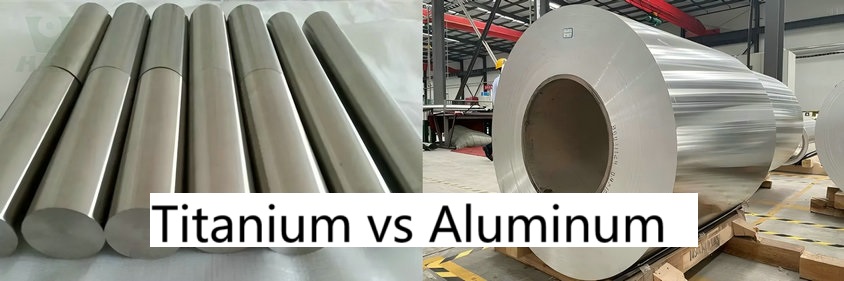
Titanium vs Aluminum
When choosing between titanium vs aluminum, it is important to understand the differences in weight, strength, corrosion resistance, and applications. Both metals are widely used
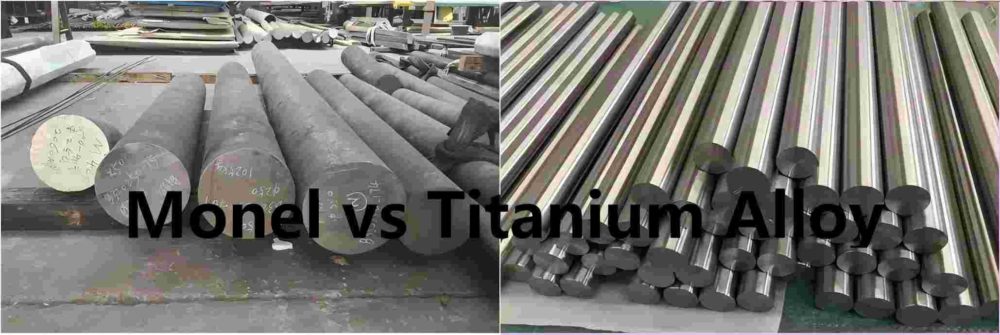
Monel vs Titanium Alloy — Complete Material Comparison (2026 Guide)
When selecting materials for demanding applications—whether in marine engineering, aerospace, chemical processing, or medical devices—choosing the right alloy is critical. Two popular options are Monel
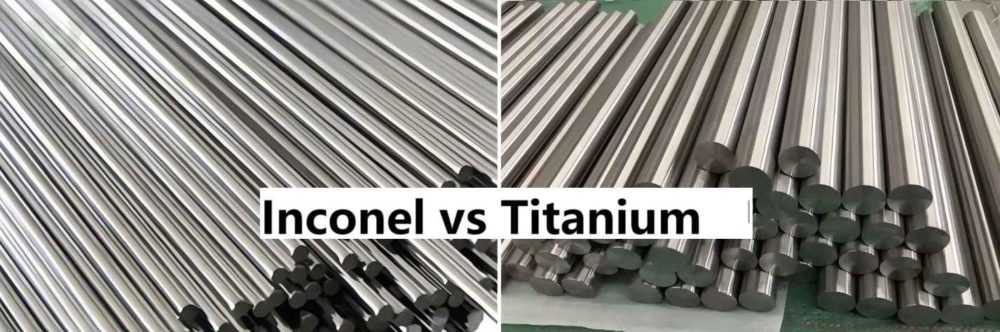
Inconel vs Titanium-The Ultimate Difference Explained
Inconel vs Titanium is widely regarded as high-specification metal materials with superior performance in industrial applications. Whether used in aerospace, medical devices, or chemical equipment,
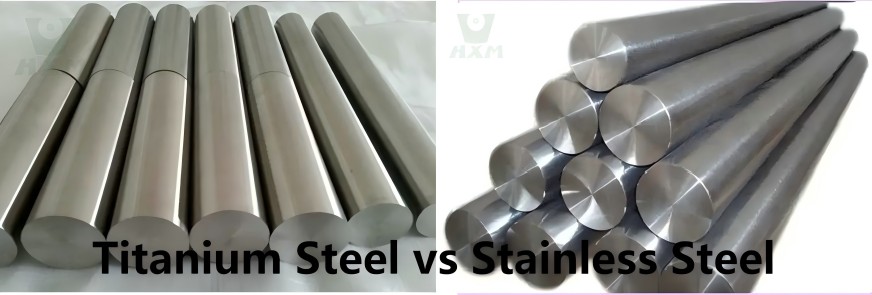
Titanium Steel vs Stainless Steel
Titanium Steel vs Stainless Steel are two commonly used metal materials in the industrial and construction fields. Each has unique properties and applications, but it