Carbon steel pipes are one of the most commonly used materials in the fields of construction, machinery, chemical industry, etc., and their international standards vary. In the global market, the standards of carbon steel pipes affect their manufacturing, performance, and adaptability to usage scenarios. This article will introduce in detail the differences in carbon steel pipe production from four perspectives: German standards, British standards, EU standards, and Japanese standards, to help customers better understand how to choose products that meet their needs.
In this guide, Huaxiao Metal provides a detailed analysis of standards, applications, latest trends, and purchasing considerations for Different Standard Carbon Steel Pipes.
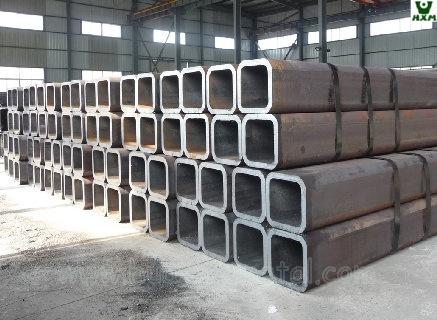
Overview of Carbon Steel Pipes
Carbon steel pipes are made primarily of iron and carbon, offering excellent mechanical strength, durability, and cost-effectiveness. They are categorized based on manufacturing methods (seamless or welded) and industry standards.
Key Features:
High tensile strength
Versatility in applications
Wide availability in stock
Cost-effective compared to stainless steel
Applications:
Oil & gas pipelines
Boiler systems
Structural engineering
Water and wastewater transportation
Automotive and machinery
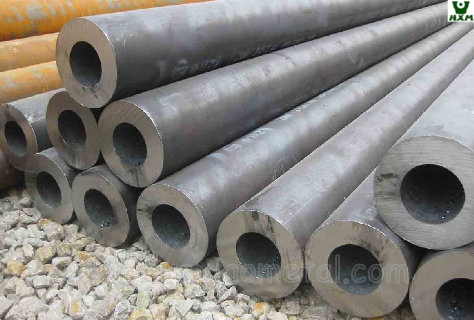
German Standard Carbon Steel Pipe (DIN Standard)
German standards are mainly formulated by DIN (German Institute for Standardization) and are widely used in industries, machinery manufacturing, and other fields. German standard carbon steel pipes have high mechanical performance requirements, especially in terms of pressure resistance and corrosion resistance.
Representative Standards: DIN 17175, DIN 2448
Advantages: high tensile strength, suitable for use in high-pressure and high-temperature environments, especially suitable for boiler tubes and heating systems.
Application Scenarios: petroleum, chemical, boiler manufacturing, and other industries.
British Standard Carbon Steel Pipe (BS Standard)
The British Standard (BS – British Standards) is a long-standing industrial standard system with wide application and good international recognition. British standards focus on product quality and safety and meet the needs of global engineering applications.
Representative Standards: BS 1387, BS EN 10255
Advantages: Good rust resistance and corrosion resistance, and the standard has strict regulations on the thickness and weldability of steel.
Application Scenarios: water supply and drainage pipelines, construction engineering, machinery and equipment manufacturing.
British standards are widely used in Europe, especially in Commonwealth countries, and are suitable for projects with higher safety requirements.
EU Standard Carbon Steel Pipe (EN Standard)
The EU Standard (EN – European Norms) is jointly formulated by several European countries to provide unified specifications for steel trade between different countries. EU standards cover all aspects from material selection to process control, with good compatibility and consistency.
Representative Standards: EN 10216, EN 10255
Advantages: It can ensure the consistency of the product, and has good anti-oxidation and corrosion resistance, suitable for use in various environments.
Application Scenarios: oil and gas pipelines, marine engineering, industrial manufacturing, etc.
EU standards emphasize environmental protection and sustainability, meet the requirements of green buildings, and are widely used in the European market.
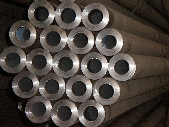
Japanese Standard Carbon Steel Pipe (JIS Standard)
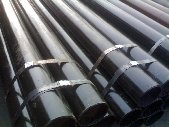
Japanese Standards (JIS – Japanese Industrial Standards) strictly stipulate the chemical composition, mechanical properties, and dimensional tolerances of steel and are widely used in the Asian market. The advantages of JIS standards are their high precision and strict quality control.
Representative Standards: JIS G3452, JIS G3454
Advantages: high dimensional accuracy, and good durability, especially in terms of seismic resistance and wear resistance.
Application Scenarios: construction, shipbuilding, automobile manufacturing, and other fields.
Japanese Standard Carbon Steel Pipe is suitable for projects that require high precision and has a wide customer base in the Asian market.
ASTM/ASME Standard Pipes
Description: Widely used in the USA and internationally.
Applications: Pressure vessels, pipelines, and industrial systems.
Popular Grades: ASTM A106, ASTM A53, ASME SA106, ASME SA53
Advantages: Reliable quality, globally recognized, available from multiple Carbon Steel Pipes suppliers.
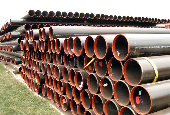
Difference of Different Standard Carbon Steel Pipe
Carbon steel pipes are an indispensable basic material in modern industry. There are many international standards for them, mainly including German standards, British standards, EU standards and Japanese standards. These standards have significant differences in manufacturing processes, performance requirements and applicable scopes. Understanding these differences is essential for choosing the right product.
| Standard | Common Steel Grades | Pipe Type | Wall Thickness | Typical Applications | Notes |
|---|---|---|---|---|---|
| ASTM | A53, A106 | Seamless / Welded | 2–50 mm | Water, Gas, Steam | US standard widely used globally |
| EN | 10216-1, 10217-1 | Seamless / Welded | 2–60 mm | Industrial & Boiler Pipes | European standard, high precision |
| DIN | 2440, 2448 | Seamless | 2–40 mm | Industrial Pipelines | German quality control |
| JIS | G3452, G3454 | Seamless / Welded | 2–30 mm | Heat, Chemical | Japanese reliability |
| BS | 1387, 1139 | Welded | 2–25 mm | Construction, Water | UK standard |
| GB | 8163, 5310 | Seamless / Welded | 2–50 mm | General Use | China domestic and export |
Contact us now, and our team will reply within 12 hours with full pricing, lead time, and documentation.
International Steel Grade Equivalents
For global procurement, it is often necessary to find equivalent steel grades across different standards. The table below shows common equivalents:
| ASTM | EN | DIN | JIS | BS | GB |
|---|---|---|---|---|---|
| A106 Gr.B | 10216-2 P235GH | DIN 1629 ST35.8 | STPG 370 | BS 3604 | 20# |
| A53 Gr.B | EN 10217-1 P235 | DIN 2448 | STPG 370 | BS 1387 | 20# |
| A179 | EN 10216-2 P265GH | DIN 17175 | STPT 38 | BS 3604 | 20G |
These equivalents help buyers ensure compatibility and compliance when sourcing pipes internationally.
Common Applications and Case Studies
Oil & Gas Pipelines
Carbon steel pipes are preferred due to their strength and pressure resistance. Seamless ASTM pipes are commonly used in drilling operations.
Water Treatment Plants
DIN and BS standard pipes ensure reliable water flow and durability in municipal projects.
Structural Engineering
EN standard pipes are used for construction scaffolding and steel frameworks due to their dimensional accuracy and load-bearing capacity.
Automotive Industry
JIS pipes are integrated into chassis and exhaust systems for precision and reliability.
Example Recommendations:
Steam pipelines: ASTM A106 / EN 10216-2
Industrial chemical lines: JIS G3454 / DIN 2440
Domestic water pipelines: GB/T 8163
Need help selecting the right standard carbon steel pipe? Our engineers can assist you
Selection Suggestions for Carbon Steel pipes of Different Standards
In international trade and engineering projects, carbon steel pipes of different standards have their own advantages. Choosing the right standard requires weighing the specific requirements of the project. German standards are suitable for high pressure and high temperature environments, British standards focus on rust resistance and safety, EU standards emphasize consistency and environmental protection, and Japanese standards focus on high precision and durability.
Choosing the right carbon steel pipe standard is crucial for project success, regulatory compliance, and cost control. At Huaxiao Metal, we supply ASTM, DIN, JIS, and EN standard carbon steel pipes with full mill test certificates and global shipping support.
Contact us today to get expert advice, request pricing, or download datasheets.
FAQ – Common Questions About Carbon Steel Pipe Standards
What is the difference between ASTM and EN standards?
ASTM focuses on U.S. industrial norms, while EN meets European requirements. Dimension and chemical composition tolerances differ.
Can GB pipes be exported to Europe or the US?
Yes, provided they meet the equivalent international standard requirements.
What is the difference between seamless and welded carbon steel pipes?
Seamless pipes are manufactured without welding, offering higher pressure resistance. Welded pipes are cheaper and suitable for lower pressure applications.
How to check pipe quality and standard compliance?
Inspect certificates of conformity, mechanical property reports, chemical composition tests, and dimensional tolerances.
What are Different Standard Carbon Steel Pipes?
They are carbon steel pipes manufactured according to various global standards, ensuring quality, safety, and compatibility for specific applications.
How to choose between ASTM, DIN, BS, EN, and JIS standards?
Consider the industry, regional regulations, application requirements, and supplier availability.
Can I get customized lengths or coatings?
Yes, most Carbon Steel Pipes suppliers offer customization, including special coatings for corrosion resistance.
How do prices vary among different standards?
Pricing depends on standard, grade, wall thickness, and stock availability. Contact Huaxiao Metal for detailed Carbon Steel Pipes prices.
Are these pipes available in stock for immediate shipping?
Yes, our inventory covers all popular standards to support urgent orders.
In Conclusion:
1095 carbon steel is well suited for applications that require high hardness and excellent edge retention, such as high-performance cutting tools and precision blades. However, it can be more brittle and more difficult to weld.
1060 carbon steel strikes a good balance between toughness and hardness, making it suitable for general-purpose tools, large knives, and swords. It is easier to weld and has better impact resistance, although it may not hold an edge as long as 1095 steel.
The choice between the two depends on whether extreme hardness and wear resistance (1095) or toughness and ease of welding (1060) are the priorities.