
[email protected]

24/7 Customer Support

+86-13761906384

24/7 Customer Support

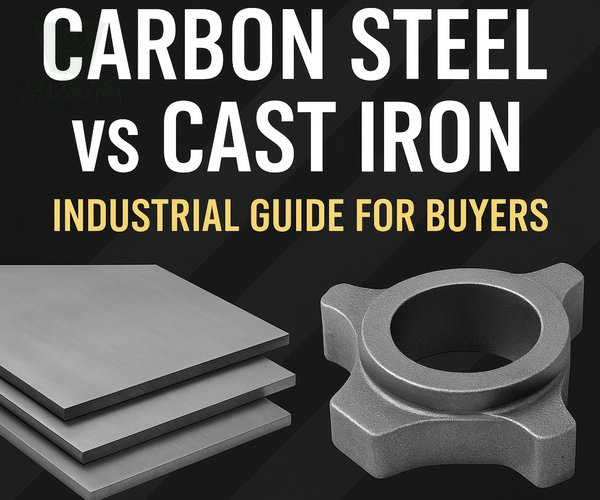
The Difference Between Carbon Steel vs Cast Iron

The Difference Between Carbon Steel vs Cast Iron

When it comes to industrial materials, carbon steel vs cast iron are two of the most frequently compared ferrous alloys. Both materials contain iron and carbon as their primary elements, yet they differ significantly in structure, properties, and manufacturing methods.
Understanding these differences is crucial when choosing the right material for engineering, manufacturing, or construction projects.

In this article, Huaxiao Metal, a trusted steel and alloy supplier, provides a comprehensive comparison between carbon steel and cast iron — including their composition, strength, applications, cost, and machinability — to help you make a better purchasing decision.
If you are sourcing carbon steel or cast iron products, feel free to contact Huaxiao Metal for material consultation and the latest prices.

What is Cast Iron?

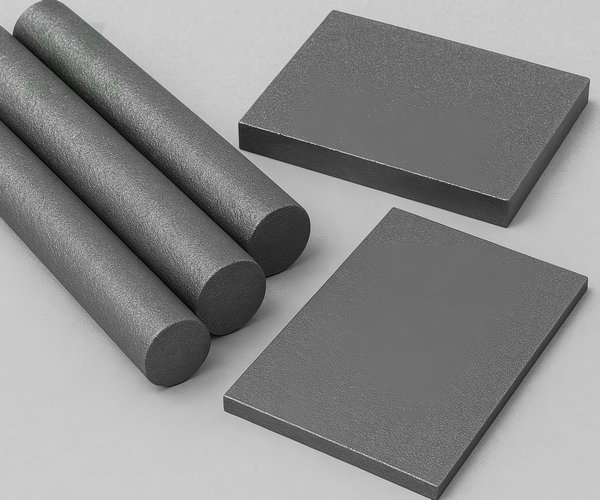
What is Cast Iron

Cast iron is an iron-carbon alloy containing 2.0% to 4.0% carbon, along with 1–3% silicon and trace amounts of manganese, sulfur, and phosphorus. The high carbon content gives cast iron its brittle but hard characteristics.

Industrial Characteristics:

  • High compressive strength – suitable for heavy-load applications.

  • Excellent vibration damping – ideal for machinery bases and automotive parts.

  • High wear resistance – long service life in abrasive environments.

  • Applications – engine blocks, machine tool frames, pump housings, pipes, and manhole covers.

Main Types of Cast Iron

  • Gray Cast Iron – High carbon and silicon; good machinability and damping properties; used in engine blocks and machine bases.

  • Ductile (Nodular) Iron – Contains small amounts of magnesium or cerium, improving ductility and toughness.

  • White Cast Iron – Very hard, wear-resistant, but brittle; used for abrasion-resistant parts.

  • Malleable Iron – Produced by heat-treating white iron to improve ductility.

Manufacturing Process

Cast iron is produced by melting pig iron in a furnace and pouring the molten metal into molds. Its excellent fluidity allows for the production of complex shapes and heavy castings with minimal machining.

What is Carbon Steel?

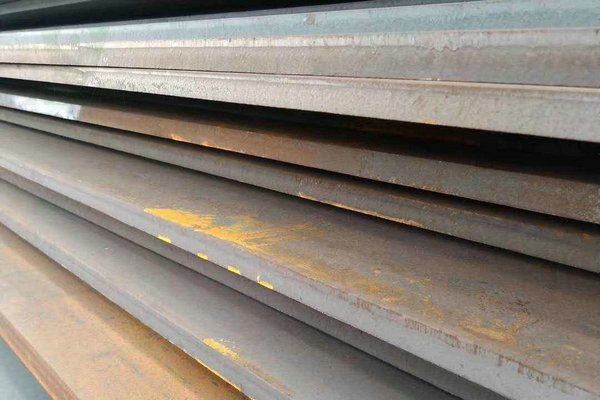
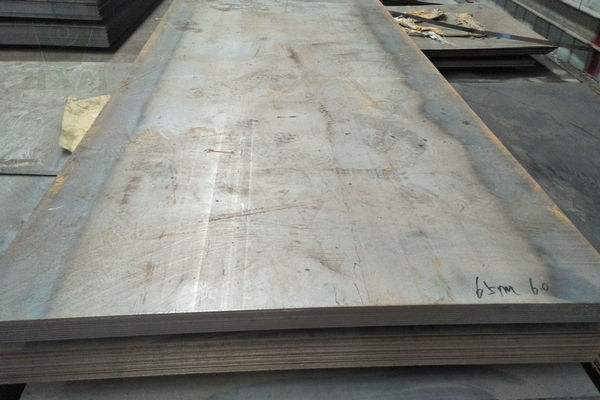
Carbon steel is an iron-carbon alloy with a lower carbon content (typically 0.05%–2.0%), available in various grades such as low, medium, and high carbon steel. It is manufactured by rolling or forging, which allows for more versatile shapes and thicknesses.

Carbon Steel Types:

Carbon steel contains less than 2.0% carbon, usually classified into three categories:

  • Low carbon steel (≤0.3%) – Ductile, easy to form, ideal for sheet metal and tubing.

  • Medium carbon steel (0.3–0.6%) – Stronger and harder, suitable for shafts, gears, and mechanical parts.

  • High carbon steel (≥0.6%) – Very hard and wear-resistant, often used for cutting tools and springs.

Industrial Characteristics:

  • High tensile strength – ideal for load-bearing structures.

  • Good ductility – easier to shape, weld, and machine.

  • Wide size availability – from thin sheets to heavy plates and structural beams.

  • Applications – construction beams, automotive frames, pressure vessels, pipelines, and machinery parts.

Unlike cast iron, carbon steel can be forged, rolled, and welded, making it suitable for structural and high-strength applications.

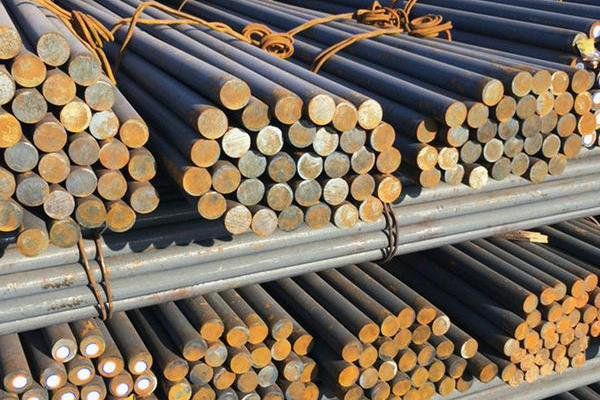
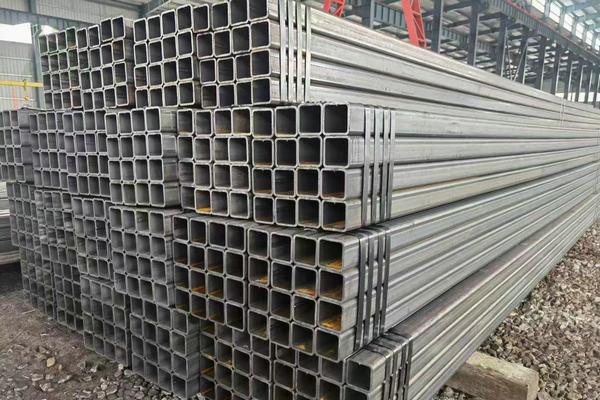
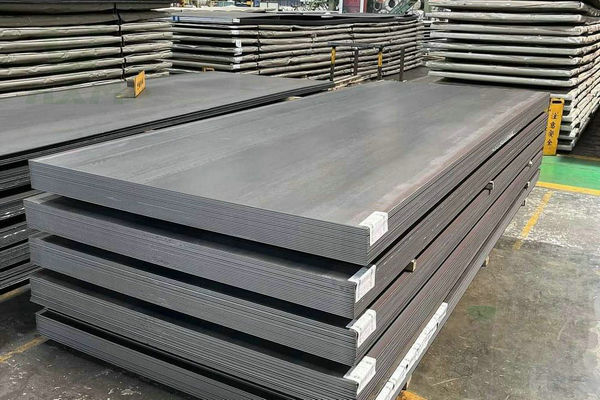
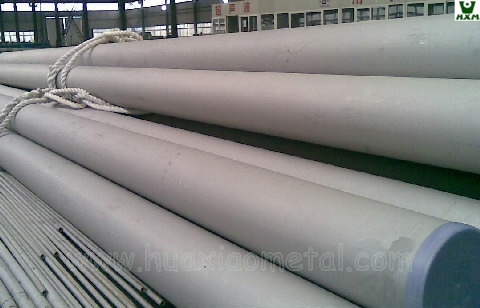
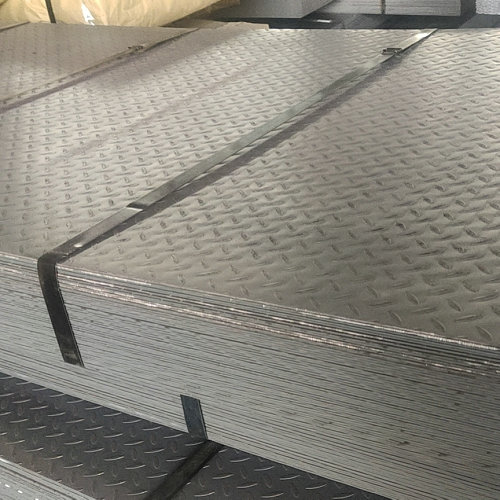
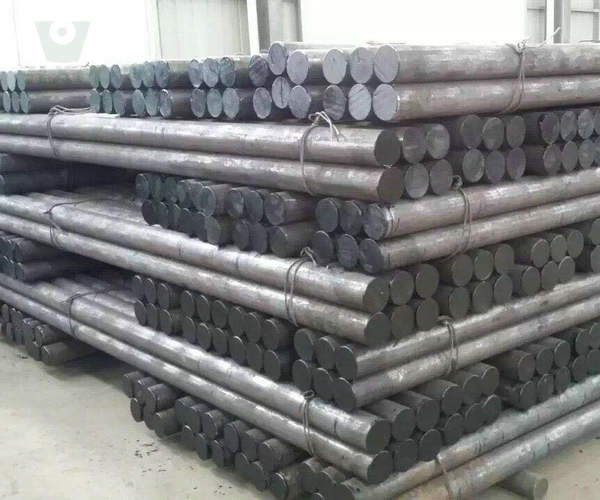
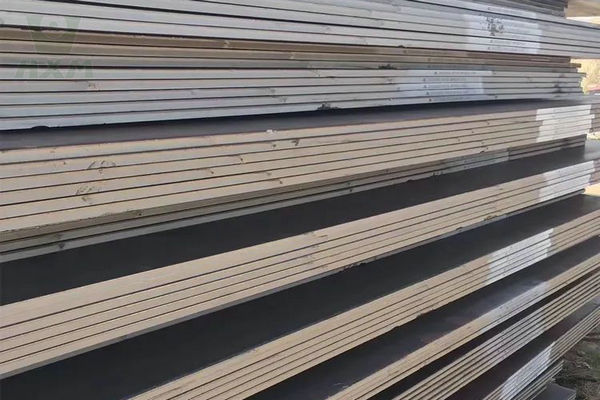
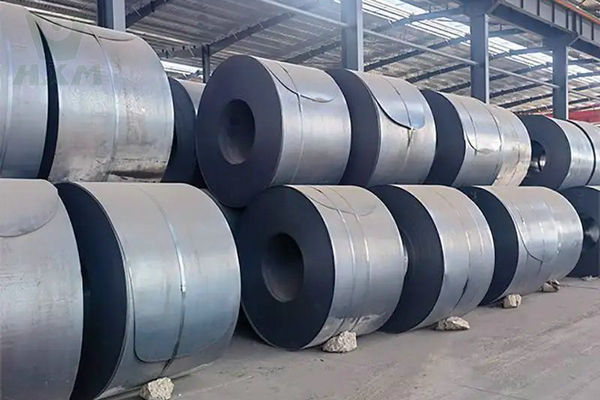
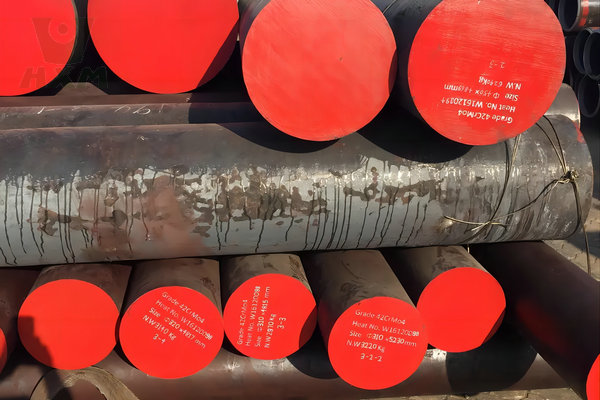
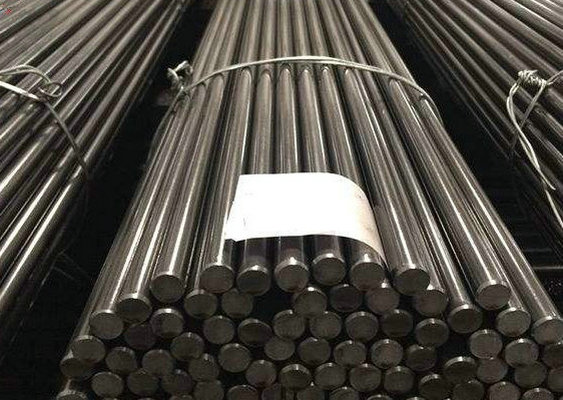
Huaxiao Metal offers a full range of carbon steel plates, bars, and pipes, produced under ASTM, DIN, and JIS standards to ensure mechanical consistency and reliability.

Difference Between Cast Iron vs Carbon Steel

Although both materials are iron-carbon alloys, their production methods and carbon content lead to significant differences in properties and uses.

1. Construction Design

  • Cast Iron: Molded into shape; excellent for complex castings with high rigidity.

  • Carbon Steel: Rolled or forged; available in sheets, bars, and structural sections for fabrication.

2. Heat Distribution

  • Cast Iron: Withstands high temperatures and retains heat well, suitable for industrial furnaces or high-heat components.

  • Carbon Steel: Heats and cools quickly, better for applications requiring thermal responsiveness.

3. Safety Durability

  • Cast Iron: Excellent resistance to wear and deformation; brittle under impact.

  • Carbon Steel: Strong under impact loads; better suited for high-tensile applications.

4. Ease of Use

  • Cast Iron: Requires casting molds; machining is more challenging.

  • Carbon Steel: Easier to cut, weld, and machine for custom fabrication.

5. Nonstick Coating (Not applicable in industrial context)

In industrial terms, this relates to surface treatments such as galvanizing, painting, or powder coating for corrosion protection.

6. Maintenance

  • Cast Iron: Requires protection from rust; often coated or painted.

  • Carbon Steel: Also prone to rust without treatment, but easier to maintain through surface coatings.

7. Cost Considerations

  • Cast Iron: Generally lower raw material cost; economical for high-volume castings.

  • Carbon Steel: May cost more per ton depending on grade and processing, but offers higher versatility.

8. Energy Consumption

  • Cast Iron: High thermal mass can improve energy efficiency in certain machinery.

  • Carbon Steel: Lighter and often more efficient for transport and assembly.

Carbon Steel vs Cast Iron: Mechanical and Thermal Properties Comparison

Strength and Toughness

Carbon steel offers higher tensile strength (400–900 MPa) compared to cast iron (200–400 MPa).

While cast iron is excellent in compression, its brittleness makes it unsuitable for impact or dynamic loads.

That’s why carbon steel is preferred for load-bearing and welded structures such as bridges, pipelines, and machinery frames.

🔧 Example:

  • A medium-carbon steel shaft can withstand higher torque and shock loads than an equivalent cast iron shaft, offering better durability in rotating equipment.

Hardness and Wear Resistance

Cast iron is inherently hard due to its graphite structure, which enhances wear resistance and vibration damping.

For high-abrasion environments, such as mill liners or brake rotors, white cast iron and ductile iron are ideal choices.

Weldability and Fabrication

One of the biggest differences lies in weldability.

Cast iron is difficult to weld because its high carbon content can cause cracking and distortion during cooling.

Carbon steel, however, can be easily welded, cut, or formed, making it a versatile material for fabrication.

Thermal Conductivity

Cast iron retains heat longer, which makes it ideal for cookware and engine components.

Carbon steel dissipates heat faster, suitable for structural and pressure applications.

Heat Conductivity, Heat Retention, and Stability

  • Heat Retention: Cast iron, due to its higher density and mass, has excellent heat retention. It heats slowly, but once heated, it maintains a stable and long-lasting temperature. Carbon steel heats and cools quickly, making it more sensitive to temperature fluctuations.

  • Thermal Shock Resistance: Carbon steel has far superior thermal shock resistance than cast iron. Cast iron’s brittleness makes it susceptible to cracking and even shattering when subjected to drastic temperature fluctuations (such as when suddenly dropped from hot to cold water).

  • Welding and Machining: Mild steel has excellent weldability, while cast iron has poor weldability and is prone to thermal cracking. However, in terms of machining, gray cast iron, due to its graphite structure, generally offers better machinability than carbon steel.

Carbon Steel vs Cast Iron: Additional Technical Considerations

  1. Corrosion Resistance – Both materials can corrode, but carbon steel can be more effectively treated with galvanizing or special coatings. Cast iron’s natural structure offers some wear resistance but is still prone to rust without protection.

  2. Density & Weight – Similar densities (~7.8 g/cm³), but component design affects total weight. Weight is critical for shipping and structural load calculations.

  3. Fatigue Resistance – Carbon steel generally has better performance under repeated stress, making it ideal for moving or load-cycling parts.

  4. Temperature Performance – Cast iron is stable under high heat, while carbon steel performs better in low-temperature, impact-prone environments.

  5. Recyclability – Both materials are recyclable; buyers with environmental certifications may require proof of recycled content.

Carbon Steel vs Cast Iron: Commercial Factors for Buyers

  1. Market Price Volatility – Cast iron prices tend to be more stable, while carbon steel prices can fluctuate with steel scrap and energy costs.

  2. Lead Time & Supply Chain – Cast iron production requires mold preparation, leading to longer lead times. Carbon steel products can be fabricated faster from stock material.

  3. Customization Capability – Carbon steel is highly flexible for fabrication, while cast iron is more cost-effective for high-volume, uniform designs.

  4. Lifecycle Cost – Consider total cost over the material’s lifespan, including maintenance, downtime, and replacement frequency.

  5. Compliance & Certification – Many industries require materials to meet ASTM, EN, JIS, or ISO standards. Buyers should ensure the supplier can provide mill test reports and certification documents.

Always consider operating stress, heat, corrosion environment, and fabrication requirements before final selection.

Our engineers can provide custom recommendations and material certificates for your project.

Carbon Steel vs Cast Iron Comparison Chart

Property

Carbon Steel

Cast Iron

Core Process

Plastic forming, cutting, welding

Melting, casting

Main Advantages

High strength, high toughness, easy welding, easy machining

High compressive strength, strong damping capacity, can form complex shapes

Main Disadvantages

Shape flexibility limited by machining

Brittle, low tensile strength, difficult to weld

Machinability

Excellent

Fair to poor (depends on type)

Weldability

Excellent

Poor to moderate (requires special processes)

Typical Applications

Structural steel, pipes, car bodies, pressure vessels

Engine blocks, machine tool bases, valves, water pipes, gearboxes

Cost Structure

Higher raw material cost, but flexible processing

Lower raw material cost, but high mold costs

Pros and Cons of Carbon Steel vs Cast Iron

Cast Iron Pros

  • High wear resistance

  • Excellent vibration damping

  • Cost-effective for casting

  • Long service life in static load applications

Cast Iron Cons

  • Brittle under impact loads

  • Heavier weight

  • Lower ductility

Carbon Steel Pros

  • High tensile strength

  • Good weldability and machinability

  • Suitable for dynamic load applications

  • Available in multiple grades and forms

Carbon Steel Cons

  • Higher cost for certain grades

  • Requires protective coatings for corrosion resistance

In short: Carbon steel wins with high tensile strength and excellent toughness; cast iron excels in compressive strength and wear resistance.

Carbon Steel vs Cast Iron: Which is Better?

Choose cast iron if:

  • You need complex shapes with high compressive strength.

  • Your application requires excellent wear resistance and vibration damping.

Choose carbon steel if:

  • You need high tensile strength and impact resistance.

  • You require material that is easy to weld, cut, and machine.

  • Your project involves dynamic or structural loads.

For many industrial buyers, the decision depends on application requirements, budget, and lead time. Consulting with your supplier can ensure the best material choice for your specific project.

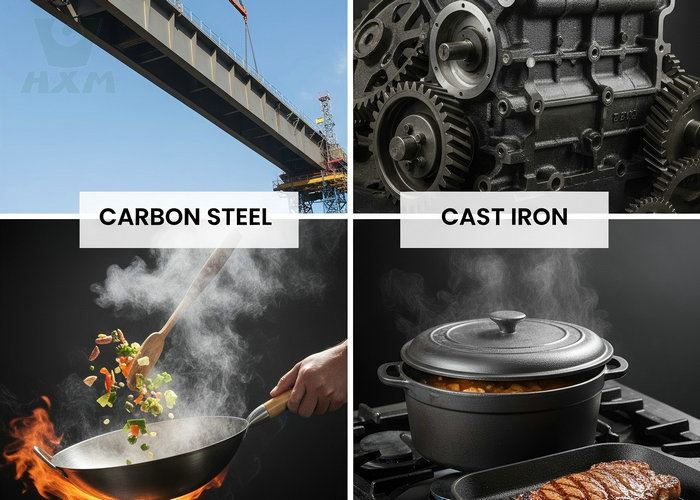
Carbon Steel vs Cast Iron: Typical Application Scenarios

Understanding the profound differences in performance allows us to accurately guide the selection of carbon steel and cast iron across various sectors.

1. Industrial and Structural Applications

Application AreaPreferred MaterialKey Rationale
Structural Beams/BridgesCarbon SteelHigh tensile strength, excellent ductility, and superior weldability for absorbing stress and facilitating on-site fabrication.
Heavy Machinery BasesCast IronHigh compressive strength and superior damping capacity to absorb machine vibration, enhancing stability and precision.
High-Pressure Piping/VesselsCarbon SteelRequires high pressure resistance, ductility, and ease of welding for secure containment.
Engine Blocks/Cylinder HeadsCast IronHigh compressive strength, dimensional stability, and good wear resistance in high-heat environments.
Shafts, Gears, and ToolsCarbon Steel (Medium/High)Can be heat-treated to achieve extremely high hardness and wear resistance.

Cookware: Carbon Steel Woks vs. Cast Iron Woks

  • Carbon steel woks (woks/French skillets): Advantages include lightweight flexibility, fast heating and cooling times, and precise temperature control. Their smooth surface allows for a smoother, more delicate oil layer, making them ideal for quick stir-fries and delicate searing.

  • Cast iron woks (Dutch ovens/griddles): Advantages include unparalleled heat retention. While they heat slowly, they maintain a stable temperature once heated, making them an excellent choice for searing steaks and slow-cooking dishes.

We understand the crucial role high-quality metal materials play in product performance. Whether providing high-purity mild steel coils for professional chefs’ woks or custom-formulated ductile iron castings for precision machinery, Huaxiao Metal offers industry-leading material solutions.

Carbon Steel vs Cast Iron Typical Application Scenarios

Huaxiao Metal – Your Trusted Supplier for Carbon Steel and Cast Iron Products

As a professional metal supplier, Huaxiao Metal provides a complete range of carbon steel bars, plates, pipes, and cast iron components to customers in construction, manufacturing, and energy industries.

Why Choose Huaxiao Metal

  • Global material standards: ASTM / DIN / JIS / EN

  • Strict quality inspection and third-party testing

  • Large inventory for fast delivery

  • Customized machining and packaging services

  • Competitive prices and technical support

We help customers worldwide choose the right material and optimize their cost-performance ratio.

Contact Us Now to discuss your project and get a free quote:

FAQ

Yes. We can offer a variety of carbon steel and cast iron grades according to international standards (such as ASTM, SAE, DIN, and GB) to meet your exact specifications.

Carbon steel has higher tensile strength and impact resistance, while cast iron has higher compressive strength.

Yes, many machines use carbon steel for structural parts and cast iron for wear components.

Without special coatings or surface treatments, both carbon steel and cast iron are susceptible to rust (corrosion) because they are primarily composed of iron. Cast iron, due to its porosity, may more readily absorb moisture and salt, accelerating corrosion. However, the corrosion resistance of both can be significantly improved with appropriate surface treatments (such as oiling, enameling, plating, or coating). For applications exposed to moisture or outdoor environments, it is recommended to choose materials that have been treated with corrosion inhibitors.

Both carbon steel and cast iron are recyclable metal materials. They can be melted down and recast or processed into new products, which is important for sustainable development. They can be effectively recycled in most industrial recycling systems.

Cast iron is usually cheaper per ton, but processing and finishing can affect final costs.

Use protective coatings, paints, or galvanizing to extend service life.

Generally, yes. Cast iron has a slightly higher density than carbon steel, and because cast iron parts are typically thicker to achieve sufficient strength, cast iron parts tend to be heavier than carbon steel parts of equal volume or similar dimensions.

Yes, but it requires special welding rods and preheating techniques to prevent cracking due to carbon migration.

Both are great. Cast iron retains heat better, while carbon steel heats up faster and is easier to work with.

Yes, we provide bulk supply for manufacturing, construction, and distribution.

Looking for a reliable carbon steel or cast iron supplier for your next project?

Contact us today for material specifications, bulk pricing, and global shipping options.

In Conclusion

Both cast iron and carbon steel play essential roles in industrial applications.

The right choice depends on the balance between strength, ductility, machinability, and cost.

For structural and welded components, carbon steel offers superior performance.

For heavy-duty, wear-resistant parts, cast iron is often the economical solution.

At Huaxiao Metal, we help clients worldwide select the most suitable material through technical expertise, strict quality control, and competitive pricing.

Need advice on choosing between carbon steel and cast iron?

Contact Huaxiao Metal today — we’ll help you find the best material for your next project.

Share:

Facebook
Twitter
Pinterest
LinkedIn

Contact Us For Metal Prices

Table of Contents

On Key

Related Posts

Welcome