In modern metal manufacturing, clad plates, or bimetallic plates, play an essential role in industries such as petrochemical, pressure vessels, shipbuilding, and power generation. The performance of a clad plate depends not only on the base and cladding materials but also on the bonding process used during production.
There are three main types of bonding methods:
Explosive Bonding (Explosion Welding)
Hot Bonding (Hot Rolling Bonding)
Cold Bonding (Cold Rolling / Diffusion Bonding)
Each method has its own bonding mechanism, advantages, and ideal application scenarios. In this article, Huaxiao Metal—a professional clad plate supplier and manufacturer—will help you understand these three processes in detail, providing both technical and commercial insights to help you choose the best solution for your project.
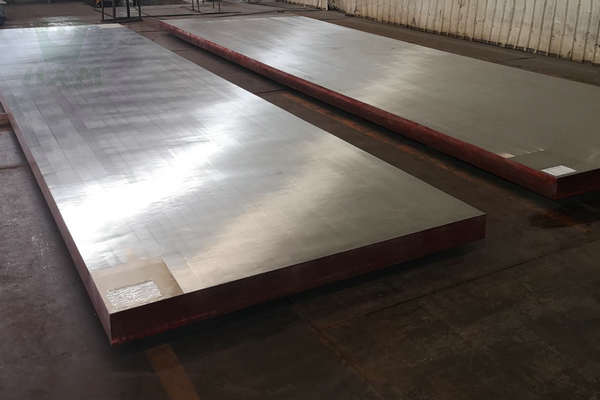
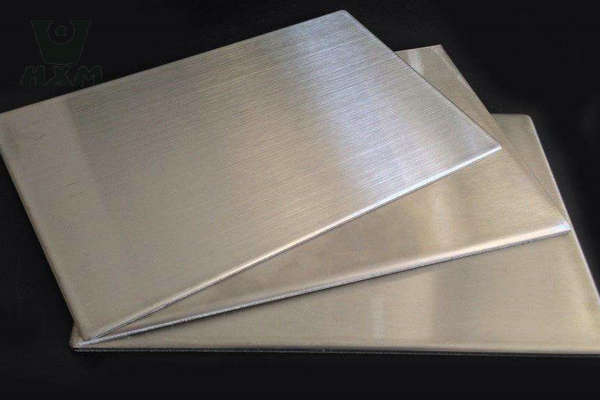
Explosive Bonding VS Hot Bonding VS Cold Bonding Process Principle
What Is Explosive Bonding?
Definition
Explosive bonding, also known as explosion welding, uses controlled detonation energy to join two or more metal layers together at high velocity. The explosive force causes a metallurgical bond at the interface without melting the metals.
How It Works
A layer of explosive is placed on the cladding metal plate. When detonated, the explosion generates shock waves that press the cladding plate against the base plate at extremely high speed. This impact creates a solid-state bond through plastic deformation and micro-jetting at the interface.
Characteristics
No melting or heat-affected zone
High bonding strength (typically exceeding 400 MPa)
Suitable for joining dissimilar metals (e.g., stainless steel + carbon steel, titanium + steel, nickel alloy + steel)
What Is Hot Bonding?
Definition
Hot bonding or hot rolling bonding combines heat and pressure to achieve a metallurgical bond between two metals. The materials are stacked and heated in a furnace before being rolled together at high temperature.
How It Works
The base plate and cladding plate are assembled, heated to the appropriate bonding temperature (typically 800–1000°C), and passed through a hot rolling mill. The combined effects of temperature and pressure create a diffusion bond at the interface.
Characteristics
Produces uniform bonding across large areas
Well-suited for mass production
Can achieve thicker composite structures
What Is Cold Bonding?
Definition
Cold bonding (also known as cold rolling bonding or diffusion bonding) is a process where two or more metal layers are joined together at room temperature using high pressure and sometimes a bonding agent or surface activation.
How It Works
The metal surfaces are first cleaned and roughened, then pressed under high mechanical force. In some cases, the plates are rolled multiple times to increase bonding strength. A mild post-heat treatment may be applied to enhance adhesion.
Characteristics
No heat distortion
Environmentally friendly
Preserves mechanical properties of the base materials
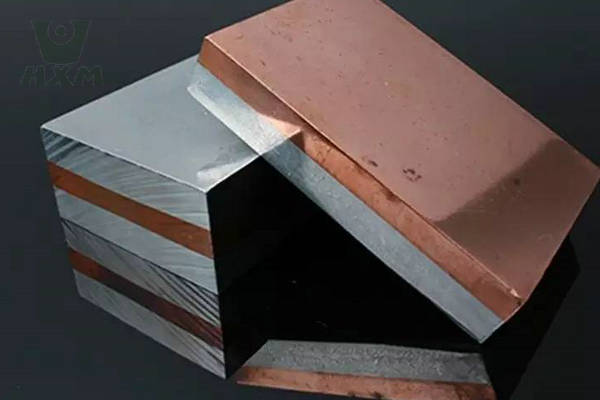
Advantages and Disadvantages
Advantages of Explosive Bonding
Superior Bond Strength: Creates a wavy, high-strength metallurgical bond that often exceeds the strength of the weaker parent metal.
Wide Material Flexibility: Can bond virtually any combination of dissimilar metals, including those that are metallurgically incompatible via fusion welding (e.g., Titanium/Steel, Zirconium/Steel, Aluminum/Steel).
Minimal Heat-Affected Zone (HAZ): The extremely short duration of the process ensures the bulk of the material remains at ambient temperature, preserving the original properties of both the clad and base metals.
Large Size Capability: Can produce very large clad plates, limited only by the handling capacity.
Limitations of Explosive Bonding
Batch Process: It is a specialized, non-continuous batch process, which can increase unit costs for standard materials.
Noise and Safety: Requires specialized, remote facilities due to the use of explosives.
Advantages of Hot Bonding
Cost Efficiency (Mass Production): Highly suitable for large-scale, continuous or semi-continuous production runs of standard material combinations (e.g., Stainless Steel/Carbon Steel).
Excellent Surface Finish: The rolling process inherently improves the surface quality and dimensional tolerances of the final product.
Uniform Thickness: Produces plates with highly uniform thickness across large areas.
Limitations of Hot Bonding
Material Compatibility: Only viable for material combinations that are metallurgically compatible and do not form excessive brittle intermetallic compounds at high processing temperatures.
HAZ and Property Change: The prolonged exposure to high temperatures can alter the mechanical properties (e.g., yield strength, grain structure) of both the clad and base metals, requiring subsequent heat treatment.
Thickness Ratio Constraint: The ratio of the clad layer to the base layer is often more constrained compared to explosive bonding.
Advantages of Cold Bonding
Preserves Material Properties: Since it avoids extreme temperatures, cold bonding is excellent for preserving the mechanical and thermal properties of heat-sensitive metals.
High Precision: Diffusion bonding, in particular, allows for the creation of intricate, high-quality bonds in complex geometries.
Minimal Deformation (DB): Diffusion Bonding results in virtually no macroscopic deformation of the components.
Limitations of Cold Bonding
High Cost (DB): Diffusion bonding is a slow, high-vacuum, and expensive process.
Limited Thickness (CRB): Cold roll bonding is generally restricted to producing thin sheets and foils.
Surface Preparation: Both methods demand extremely clean and smooth surface preparation.
Application Fields
Explosive Bonding
Application: Applicable to aerospace, defense, chemical equipment shipbuilding, etc., where high-strength and high-performance materials are required.
Hot Bonding
Application: Widely used in construction, transportation, and industrial equipment, suitable for applications requiring high corrosion resistance and strength.
Cold Bonding
Application: Applicable to some low-temperature environments or temperature-sensitive materials, often used in electronic products, building decoration and some industrial applications.
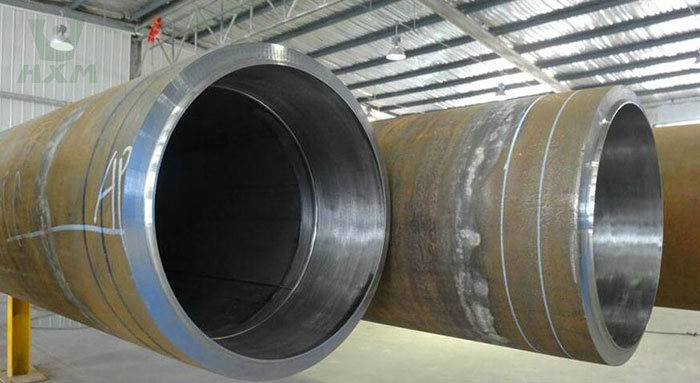
Cost and Process Complexity
When evaluating explosive bonding, hot bonding, and cold bonding processes for clad plates, cost is a critical factor. Each method’s cost level depends on production scale, equipment investment, and operational complexity. Below is a detailed comparison prepared by Huaxiao Metal, a leading clad plate manufacturer and supplier.
| Bonding Method | Production Type | Cost Level | Cost Drivers | Suitable for |
|---|---|---|---|---|
| Explosive Bonding | Batch process (discontinuous) | Higher | Requires controlled detonation site, explosives, safety setup, and post-treatment (rolling, heat treatment). High setup cost and lower production efficiency. | Dissimilar metal clad plates (e.g., stainless steel + carbon steel, titanium + steel, nickel + steel) |
| Hot Bonding (Hot Rolling Bonding) | Continuous mass production | Lower | Although equipment investment is large, continuous hot rolling allows high throughput and stable quality. Energy cost is offset by efficiency and scalability. | Large-scale industrial clad plates, boilers, tanks, and pressure vessels |
| Cold Bonding (Cold Rolling / Diffusion Bonding) | Small batch, precision process | High | Requires multiple high-pressure passes, precise surface preparation, and long bonding cycles. Low throughput increases unit cost. | Thin or precision metal clads (aluminum-copper, decorative panels, electronic materials) |
Each bonding process has its specific advantages and application scenarios. The choice of which process depends on the specific project requirements, budget, and material properties.
Comprehensive Comparison: Explosive vs. Hot vs. Cold Bonding

For a quick reference, the table below summarizes the key differentiators between the three processes:
| Feature | Explosive Bonding (EXW) | Hot Bonding (HRB) | Cold Bonding (DB/CRB) |
| Bonding Mechanism | High-velocity collision, plastic deformation | Heat and high-pressure rolling, diffusion | Pressure, time, atomic diffusion (DB) / Heavy cold work (CRB) |
| Bond Strength | Highest (Wavy interface, superior shear strength) | High | High (Dependent on process and cleanliness) |
| Temperature | Ambient (Transient, localized heat) | High (800–1000°C) (Prolonged exposure) | Low to Moderate (Controlled) |
| Material Combinations | Unlimited (Best for incompatible metals) | Limited (Requires metallurgical compatibility) | Moderate (Excellent for heat-sensitive metals) |
| Cost Profile | Higher (Batch process, specialized setup) | Lower (Mass production, continuous) | High (Specialized equipment, long cycle time) |
| Product Size | Very Large Plates and Shapes | Large Plates (Standard sizes) | Thin Sheets, Foils, or Intricate Parts |
| Impact on Base Metal | Minimal HAZ, preserves original properties | Significant HAZ, may require post-process heat treatment | Minimal HAZ (DB), High Cold Work (CRB) |
Explosive Bonding vs Hot Bonding vs Cold Bonding: Which Clad Plate Process is Best?
If you’re still confused about choosing the right bonding method after reading the above, we’ll provide a straightforward answer below.
When selecting a composite panel manufacturing process, consider the following factors:
Material compatibility – Different metals respond differently to heat and impact.
Thickness and size – Explosive bonding suits large plates; cold bonding suits thin sheets.
Mechanical strength requirements – For high-pressure vessels, explosive bonding is ideal.
Cost and efficiency – Cold bonding offers the lowest production cost for small batches.
Surface quality needs – Hot bonding provides smoother interfaces for structural applications.
At Huaxiao Metal, we analyze your project requirements to recommend the most suitable bonding solution, ensuring durability, performance, and cost-effectiveness.
Why Choose Huaxiao Metal for Your Clad Plate Needs
At Huaxiao Metal, our expertise spans all three bonding technologies, allowing us to provide an unbiased, application-driven recommendation.
Our Core Competencies:
Explosive Bonding Mastery: We operate dedicated, state-of-the-art facilities for high-precision explosive welding, guaranteeing superior bond integrity for materials like Titanium-Steel, Copper-Aluminum, and Nickel-Stainless Steel combinations. We focus on non-standard, demanding applications.
Quality Certification: Huaxiao Metal adheres to stringent international standards, including ISO 9001, ASME, and PED, ensuring every clad plate meets global safety and performance benchmarks.
End-to-End Service: From metallurgical consultation and material selection to final inspection and cutting, we offer a seamless service experience, ensuring the chosen bonding method aligns perfectly with your engineering specifications and budget.
Our Commitment: We don’t just supply metal; we deliver tailored material solutions that solve complex engineering challenges, ensuring optimal material performance and minimizing long-term maintenance costs for our global partners.
FAQ – Explosive Bonding VS Hot Bonding VS Cold Bonding
What is the strongest metal bonding method?
Explosive bonding typically provides a superior metallurgical bond with extremely high shear strength, often exceeding that of the base metals, making it the top choice for critical, high-pressure, or high-temperature applications.
Can explosive bonding join stainless steel to carbon steel?
Yes. It’s one of the most common uses for explosive welding, creating corrosion-resistant and cost-effective clad plates.
Which process is most cost-effective?
Cold bonding is generally cheaper for thin materials, while explosive bonding offers the best cost-to-performance ratio for heavy-duty applications.
Is Hot Bonding (Hot Rolling) more cost-effective than Explosive Bonding?
Generally, yes. Hot rolling is suitable for mass production of certain material combinations and standard dimensions, leading to lower per-unit costs compared to the specialized, batch-process nature of explosive bonding.
What is Cold Bonding primarily used for?
Cold bonding methods like cold rolling or diffusion bonding are often used for clad materials that are sensitive to high temperatures, or when highly precise, minimal-deformation bonding is required, such as in aerospace or electronics.
How does the thickness ratio affect the choice of bonding method?
Explosive bonding offers the greatest flexibility in thickness ratios. Hot rolling is more constrained by the rolling mill capacity and material properties, typically favoring relatively thick base metals.
What industries use clad plates the most?
Oil and gas, petrochemical, power generation, shipbuilding, and pressure vessel manufacturing.
Does Huaxiao Metal provide custom clad plate fabrication?
Yes. We offer explosive bonded, hot rolled, and cold rolled clad plates tailored to your technical requirements and standards (ASTM, ASME, DIN).
What are the most common Huaxiao Metal clad plate combinations?
Our most frequently requested combinations include Titanium/Steel, Nickel/Steel, Stainless Steel/Carbon Steel, and Copper/Aluminum, widely used in the marine and petrochemical sectors.
In Conclusion
Choosing the right composite panel manufacturing method—explosive bonding, hot rolling, or cold bonding—is a critical decision that impacts performance, safety, and cost. Explosive bonding offers ultimate strength and flexibility, hot rolling provides efficiency for compatible materials, and cold bonding offers precision for sensitive applications.
Huaxiao Metal is your trusted expert. With Huaxiao Metal, you’ll gain access to expertise in composite panel manufacturing, metal bonding technology, and global supply chain support to help you navigate these complexities.
Need a professional bimetallic solution? Contact our engineering team to discuss your project needs. We offer expert consultation and competitive quotes for explosively bonded, hot-rolled, and cold-bonded composite panels to meet your exact specifications.
Request a custom quote from Huaxiao Metal today.