The surface and core materials of the substrate used in composite-based printed circuit boards are composed of different reinforcing materials. The mechanical properties and manufacturing costs of composite-based copper clad laminates are between paper-based copper clad laminates and epoxy glass fiber cloth copper-clad laminates. The composite-based copper clad laminate substrates are mainly CEM (Composite Epoxy Material) series, among which CEM-1 and CEM-3 are the most representative.
Copper Clad Plate
What Is Copper Clad Laminate (CCL)?
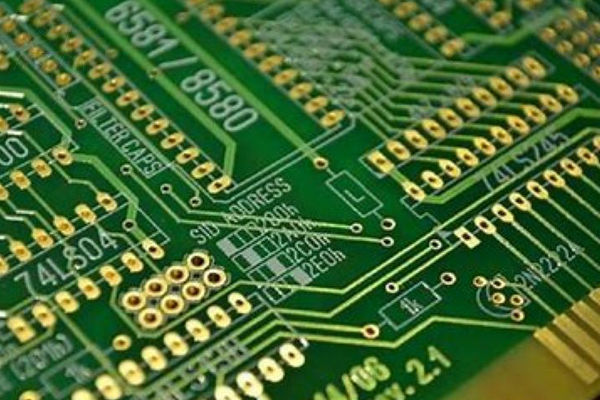
Copper Clad Laminate (CCL) is the foundational material used in manufacturing printed circuit boards (PCBs). It consists of a base substrate—usually an insulating material such as FR-4 (fiberglass reinforced epoxy), CEM-1, CEM-3, or aluminum—that is laminated with a thin layer of copper foil on one or both sides.
Key Points About CCL:
Purpose
Provides a stable platform for PCB circuits.
The copper layer is etched to form the electrical pathways needed for electronic components.
Base Material Types
FR-4: High-strength, flame-retardant fiberglass epoxy; most common for multilayer PCBs.
CEM-1/CEM-3: Paper or fiberglass epoxy-based, used for single or double-sided PCBs, more cost-effective.
Aluminum: Provides excellent heat dissipation, ideal for high-power applications like LED boards.
High-frequency laminates: Specialized materials with low dielectric constant and loss, suitable for RF and high-speed circuits.
Copper Foil
Thickness typically ranges from 18 µm (0.5 oz) to 105 µm (3 oz) per side.
Determines the current-carrying capacity and thermal conductivity of the PCB.
Applications
Used in consumer electronics, industrial control, automotive electronics, LED lighting, RF and 5G devices, and power electronics.
Key Features
Electrical insulation: Ensures signal integrity.
Mechanical strength: Supports PCB structure during fabrication and usage.
Thermal resistance: Handles soldering temperatures and operational heat.
Versatility: Available in single-sided, double-sided, or multilayer configurations.
In short, CCL is the backbone of any PCB, providing the combination of electrical, mechanical, and thermal properties required for reliable electronic devices.
Basic Structure of CCL
Copper-clad laminate (CCL) is a composite material consisting of three basic components:
Copper foil: The conductive layer that forms the circuit. Common types include electrolytic copper foil (ED) and rolled copper foil (RA). The latter is often used in high-frequency or flexible circuits due to its flexibility and excellent signal integrity.
Dielectric substrate: Provides mechanical support and electrical insulation. It is typically impregnated with a reinforcing material (such as fiberglass cloth or paper) and a resin (such as epoxy, polyimide, or PTFE).
Adhesive/prepreg (prepreg/bondply): In multilayer board manufacturing, it is used to bond the copper foil and core board together. The resin composition and glass cloth structure determine the dielectric layer thickness and electrical properties.

CEM-1 Copper Clad Laminate
CEM-1 copper-clad laminate. It is improved based on FR-3. FR-3 is a composite of paper-based impregnated epoxy resin and copper foil. CEM-1 is made by impregnating paper-based epoxy resin, compounding a layer of glass fiber cloth on both sides, and then hot-pressing it with copper foil. Therefore, CEM-1 has two more layers of glass fiber cloth than FR-3 in structure. Therefore, the comprehensive performance of CEM-1, such as mechanical strength, moisture resistance, flatness, heat resistance, and electrical performance, is better than that of paper-based CCL.
Therefore, CEM-1 can be used to make PCBs with high-frequency characteristics, such as TV tuners, power switches, ultrasonic equipment, computer power supplies, and keyboards. It can also be used for TVs, recorders, radios, electronic equipment instruments, office automation equipment, etc. CEM-1 is an ideal replacement for FR-3.
CEM-1 Copper Clad Laminate Characteristics.
① The main performance is better than that of paper-based copper-clad laminate.
② Excellent mechanical processing performance.
③ The cost is lower than that of glass fiber cloth copper clad laminate.
CEM-3 Copper Clad Laminate
CEM-3 copper clad laminate. It is an improvement on FR-4. CEM-3 is made of glass felt (also known as non-woven fabric) impregnated with epoxy resin, and then glass fiber cloth is attached to both sides and then compounded with copper foil and hot-pressed. The difference between it and FR-4 is that glass felt is used to replace most of the glass fiber cloth, which increases the degree of “cutting” in terms of mechanical properties. Usually, CEM-3 is directly made into double-sided copper-clad laminate. CEM-3 boards are easier to process than FR-4 in drilling. The reason is that glass felt is looser than glass fiber in structure, and it is also better than FR-4 in punching.
The shortcomings of CEM-3 compared with FR-4: CEM-3 is not as thick and accurate as FR4; after PCB welding, the degree of distortion is also higher than FR-4.
In short, CEM-3 is a product similar to FR-4 and can be used to make PCBs for a variety of electronic products, especially in terms of price.
CEM-3 Copper Clad Laminate Characteristics.
①Basic performance is equivalent to FR-4 copper clad laminate.
②Excellent machining performance.
③The use conditions are the same as FR-4 copper-clad laminate.
④The cost is lower than FR-4 copper clad laminate.
Some CEM-3 products are superior to general FR-4 products in terms of tracking resistance (CTI), dimensional accuracy, and dimensional stability. Using CEM-1 and CEM-3 to replace FR-4 substrates to manufacture double-sided PCBs has been widely used in Japan, Europe, the United States, and other countries and regions.
Critical Feature Assessment of Copper Clad Laminates (CCL) in PCB Selection
For engineers and procurement specialists, selecting the right CCL fundamentally involves balancing its three critical properties: electrical, thermal, and mechanical, according to the application requirements.
Key Electrical Properties: Guardians of Signal Integrity
| Performance Parameter | Symbol | Description | Importance in Selection |
| Dielectric Constant | Dk (or Permittivity epsilon r) | Measures the material’s ability to store electrical energy, directly affecting signal propagation speed. | High-Speed Signals: The lower and more stable the Dk, the better, ensuring minimal signal delay. |
| Dissipation Factor | Df (or Loss Tangent tan\delta) | Measures the energy loss (signal attenuation) within the dielectric medium. | High-Frequency Applications: Df should be as low as possible (e.g., < 0.005) to minimize transmission loss. |
| Volume/Surface Resistivity | Rho | Measures the insulation performance and resistance to leakage current. | High-Voltage/High-Reliability: Higher values indicate better insulation. |
| Dielectric Breakdown Voltage | VB | The maximum voltage the dielectric can withstand before electrical breakdown. | High-Voltage Applications: Ensures the material has sufficient margin above the operating voltage. |
Key Thermal Properties: Assurance of System Stability
| Performance Parameter | Symbol | Description | Importance in Selection |
| Glass Transition Temperature | Tg | The temperature at which the resin transitions from a rigid (glassy) state to a soft (rubbery) state. | High-Heat Applications: Higher Tg (e.g., High-Tg CCL, Tg ≥ 170℃) provides resistance to multiple reflow cycles and higher operating temperatures. |
| Decomposition Temperature | Td | The temperature at which the material begins to decompose, losing 5% of its mass. | Manufacturing Process: Td must be significantly higher than soldering temperatures to ensure processing safety and reliability. |
| Coefficient of Thermal Expansion | CTE | The degree to which a material expands when heated. | Multilayer Boards: The CCL’s CTE (especially in the Z-axis) must closely match that of copper (≈17ppm ℃) to prevent plated-through hole (PTH) failure. |
| Thermal Conductivity | k | The ability of the material to conduct heat. | Power Devices: Metal Core CCLs feature high k values for efficient heat dissipation. |
Key Mechanical Properties and Environmental Requirements
Peel Strength: The adhesion force between the copper foil and the substrate, which directly affects PCB fabrication yield and service life.
Bending Strength: Measures the rigid board’s resistance to fracture.
Water Absorption: Affects electrical performance and Tg; low water absorption CCL should be selected.
UL Flammability Rating: Industry standards require a minimum of UL94 V-0 rating.
Environmental Compliance: With increasing global regulations, Halogen-Free CCL is becoming the mainstream choice. Halogen-Free solutions from Huaxiao Metal comply fully with RoHS/REACH standards while maintaining excellent Tg and Td.
Considerations for PCB Design and Copper Clad Laminate Selection
1. Matching Signal Rate and Dielectric Properties
High-frequency PCBs or high-speed signal designs require materials with low Dk and Df to ensure signal integrity.
2. Multilayer Boards and Laminated Structures
The lamination sequence, thickness, and copper foil weight of the laminate should be selected based on the PCB design requirements to ensure a balance between mechanical strength and electrical performance.
3. Thermal Management and Heat Dissipation Design
Power PCBs require laminates with good thermal conductivity, such as aluminum substrates or high-conductivity FR-4, to ensure temperature control during long-term operation of electronic components.
4. Environmental Adaptability and Durability
Different application environments (high temperature, high humidity, and chemical corrosion) require laminates with appropriate flame retardancy and chemical resistance to ensure long-term reliability.
Long-tail keyword examples: Multilayer PCB material selection, low-loss laminate suppliers, high-temperature resistant PCB laminates
FAQ – PCB Selection and Use of Copper Clad Laminate Features
What is copper clad laminate (CCL)?
Copper clad laminate is a core material in PCB manufacturing. It consists of a base material (FR-4, CEM-1, CEM-3, etc.) and a copper clad layer, used for printed circuits.
What is the difference between FR-4 and CEM-3?
FR-4 is a glass fiber reinforced epoxy laminate with high temperature resistance and excellent mechanical strength. CEM-3 is also glass fiber reinforced, but has slightly lower temperature resistance and is more economical.
How do I choose the right copper clad laminate?
The selection depends on a comprehensive consideration of the number of PCB layers, signal rate, ambient temperature, heat dissipation requirements, and cost. Huaxiao Metal provides professional consulting and customization services.
Can PCB composite laminates be customized in thickness and copper foil weight?
Yes, Huaxiao Metal can provide customized specifications based on customer needs.
How can I get a quote for composite laminates?
Please contact Huaxiao Metal customer service and provide the plate type, size, copper foil weight and quantity to get a quick quote.
In Conclusion
Huaxiao Metal is more than just a supplier of copper clad laminates (CCL). We are your strategic technology partner for upgrading PCB performance. We understand the core role of CCL in electronic systems and are committed to helping our customers achieve superior circuit designs through high-quality products and professional engineering support.
Our Commitments:
Quality Assurance: We strictly adhere to IPC-4101 standards, and all our products are UL/ROHS/REACH certified.
Technical Support: We provide professional consulting on Dk/Df matching, stackup design optimization, and more for your PCB selection.
Supply Capacity: Leveraging our robust supply chain network, we ensure stable and timely delivery of high-reliability CCL products.
Contact Huaxiao Metal today for your customized copper clad laminate solution and the latest quote!