When selecting sheet metal for construction, fabrication, or industrial manufacturing, one of the most common questions is:
Should you choose 10 gauge, 12 gauge, or 14 gauge steel?
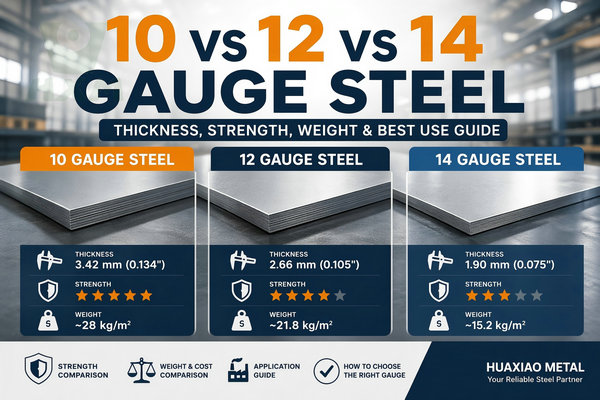
10 gauge steel = 3.42 mm → strongest & heaviest
12 gauge steel = 2.66 mm → best balance of strength & cost
14 gauge steel = 1.90 mm → lighter & easier to process
Rule: Lower gauge number = thicker steel = higher strength
Each gauge represents a different thickness, strength level, weight, and cost. Choosing the wrong gauge can lead to:
- Structural failure
- Increased production cost
- Welding and forming issues
- Reduced product lifespan
In this complete guide, Huaxiao Metal explains everything you need to know about 10 vs 12 vs 14 gauge steel, including thickness, strength, applications, and how to choose the right option for your project.
Thickness Comparison Table
Carbon Steel Gauge Chart
| Gauge | Thickness (mm) | Thickness (inch) | Relative Strength |
|---|---|---|---|
| 10 gauge | 3.42 mm | 0.135″ | ⭐⭐⭐⭐⭐ |
| 12 gauge | 2.66 mm | 0.105″ | ⭐⭐⭐⭐ |
| 14 gauge | 1.90 mm | 0.075″ | ⭐⭐⭐ |
10 Gauge Steel: Thickness, Weight, Price & Industrial Applications
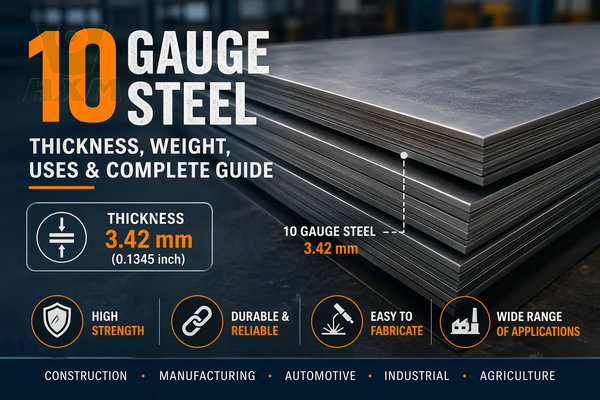
10 gauge steel is a heavy-duty sheet metal approximately 3.42 mm (0.1345 inches) thick. It is widely used in construction, manufacturing, and industrial engineering due
12 Gauge Steel – Everything You Need to Know
When it comes to industrial materials, 12 gauge metal is one of the most popular thickness options for steel, aluminum, and other alloys.In simple terms,
14 Gauge Steel – Everything You Need to Know
In the world of metal fabrication and engineering, 14 gauge steel is a household name. Its exceptional strength, workability, and cost-effectiveness make it an indispensable
Sheet Metal Gauge Chart (Complete Thickness Guide for Steel, Stainless & Aluminum)
Why Sheet Metal Gauge Matters? When it comes to sheet metal fabrication, one of the most common sources of confusion is the gauge system. Engineers,
Strength & Mechanical Performance
10 Gauge Steel
- High load-bearing capacity
- Excellent impact resistance
- Strong bending resistance
👉 Ideal for heavy-duty industrial use
12 Gauge Steel
- Medium-high strength
- Good rigidity + machinability
- Widely used across industries
👉 Most versatile option
14 Gauge Steel
- Lower strength
- Easy to bend, cut, and form
👉 Best for lightweight applications
12 gauge steel is the most commonly used thickness globally
because it offers the best balance between:
- Strength
- Weight
- Cost
- Workability
Weight Comparison
Approximate Weight per Square Meter
- 10 gauge → ~28 kg/m²
- 12 gauge → ~21.8 kg/m²
- 14 gauge → ~15.2 kg/m²
👉 Weight directly impacts:
- Shipping cost
- Installation difficulty
- Structural load
Cost Comparison
Material Cost Trend
- 10 gauge → highest cost
- 12 gauge → best cost-performance ratio
- 14 gauge → lowest cost
👉 However:
⚠ Choosing thinner steel only to reduce cost may result in:
- deformation
- shorter lifespan
- higher long-term replacement cost
Application Comparison
10 Gauge Steel Applications
- Structural frames
- Heavy equipment
- Industrial platforms
- Load-bearing structures
12 Gauge Steel Applications
- Construction panels
- HVAC systems
- Automotive components
- Machinery enclosures
👉 Most common industrial choice
14 Gauge Steel Applications
- Cabinets & furniture
- Decorative panels
- Appliance housings
- Light fabrication
10 vs 12 vs 14 Gauge: How to Choose
Choose 10 gauge steel if:
- High strength is critical
- Structure must heavy loads
Choose 12 gauge steel if:
- You need balanced performance
- Budget and strength must both be optimized
Choose 14 gauge steel if:
- Lightweight is priority
- Product requires easy forming
Many buyers choose thinner steel to reduce cost…
👉 But this can lead to:
- structural deformation
- welding issues
- shorter product lifespan
Material Differences
Gauge is NOT universal across materials
For example:
- 12 gauge carbon steel ≠ 12 gauge stainless steel
- 12 gauge aluminum uses a different system
Why?
Because gauge is based on:
- material density
- historical rolling standards
👉 Always confirm material + thickness (mm) when purchasing.
Common Buyer Mistakes
Many buyers make these mistakes:
❌ Choosing thinner gauge to reduce cost
❌ Ignoring material differences
❌ Not confirming mm thickness
❌ Selecting wrong gauge for load conditions
👉 Result:
- project failure
- increased maintenance cost
- safety risks
Why Choose Huaxiao Metal as Your Supplier
At Huaxiao Metal, we specialize in supplying:
- Carbon steel sheets (10 / 12 / 14 gauge in stock)
- Stainless steel sheets (304, 316, 430)
- Galvanized steel sheets
- Aluminum sheets
Our advantages:
- 15 years of export experience
- Precise thickness control
- Custom cutting service
- Large inventory for fast delivery
- Export experience in 50+ countries
- OEM & bulk order support
👉 Not sure which gauge is right for your project?
Contact Huaxiao Metal for professional selection advice and a fast quotation.
FAQ about 10 vs 12 vs 14 Gauge Steel
Which is thicker: 10, 12, or 14 gauge steel?
10 gauge is the thickest, followed by 12 gauge, then 14 gauge.
Is 12 gauge stronger than 14 gauge?
Yes, 12 gauge steel is significantly stronger and thicker than 14 gauge.
What gauge steel is best for construction?
12 gauge is the most commonly used due to its balance of strength and cost.
Is 14 gauge steel too thin?
It depends on the application. It is suitable for light-duty uses.
Why is 10 gauge more expensive?
Because it uses more material, making it heavier and stronger.
How do I choose between 10, 12, and 14 gauge for my project?
Selection depends on the balance between strength and weight:
Choose 10 Gauge for heavy-duty structural applications like trailer frames, industrial tanks, and load-bearing platforms.
Choose 12 Gauge for a “best-of-both-worlds” solution. It’s the most common industrial choice for HVAC, automotive parts, and machinery enclosures.
Choose 14 Gauge when weight reduction and ease of forming are priorities, such as for cabinets, furniture, and light decorative panels.
Is 12 gauge steel strong enough for outdoor structures?
Yes, 12 gauge steel is highly versatile and offers excellent structural integrity for most medium-duty outdoor applications. However, for extreme environments or high-stress loads, upgrading to 10 gauge may prevent long-term deformation. At Huaxiao Metal, we recommend considering the material grade (like 304 or 316 stainless) alongside the gauge for maximum durability.
Does 12 gauge steel have the same thickness for both Carbon Steel and Aluminum?
No. A common buyer mistake is assuming gauge is universal. 12 gauge carbon steel is approximately 2.66 mm, whereas 12 gauge aluminum is approximately 2.05 mm. Always specify the material type when requesting a quote to ensure you receive the correct thickness.
Can Huaxiao Metal provide custom sizes for these gauges?
Absolutely. We maintain a large inventory of 10, 12, and 14 gauge sheets in carbon steel, stainless steel, and galvanized steel. We offer precision laser cutting and custom shearing services to meet your specific project dimensions, ensuring fast delivery for bulk orders.
In Conclusion
Choosing between 10 vs 12 vs 14 gauge steel depends on your project requirements:
- Need maximum strength → 10 gauge
- Need balanced performance → 12 gauge
- Need lightweight fabrication → 14 gauge
👉 In most industrial applications, 12 gauge steel is the optimal choice.
At Huaxiao Metal, we help global buyers select the right steel thickness for their applications.
👉 Contact us today for:
- Technical guidance
- Gauge selection support
- Latest steel prices
- Bulk order discounts