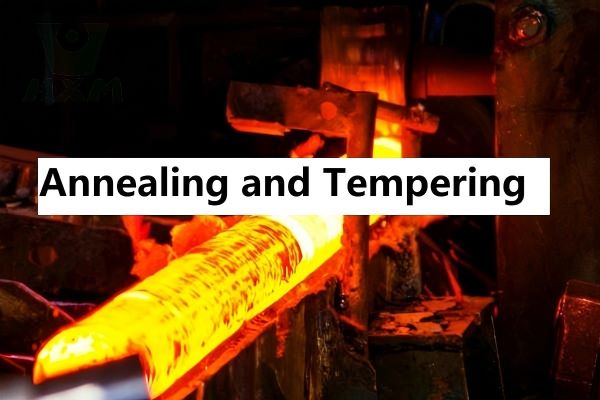
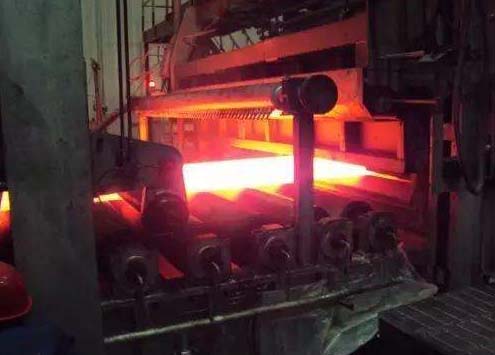
In the vast field of metal heat treatment, annealing and tempering are two of the most fundamental and critical processes, yet they are also the most easily confused by non-experts. For engineers, designers, and international buyers dedicated to producing high-quality, high-performance parts, understanding the differences between annealing and tempering and choosing the right process is a crucial first step in ensuring the ultimate material properties and component durability.
Heat treatment is more than just heating and cooling; it’s the science of manipulating a material’s microstructure. By precisely controlling temperature and time, we can alter a metal’s internal grain structure, eliminate internal stresses, and thus impart entirely new mechanical properties.
Written by Huaxiao Metal’s team of experienced experts, this article aims to provide a professional, accessible, and comprehensive guide that thoroughly deciphers the essential differences between annealing and tempering, offering a comprehensive comparison of their definitions, purposes, process flows, and microstructural transformations. Whether you’re new to the metals industry or an international buyer seeking reliable, customized metal heat treatment solutions, this guide will be a crucial reference for optimizing your supply chain and improving product quality. With Huaxiao Metal’s professional perspective, we will help you achieve the ultimate balance of material properties.
What is Annealing?
Annealing, often referred to as the “softening” process in heat treatment, is a fundamental technique used to adjust the properties of a metallic material before subsequent processing or final use.
Precise Definition and Core Objectives of Annealing
Annealing is a heat treatment process that involves heating a metal or alloy to an appropriate temperature (typically at or above the recrystallization temperature), holding it there for a sufficient duration, and then cooling it at an extremely slow rate.
Core Objectives:
The primary goal of the annealing process is to achieve a material state close to thermodynamic equilibrium, which accomplishes the following key effects:
Reduce Hardness, Increase Ductility and Toughness: This is the most crucial objective of annealing, making the material easier to machine, cold-work (e.g., stamping, drawing), and form.
Eliminate Internal Stresses (Stress Relief): Internal stresses, often caused by cold working, casting, welding, or uneven cooling, can lead to component distortion or cracking during use. Annealing relieves these internal tensions.
Refine Grain Structure and Homogenize Microstructure: It improves the coarse, non-uniform structural defects resulting from uneven casting or hot working.
Improve Machinability: For high-carbon steels, spheroidizing annealing converts flake-like carbides into spherical particles, significantly enhancing cutability and machinability.
Types of Annealing and Typical Processes
Annealing is not a single process; it encompasses various sub-processes depending on the heating temperature and cooling method, tailored to different materials and property requirements.
1. Full Annealing
Applicable Materials: Hypoeutectoid steels (carbon content less than 0.8%).
Temperature Control: Heated to 30∼50∘C above the Ac3 (upper critical temperature).
Process Characteristics: Held for enough time for the structure to fully austenitize, followed by very slow cooling in the furnace down to 500∼600∘C, then air cooled.
Effect: Achieves a fine and uniform microstructure of ferrite and pearlite, resulting in more consistent properties.
2. Spheroidizing Annealing
Applicable Materials: High-carbon steels (e.g., tool steels) and bearing steels.
Temperature Control: Heated to around or fluctuating slightly above the Ac1 (lower critical temperature).
Process Characteristics: Long holding time to allow the flake-like carbides in the steel to transform into a spherical shape; slow cooling rate.
Effect: Significantly reduces hardness, improving the machinability and cold-deforming properties of high-carbon steel.
3. Stress Relief Annealing
Applicable Materials: Castings, weldments, and parts after cold plastic deformation.
Temperature Control: Heated to 500∼650∘C (below Ac1).
Process Characteristics: Heated, held, and then cooled slowly in the furnace.
Effect: Eliminates internal residual stresses caused by uneven cooling or plastic deformation, preventing deformation and cracking during subsequent machining or use. This is crucial for precision part stress relief annealing services.
Typical Process Curve for Annealing
The key to annealing is the slow cooling. This extremely low cooling rate ensures atoms have sufficient time for diffusion and rearrangement, allowing the microstructure to approach thermodynamic equilibrium, thus maximizing softness and stress relief.

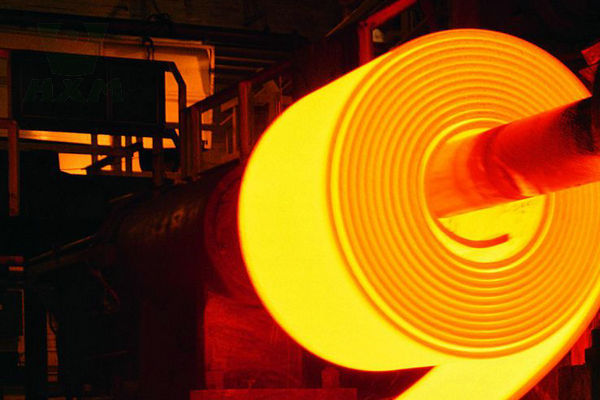
Does your project require complex cold working or deep drawing? Huaxiao Metal provides high-quality steel plates and coils that have been perfectly annealed to ensure optimal processing performance.
What is Tempering?
In contrast to annealing, the Tempering process is not an independent, preparatory procedure. It is an absolutely essential subsequent step after quenching (hardening), and it is the decisive means of achieving a balance between strength and toughness in steel.
Precise Definition and Core Objectives of Tempering
Tempering is a heat treatment process that involves reheating quenched (hardened) steel parts to a specific temperature below the Ac1 (lower critical point), holding them for an appropriate time, and then cooling them to room temperature.
Core Objectives:
Tempering’s main goal is to modify the non-equilibrium martensitic structure created by quenching, specifically to eliminate its inherent brittleness and achieve the desired combination of mechanical properties:
Eliminate Internal Stresses from Quenching: Quenching creates enormous internal stresses. If not immediately tempered, the part is highly susceptible to brittle fracture either during use or even immediately after quenching.
Reduce Brittleness, Enhance Toughness and Ductility: This is the most crucial function of tempering. The decomposition of martensite increases the material’s impact resistance and energy absorption capacity.
Adjust Hardness to Achieve Optimal Property Combination: By precisely controlling the tempering temperature, the final hardness can be fine-tuned, ensuring the steel achieves the best balance of strength, hardness, and toughness. This is particularly vital for high-strength steel tempering processes.
The Three Main Classes of Tempering and Their Effects
Based on the reheating temperature, tempering has distinctly different effects on the quenched microstructure, which determines the steel’s final application.
1. Low-Temperature Tempering
Temperature Range: 150∼250∘C.
Microstructural Change: Very fine carbides precipitate from the martensite, resulting in tempered martensite.
Effect: Maintains high hardness and wear resistance while slightly reducing internal stress and brittleness.
Typical Applications: Rolling bearings, measuring tools, case-hardened components, and cold-work molds.
2. Medium-Temperature Tempering
Temperature Range: 350∼500∘C.
Microstructural Change: Results in tempered troostite.
Effect: Achieves a high elastic limit and yield strength, along with moderate toughness.
Typical Applications: Springs and hot-work dies/molds.
3. High-Temperature Tempering
Temperature Range: 500∼650∘C.
Microstructural Change: Results in tempered sorbite.
Effect: Significantly increases ductility and toughness while retaining high strength.
Typical Applications: Combined with quenching, this process is known as Quenching and Tempering (Q&T) or ‘Ausschrecken’, the standard process for critical structural components like shafts, gears, and connecting rods.
Typical Process Curve for Tempering
The key to tempering is precise temperature control and the holding time. The cooling rate is relatively flexible; air cooling is often used to avoid introducing new stresses.
Looking for a durable material that combines high strength and toughness? Our tempered steels are used in demanding applications such as tools, automotive parts, springs, and more.
Annealing and Tempering: Key Differences
Although both annealing and tempering involve heating and cooling, there are essential and irreplaceable differences in the roles they play in the heat treatment process, their purpose, and their impact on the material’s microstructure.
| Comparison Dimension | Annealing | Tempering |
|---|---|---|
| Fundamental Purpose | Softening, stress relief, and improving ductility | Toughening, reducing brittleness, and balancing hardness and toughness |
| Process Prerequisite | Independent process | Must be performed after quenching |
| Heating Temperature | High (above the upper critical point Ac3) | Low (below the lower critical point Ac1) |
| Cooling Rate | Extremely slow (furnace cooling) | Relatively fast (air cooling, oil quenching, etc.) |
| Final Properties | Low hardness, low strength, high ductility | High hardness, high strength, high toughness (a balance of rigidity and toughness) |
| Cost Consideration | Higher (due to long furnace cooling time and equipment occupation) | Moderate (an additional step after quenching) |
| Application Scenario | Pre-processing before machining | Final treatment of finished products |
To fully understand the differences between the two, we must focus on their fundamental microstructural distinctions:
Annealing pursues “balance”: Annealing heats the metal to a high temperature to promote regrowth and homogenization of the austenite grains. Then, through extremely slow cooling, the austenite has ample time to decompose into balanced, stable ferrite and pearlite. This process minimizes lattice distortion, resulting in the softest material and the highest plasticity.
Tempering creates “stress”: Quenching cools the steel extremely rapidly, preventing the austenite from decomposing and forcing it to transform into martensite. Martensite is a non-equilibrium structure characterized by high hardness, high brittleness, and significant internal stress. Tempering is a secondary heating process specifically applied to martensite. Its purpose is not to return to equilibrium, but rather to induce precipitation of supersaturated carbon atoms within the martensite, forming extremely fine carbides. This alleviates lattice distortion, eliminates internal stress, and significantly improves toughness while maintaining a certain hardness.
Conclusion: Annealing is a softening process starting from scratch; whereas tempering is a correction to extreme hardening (quenching).
Common Myths and Clarifications: Avoid Costly Mistakes
It’s not enough to just know the definitions; here are a few of the most common myths engineers and purchasers encounter. Clarifying them can help you save time and money.
Myth 1: “Tempering can be done alone.”
Clarification: Not. The value of tempering is to optimize the properties after “quenching”. Tempering a piece of ordinary steel that has not been quenched has almost no practical effect and is a pure waste of energy. It is important to remember that tempering is part of the combination of “quenching and tempering (quenching + tempering)”.
Myth 2: “Annealing and normalizing are the same things.”
Clarification: They are close relatives, but not the same thing. The main difference between the two is the cooling rate: annealing pursues the softest state and uses very slow furnace cooling, while normalizing pursues a balance of strength and toughness and uses faster air cooling. Therefore, the material after normalizing is slightly harder and usually costs less.
Myth 3: “The higher the tempering temperature, the better the toughness.”
Clarification: This is not true. Many types of steel have a “temper brittleness zone” (such as the first type of temper brittleness zone, 250°C-400°C). Tempering in these temperature ranges will reduce the toughness of the steel. Choosing the correct tempering temperature is a technical job that requires rich experience and precise control.
How to Choose: Annealing or Tempering?
For international customers and buyers, choosing the right metal heat treatment service is crucial for controlling costs, ensuring product functionality, and extending product life.
When to Choose Annealing:
Annealing is used in the following scenarios where material flexibility, machinability, or stress relief are required:
Preparing for Further Processing: When plastic deformation operations such as deep drawing, cold drawing, or cold heading are required on sheet or bar material, the material must maintain maximum plasticity. Full annealing is a necessary pretreatment.
Improving Machinability: For high-carbon alloy steels or tool steels, their initial hardness may be extremely high, making them difficult to cut. Spheroidizing annealing can significantly improve machinability, reduce tool wear, and increase machining efficiency.
Large Parts and Precision Weldments: Large castings or complex welded structures are subject to significant internal stresses. Stress relief annealing for precision parts can eliminate these stresses, preventing unpredictable deformation or cracking during storage or finishing.
When to Choose Tempering:
Tempering is used to impart high performance, toughness, and impact resistance to the final product:
High-strength structural parts: Parts such as automotive axles, aircraft landing gear components, and heavy machinery gears that must withstand high loads and impact require tempering (quenching followed by high-temperature tempering) to achieve the optimal balance of strength and toughness.
Tools and dies: Tools such as cutting tools, punches, and die-casting molds that require high hardness and wear resistance are typically quenched and tempered at low temperatures to maintain hardness while resisting shock and vibration.
Springs and elastic components: Intermediate-temperature tempering imparts the highest elastic limit and yield strength to the material, ensuring that springs, torsion bars, and other components resist permanent deformation under long-term stress.
How Huaxiao Metal Meets Your Needs?
Theoretical knowledge must ultimately be implemented into high-quality products. At Huaxiao Metal, we ensure that every heat-treated product exceeds your expectations in the following ways:
Precision temperature control capability: Our heat treatment furnaces are equipped with advanced PID temperature control systems and multi-point thermocouples to ensure that the temperature difference in the furnace is less than ±5°C. This means that your parts can get a uniform and consistent heat treatment effect.
Strict process execution: We have developed a standard operating procedure (SOP) for each material, which specifies the heating rate, holding time, and cooling curve in detail. All processes are recorded to ensure 100% traceability.
Reliable hardness testing: We will use a calibrated Rockwell hardness tester (HRC) to test each batch of processed products, and we can provide you with a detailed material performance report to ensure that the delivered products fully meet the technical requirements.
Proactive technical suggestions: Our engineers will not only execute orders, but also help you analyze applications. If we find that there is room for optimization in the process you choose, we will proactively communicate with you to help you find the best balance between performance and cost.
At Huaxiao Metal, we are not just a material supplier, but also your technical partner. We provide high-quality carbon steel, stainless steel, and special alloy materials in various specifications, and can provide customized products with precise heat treatment according to your specific requirements.
Whether your project requires easy-to-form annealed plates or strong and durable tempered parts, our strict quality control system and professional service team can ensure that you get metal materials with excellent performance and reliable quality.
FAQ
What is stress relieving? Is it the same as annealing?
No. Stress relieving is a relatively low-temperature heat treatment whose sole purpose is to eliminate or reduce the internal stress of the material without significantly changing its hardness and microstructure. Full annealing, on the other hand, is performed at a higher temperature, which completely changes the microstructure of the material and significantly reduces its hardness. It can be said that stress relieving “only relieves fatigue, does not change the character”, while annealing “completely reshapes the character”.
How do I know if the steel has been properly tempered?
The most reliable method is to perform a hardness test. The technical drawings of parts that have been quenched and tempered (quenched + tempered) usually clearly indicate the hardness requirements, such as “HRC 48-52”. Suppliers should use equipment such as Rockwell hardness testers for testing and be able to provide a material inspection certificate (MTC) containing the hardness test results. This is also a standard service provided by Huaxiao Metal for each batch of products.
Annealing and tempering, which process takes longer?
Annealing takes much longer. This is because the most critical step of annealing is “cooling with the furnace”, that is, letting the workpiece cool naturally in the furnace extremely slowly, which may take more than ten hours or even longer. The heating and cooling process of tempering is relatively much faster. Therefore, from the perspective of production cycle and cost, annealing is usually more expensive than tempering.
What is the significance of the surface color of steel after tempering?
This is a good observation point! During tempering, a thin oxide film will form on the surface of the steel, and its color will change with the increase of temperature, from light yellow (about 220°C) to straw yellow, brown, purple, and finally to dark blue (about 300°C and above). In the past, experienced technicians would judge the tempering temperature by observing the color. But in modern industrial production, we rely on precise temperature controllers, not color, to ensure the accuracy and consistency of the process.
In addition to steel, can other metals (such as aluminum and copper) undergo these treatments?
Yes, but they are different. Annealing is a process that is widely applicable to a variety of metals, including aluminum alloys, copper, brass, etc., and its purpose is to soften the material and improve the processability. The concept of tempering is mainly associated with hardened steel because its purpose is to reduce the brittleness caused by quenching. For some aluminum alloys, there is a similar but different process called “aging” to improve their strength.
Why must tempering be performed after quenching?
Tempering is a process specifically designed to eliminate the drawbacks of quenching. While quenching imparts extremely high hardness to steel, it also forms a brittle martensitic structure with significant internal stresses. Without tempering, these parts are highly susceptible to brittle fracture or failure during use. Therefore, tempering follows the quenching process to toughen the steel and eliminate internal stresses.
Which takes longer in the heat treatment cycle, annealing or tempering?
Annealing is generally more time-consuming. The key to successful annealing lies in an extremely slow cooling process (usually furnace cooling, which can take dozens of hours) to ensure complete and balanced microstructural transformation. In contrast, tempering uses a lower heating temperature and a relatively rapid cooling rate (often using air cooling), so the tempering cycle is typically much shorter than a full annealing.
What is "Quenching and Tempering (Q&T) Treatment," and how does it relate to Annealing and Tempering?
Quenching and Tempering (Q&T) is a vital concept in metal heat treatment. It specifically refers to the combined process of quenching (hardening) followed by high-temperature tempering. Its primary purpose is to achieve a high and balanced combination of strength and toughness, making it the standard method for treating critical structural components such as shafts and connecting rods.
Relationship to Annealing: It differs from annealing because their objectives are fundamentally different (annealing is for softening and relieving stress, whereas Q&T is for strengthening and toughening).
Relationship to Tempering: High-temperature tempering is simply the second, essential step in the overall Quenching and Tempering (Q&T) process.
What are the consequences if I skip the heat treatment step or perform the incorrect process?
Omitting or incorrectly performing the annealing and tempering steps can lead to serious metal heat treatment failures:
Unannealed: The material is too hard to cold work, or residual stresses can cause deformation after finishing.
Untempered (or the tempering temperature is too low): The quenched component is brittle and has poor impact resistance, making it prone to sudden fracture during use.
In Conclusion
Understanding the essential differences between annealing and tempering is fundamental to making the right material decisions. Annealing softens, relieves stresses, and prepares for machining, making it the first step in improving material machinability. Tempering, on the other hand, aims to toughen, reduce brittleness, and optimize performance, making it a critical step after quenching for component reliability. The differences in temperature, purpose, and microstructural transformation between annealing and tempering define their unique roles within the heat treatment process.
As your trusted international metal heat treatment service partner, [Huaxiao Metal] is committed to providing annealing and tempering solutions that meet the highest international standards. Our team of dedicated engineers not only precisely executes standard processes but also excels in providing customized metal heat treatment solutions for your high-strength steel and precision parts, ensuring that each batch of material possesses the most stable and reliable comprehensive mechanical properties.
Don’t let improper heat treatment compromise the quality, lifespan, and reputation of your products. Contact our dedicated team today to receive a quote for your customized heat treatment services, or email us for more information on the differences and applications of annealing and tempering.
Whether you need easy-to-process annealed steel or strong and durable tempered parts, Huaxiao Metal is your trusted partner. Contact us now for a free quote and professional material solutions!