Electrical steel is the most important metal functional material for various electrical components. Oriented electrical steel is the core material for making iron cores of various oriented magnetic field electrical products such as transformers, ballasts, amplifiers, voltage regulators, relays, rectifiers, electromagnetic switches, etc. Utilizing the excellent magnetization properties of Goss-oriented grains in the rolling direction, oriented electrical steel is mainly used to make iron cores for oriented magnetic fields to reduce magneto-induced losses and significantly increase the magnetic induction level.
Oriented electrical steel, especially high magnetic induction oriented electrical steel, is an indispensable material for manufacturing large transformers, generators, and motor cores. It has the advantages of energy saving and significant reduction in volume and mass and can meet the needs of large nuclear power plants, hydropower plants, and thermal power plants.
In recent years, China’s significant growth in power generation and the rise of the manufacturing industry have driven strong demand for oriented electrical steel, bringing good development opportunities for China to research, produce, and develop oriented electrical steel.
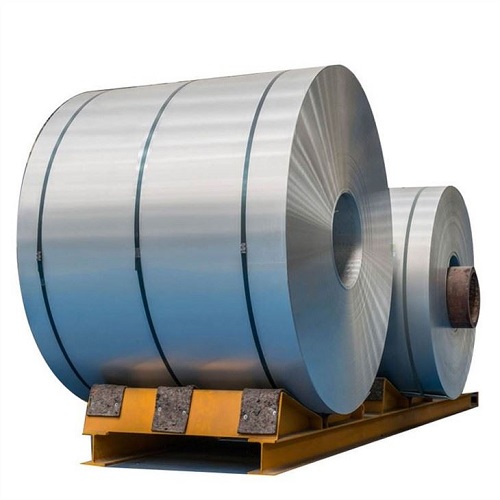
Non-Oriented Electrical Steel
Non-Oriented Electrical Steel Manufacturer As a professional Non-Oriented Electrical Steel manufacturer and supplier, we are committed to providing excellent non-oriented silicon steel products to meet
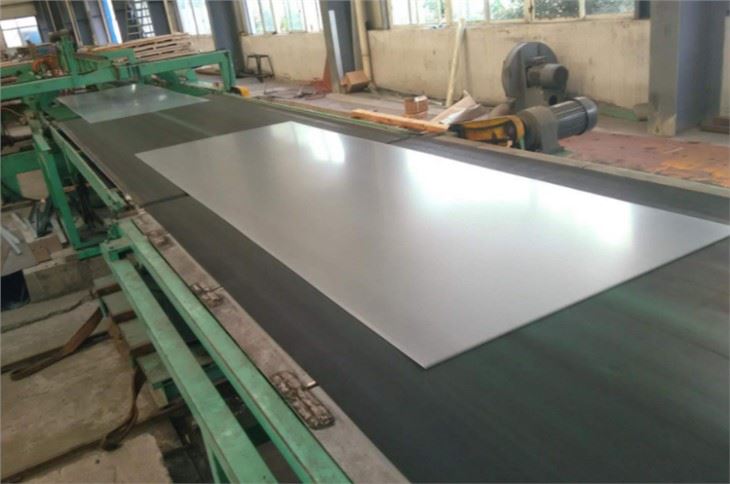
Grain Oriented Electrical Steel
Grain Oriented Electrical Steel Manufacturers As a professional Grain Oriented Electrical Steel manufacturer and supplier, we lead advanced production technology to ensure that our products
Electrical Steel
Silicon Steel Electrical Steel Manufacturers & Factory As a dedicated Silicon Steel and Electrical Steel manufacturer, we are committed to delivering high-quality products that cater
Overview of the Development of Oriented Electrical Steel
In 1934, Goss of the United States published a patent for the production method of oriented electrical steel sheets. The main feature of this method is that MnS is used as an inhibitor and a secondary cold-rolling method is used. The difficulty of this method is that it must adopt a high-temperature heating process for the ingot, which was discovered by Armco in a hot rolling accident. Due to the hot rolling accident, the ingot was kept in the furnace for a longer time and the temperature of the slab increased.
As a result, it was found that the magnetic properties of this batch of materials were good and stable. It can be said that Goss’s production method of oriented electrical steel is technical know-how obtained from experience and hard work.
In the production and development of oriented electrical steel, the production of high magnetic induction oriented electrical steel (Hi-B) is epoch-making. In the research and development of Hi-B, Professor Kotaro Honda of the Institute of Aerospace Research, University of Tokyo, and researchers Satoru Taguchi and Akira Sakakura of Nippon Steel Corporation must be mentioned. They spent 16 years exploring the production of Hi-B steel by a single cold-rolling method after various tests on nearly 6,000 hot-rolled plates.
Although Nippon Steel introduced the production patent of oriented electrical steel from Armco in the United States in 1958, they still devoted themselves to studying the single cold rolling method of oriented electrical steel. The core of Hi-B steel production is the control of AIN, including the control of smelting composition and hot-rolled plate annealing conditions.
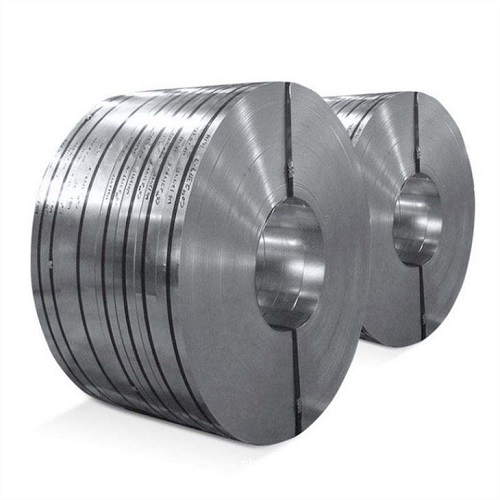
Current Production Process of Oriented Electrical Steel
The production of directional silicon steel involves a complex, multi-step metallurgical process aimed at achieving a highly consistent {110}⟨001⟩ Goss orientation, ensuring excellent unidirectional magnetic properties.
Steelmaking and Slab Preparation: Purity is the Foundation
The magnetic properties of directional silicon steel are extremely sensitive to the purity of its chemical composition and inclusions. High-standard metallurgical techniques, such as vacuum refining, must be employed during production to achieve ultra-low control of impurity elements such as carbon (C), nitrogen (N), sulfur, and oxygen. Strict impurity control in directional silicon steel is a key prerequisite for ensuring ultimate magnetic properties.
Hot Rolling and Pickling: Key to Microstructure Homogeneity
Slabs cast after steelmaking undergo hot rolling. The goal of hot rolling is to transform thick slabs into thin strips and achieve a uniform, fine-grained structure. Accurate control of the hot rolling temperature and final rolling temperature is crucial for ensuring microstructure homogeneity in the hot strip, which directly impacts deformation uniformity during subsequent cold rolling.
Cold Rolling Technology: Determining Final Thickness and Performance
Cold rolling is a critical step in reducing hot-rolled strip to the finished thickness (typically 0.23mm or 0.30mm). During the cold rolling process, the amount of deformation must be precisely calculated and controlled to facilitate the formation of the correct recrystallization texture. For high-end products such as Hi-B steel, we focus particularly on key cold-rolled directional silicon steel technologies to ensure superior thickness control accuracy.
Decarburization Annealing and Primary Recrystallization: Formation of Goss Nuclei
This is a heat treatment step performed after cold rolling. Heating in a wet hydrogen atmosphere achieves efficient decarburization and simultaneously forms the primary recrystallization grain structure. Controlling the temperature and atmosphere during this stage is crucial for successfully achieving Goss orientation formation and controlling the primary recrystallization structure.
Secondary Recrystallization and High-Temperature Annealing: The Ultimate Leap Forward in Magnetic Properties
This is the most critical step in directional silicon steel production. Its goal is to selectively and abnormally grow nuclei with a Goss orientation through the action of inhibitors. Annealing temperatures can reach up to 1200°C. Precise temperature control and pure hydrogen atmosphere control are the guarantee of success and are also the core technology for manufacturing high-end Hi-B steel.
Difficulties and key points in the production process of oriented electrical steel
1) One of the difficulties in smelting is the narrow range of composition control. The allowable fluctuation range of composition is much narrower than that of ordinary low-carbon steel and cold-rolled thin plate steel. In particular, the thinner the plate, the narrower the composition range, which is difficult to achieve with general smelting process equipment and analytical methods. Composition fluctuations directly affect the performance of each process and the final product.
Composition control is mainly carried out using vacuum refining equipment, which involves alloy weighing and rapid and accurate analysis of composition. Reducing composition fluctuations involves the entire process of steelmaking and continuous casting, especially refining and continuous casting.
2) The second difficulty in smelting is purity control. Purity control includes not only reducing oxide inclusions but also reducing elements NB, V, and Ti that form stable carbides and elements Mg, Ca that form sulfides, which directly affect the precipitation behavior of inhibitors. These elements are mainly brought into molten steel with scrap steel, ferroalloys, and refractory materials, and the procurement and management of these raw and auxiliary materials must be strengthened.
3) The third difficulty in smelting is the composition segregation and cracking of the ingot. Due to the high sulfur content and low manganese content of oriented electrical steel, the ingot is prone to internal cracks and segregation. The solution is to adopt low superheat casting, electromagnetic stirring, and light pressure reduction of the ingot, and regularly adjust the casting machine to reduce the central segregation and internal cracking caused by high sulfur and reduce the columnar crystal ratio.
4) The difficulty of the hot rolling process is the high-temperature heating of the ingot. To make inhibitors such as MnS and AlN, especially MnS, completely dissolve, the ingot needs to be heated at high temperatures and kept warm for a period, which is easy to causes oxidation and burning of the ingot. Nippon Steel sprays an antioxidant on the surface of the ingot above 300°C before heating it in the furnace.
Kawasaki Steel sprays MoO3 or CaMoO4 aqueous solution on the surface of the ingot above 500°C to prevent grain boundary cracks caused by high-temperature heating and improve the surface quality of the product. Some manufacturers apply anti-oxidation coatings to the ingot before entering the furnace.
5) The focus of the cold rolling process is high-temperature annealing. For generally oriented electrical steel, to obtain good grain orientation, a slower heating rate should be used to ensure that grains with good orientation grow first and undergo secondary recrystallization. For Hi-B steel, the temperature and atmosphere at each stage of the high-temperature annealing process must be controlled to ensure magnetic properties and form a good bottom layer.
Low-temperature heating process in oriented electrical steel
Lowering the heating temperature of oriented electrical steel slabs has the advantages of avoiding the formation of liquid slag, reducing the maintenance of heating furnaces, obtaining higher metal yields, and preventing undesirable grain coarsening in the middle of the slab. In recent years, when studying the low-temperature heating of slabs, people have added other substances besides manganese sulfide to strengthen the inhibitors to ensure the strength of the inhibitors, such as nitrides and grain boundary precipitation elements.
The solid solution temperature of aluminum nitride is lower than that of manganese sulfide, which is more suitable for low-temperature heating. At present, the production method of the low-temperature heating process of slabs used in industry is to use aluminum nitride as an inhibitor and perform nitriding treatment before the start of secondary recrystallization, or to use aluminum nitride as the main inhibitor and Cu2S and manganese sulfide as auxiliary inhibitors.
The means is to nitride into the steel so that it combines with the original elements in the steel to form aluminum nitride precipitates with an inhibitor function. According to the aluminum nitride scheme, the heating temperature of the slab can be reduced to 1150-1200℃. To obtain a complete secondary recrystallization structure, high magnetism, and good glass film, corresponding composition adjustment, and process improvement are required.
The characteristics of the new Hi-B process studied by Nippon Steel are: aluminum nitride is used as an inhibitor, the slab heating temperature is reduced to 1150-1250℃, and after decarburization annealing, nitriding treatment is carried out in an H2+N2 atmosphere containing NH3. The one-time cold rolling method can produce products with a thickness of 0.18-0.50mm, and it is easier to make new products without glass film.
Sumitomo Metal proposed a low-carbon 1.5%Mn-2.2%Si-oriented electrical steel process with aluminum nitride as an inhibitor to reduce the heating temperature of the slab. Posco Iron and Steel Company of South Korea proposed a process of using aluminum nitride as the main inhibitor, Cu2S, and manganese sulfide as auxiliary inhibitors and heating the slab at 1250-1320℃ to produce general oriented electrical steel and high magnetic induction oriented electrical steel.
Key Challenges and Quality Control Essentials
The production of grain-oriented silicon steel is a precise science, and any minor deviation in the process can severely impact the final magnetic properties.
Major Technical Difficulties in the Production Process
| Difficulty Area | Technical Challenge Description | Industry Countermeasures |
| Achieving High Magnetic Induction (Hi-B) | The type, quantity, and precipitation size of inhibitors are difficult to control precisely, often leading to suboptimal Goss orientation in the final grain structure. | Optimizing inhibitor systems, such as utilizing new nitride inhibitors, to ensure the stable production of high-quality Hi-B Steel. |
| Optimizing Core Loss | Large magnetic domain widths result in high Core Loss (P1.7/50), affecting transformer energy efficiency. | Employing advanced Laser Scribing Technology or mechanical scribing to introduce strain on the steel surface, refine magnetic domains, and effectively reduce losses. |
| Application of Surface Insulation Coating | Challenges related to coating adhesion, electrical insulation, and internal stress control. | Utilizing C-L coatings or heat-resistant coatings to provide stress relief and prevent the degradation of magnetic properties. |
Huaxiao Metal’s Solutions and Quality Assurance
As a professional supplier of grain-oriented silicon steel, Huaxiao Metal deeply understands the critical importance of high-quality materials to our clients’ projects.
Technological Advantage: To address the difficulty of impurity control, we utilize industry-leading [Type X Vacuum Refining Technology], ensuring ultra-high steel purity and fundamentally guaranteeing the basis for excellent magnetic properties.
Performance Enhancement Case: “Through precise atmosphere and temperature control optimization during the Secondary Recrystallization stage, we have successfully reduced the average Core Loss of select products by over 5%, surpassing industry benchmarks and helping our clients’ transformers achieve the latest High-Efficiency certifications.”
All our products undergo rigorous testing according to international standards, ensuring that core indicators such as Magnetic Flux Density and Core Loss are maintained at a leading level for every batch of material.
Core Application Scenarios for Grain-Oriented Silicon Steel
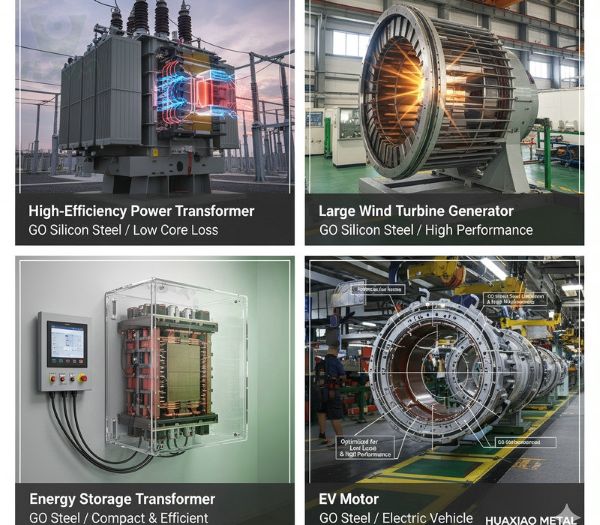
Grain-oriented silicon steel is primarily used in equipment that converts electrical energy into magnetic energy and vice versa.
Power transformers: This is the primary market, particularly in ultra-high voltage transformers and large-scale power grid projects, where there is a huge demand for low-loss silicon steel.
Large generators: Widely used in hydropower, wind power, and thermal power generators.
Emerging Areas: With the development of smart grids, energy storage transformers and high-frequency transformers are placing new demands on higher-performance, thinner-gauge oriented silicon steel.
In Conclusion
The production process of grain-oriented silicon steel is complex and involves high technical barriers. Its quality is directly related to the energy efficiency and stability of the national power grid. Continuous technological innovation, especially the mastery of Hi-B steel and ultra-low iron loss technologies, is key to a company’s competitiveness.
As a professional supplier of grain-oriented silicon steel, Huaxiao Metal is committed to providing high-performance Hi-B steel products and boasts comprehensive service capabilities, from material research and development to precision processing.