As technology continues to advance, people’s concerns about safety are also increasing. In the field of bulletproofing, AR500 steel has attracted much attention due to its strong performance. However, its bulletproof capabilities require a deeper dive to understand its role and limitations in real-world applications.
AR500 steel is one of the most discussed materials in the fields of shooting sports, ballistic protection, and target manufacturing. Known for its exceptional hardness and durability, AR500 is widely used for steel targets and body armor.
But the question remains: Is AR500 steel bulletproof? The short answer is it depends on the thickness, the type of bullet, and the presence of protective coatings. This guide explores the science, testing data, and real-world applications of AR500 steel so you can understand its true ballistic capabilities.
What is AR500 Steel?
AR500 steel is an abrasion-resistant (AR) steel with a Brinell Hardness Number (BHN) typically between 470–530. The “AR” stands for abrasion resistant, while the “500” represents its nominal hardness rating.
Key Features:
High hardness → Excellent resistance against wear and ballistic impact.
Toughness → Maintains structural integrity even after repeated impacts.
Versatility → Used in targets, ballistic plates, mining equipment, and industrial applications.
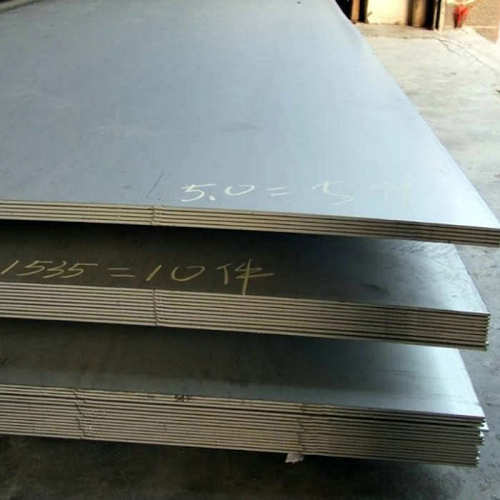
Wear Resistant NM/AR500 Steel Plate
Wear Resistant Steel – NM500 AR500 Steel Plate Our NM500 and AR500 wear-resistant steel plates are designed to cope with extreme wear environments. They have
It is produced by professional steel suppliers and manufacturers and achieves this hardness through heat treatment. Due to its balance between hardness and toughness, AR500 remains one of the most widely used materials in the field of bulletproofing.
Contact Huaxiao Metal today to consult pricing, check stock availability, and source AR500 armor directly from trusted manufacturers.
The Truth About AR500 Steel's "Bullet Resistance": What Does It Protect Against?
AR500 steel is a high-carbon, high-hardness, wear-resistant steel plate. The “AR” in its name stands for “Abrasion Resistant,” while the “500” generally refers to its Brinell Hardness Number of approximately 500 HBW. It’s this exceptional hardness that gives it its ability to withstand impact and penetration.
However, “bullet resistance” isn’t an absolute term; it depends on several key factors:
Bullet type and velocity: The penetration power of bullets of different calibers and materials varies significantly. High-velocity rifle rounds have far greater energy than handgun rounds.
Steel thickness: Even with the same caliber, a 1/4-inch thick AR500 steel plate will provide vastly different protection than a 1/2-inch thick one.
According to industry standards and testing results, AR500 steel is generally effective against handgun rounds, such as the 9mm, .40 S&W, and .44 Magnum. However, for high-velocity, high-penetration rifle rounds like 5.56mm or 7.62mm, AR500 steel may require a thicker gauge or be combined with other materials to provide effective protection.
Note: Any claim that a single material “stops all bullets” is irresponsible. Ballistic performance must be determined against specific ballistic rating standards (such as the NIJ standard) and take into account parameters such as bullet caliber, velocity, and firing distance.
What Factors Affect Bulletproof Capabilities?
In addition to the performance of the material itself, ballistic resistance is also affected by many factors. These include the type of bullet, speed, shooting angle, and the thickness and quality of the AR500 steel plate. These factors jointly determine the impact resistance and protection level of steel.
ot all AR500 steel is created equal. Two factors are critical for its ballistic performance.
1. Plate Thickness
Thickness is directly proportional to protection. While a thinner plate is lighter, a thicker plate offers more resistance.
| Thickness | Typical Application / Protection Level |
| 1/4″ (6.35mm) | NIJ Level III Body Armor, Light Targets |
| 3/8″ (9.5mm) | NIJ Level III+, Heavy-Duty Targets, Light Vehicles |
| 1/2″ (12.7mm) | Enhanced Rifle Protection, Armored Vehicles |
2. Anti-Spall Coating (Crucial for Safety)
When a bullet strikes a hard steel plate, it fragments into tiny, sharp pieces called “spall” or “fragmentation.” These fragments can be just as dangerous as the bullet itself.
An anti-spall coating is a special layer applied to the strike face of the plate. It’s designed to trap these fragments, preventing them from injuring the wearer. For any application involving personal protection, a spall coating is not just a feature—it’s a necessity.
3. Ammunition Type
7.62×51mm NATO (M80 Ball): Typically stopped by 1/4″ AR500.
5.56×45mm M193 (55gr): Often stopped, depending on velocity and angle.
5.56×45mm M855 (SS109 “Green Tip”): Requires 3/8″ or thicker plates.
Armor-Piercing (AP) Rounds: Can penetrate AR500; ceramic or composite armor is required.
4. Spall and Fragmentation Risk
Even if a bullet doesn’t penetrate AR500, fragments (spall) can ricochet and cause injury. To reduce this risk:
Spall coatings (such as PAXCON or Rhino Liner) are strongly recommended.
Encapsulation (using fabric or polymer wraps) further reduces fragment spread.
Bulletproof Steel
Quality Bulletproof Steel Suppliers & Manufacturers Huaxiao Metal has more than ten years of industry expertise in metal manufacturing and export. As the premier supplier,
Steel Material with Stronger Bulletproof Ability
In addition to AR500 steel, some more professional materials are also used to provide a higher level of ballistic protection. These include high boron alloy steel, ceramic composite steel and maraging steel. These materials offer greater impact resistance and protection and are suitable for specific applications that require a higher level of protection.
High Boron Steel:
This steel is specially treated to contain a high concentration of boron, giving it excellent impact resistance. It is commonly used in the manufacture of ballistic armor plates and vehicle protective armor.
Special Alloy Steel:
Some specially designed alloy steels, including such as maraging steel (MARAGING steel) and other alloy steels with high strength and impact resistance, can also be used to make bulletproof products.
What Can AR500 Steel (NIJ Level III) Stop?
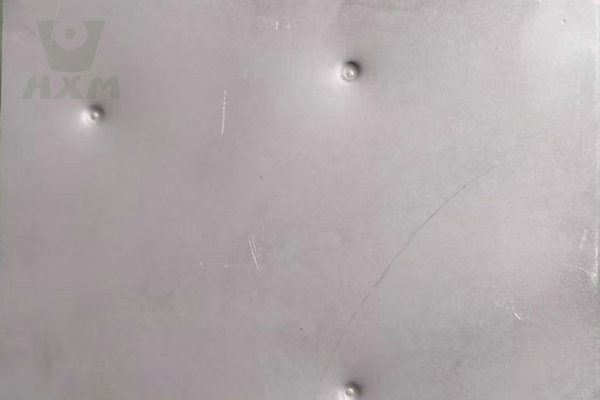
A certified NIJ Level III AR500 steel plate is engineered to stop 7.62x51mm M80 NATO ball rounds, which have a lead core. This means it can reliably defeat rounds from firearms such as:
7.62x39mm (AK-47)
5.56x45mm M193 (AR-15)
.308 Winchester
And nearly all handgun cartridges.
Common Uses of AR500 Steel (Why It's So Popular)
Although AR500 steel isn’t suitable for direct use in body armor, it excels in the following areas, making it an irreplaceable material:
1. Shooting Targets
This is the most common application for AR500 steel. Its high hardness enables it to withstand thousands of bullet impacts without deformation or cracking. Upon impact, the energy is rapidly dissipated, shattering the bullet tip into fragments, significantly reducing the risk of ricochet and ensuring safe shooting.
2. Vehicle Armor Retrofits and Ballistic Structures
In some applications where weight is less critical, AR500 steel is used as additional armor for vehicles, doors, windows, or safes. It provides reliable, lightweight ballistic protection against handguns and some low-velocity rifles.
3. Heavy Machinery Components
Due to its excellent wear resistance, AR500 steel is widely used in mining, construction, and agricultural machinery, such as bucket blades, liners, and conveyor belt chutes. It significantly extends the service life of equipment.
Advantages and Limitations of AR500 Steel in Armor
Advantages of AR500 Steel in Armor
High Hardness: Stops common rifle rounds.
Durability: Can withstand multiple hits without shattering.
Cost-Effective: More affordable compared to ceramic armor.
Low Maintenance: Resistant to corrosion and wear.
Limitations of AR500 Steel
Weight: Heavier than composite or ceramic armor.
Spall Risk: Requires anti-spall coatings to reduce fragmentation.
Not Truly “Bulletproof”: Cannot stop armor-piercing rounds indefinitely.
AR500 vs Other Armor Materials
| Material | Hardness (BHN) | Weight | Ballistic Protection | Cost |
|---|---|---|---|---|
| AR400 Steel | 360–440 | Moderate | Lower ballistic resistance | Low |
| AR500 Steel | 470–530 | High | Good up to NIJ III+ | Affordable |
| AR600 Steel | 570+ | Higher | Stronger, but more brittle | Higher |
| Ceramic Plates | N/A | Light | Stops AP rounds (NIJ IV) | Expensive |
| Polyethylene (UHMWPE) | N/A | Very light | Excellent ballistic resistance | High |
Conclusion: AR500 is cost-effective, durable, and widely available—but it is heavier than ceramic or PE plates and not suitable for AP threats.
AR400 VS AR500 Steel
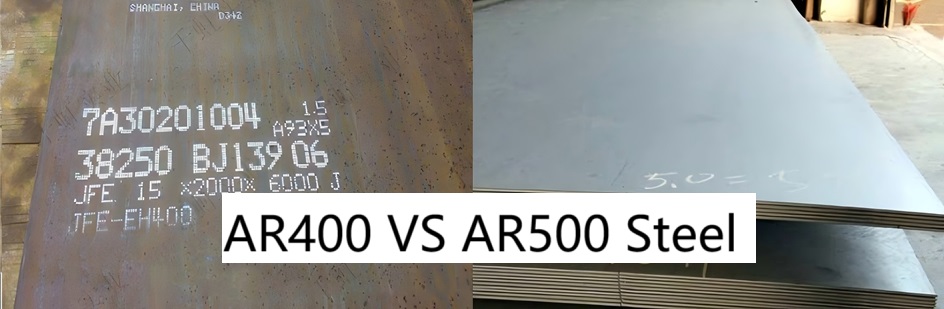
AR400 vs AR500 steel are two popular types of abrasion-resistant steels used in various industries. They possess unique properties that make them suitable for applications
AR500 vs AR600 Steel: Which is Better?
A common comparison in the armor industry is AR500 vs AR600 steel.
| Feature | AR500 Steel | AR600 Steel |
|---|---|---|
| Hardness | ~500 BHN | ~600 BHN |
| Weight | Moderate | Slightly lighter for same protection |
| Durability | Excellent | Even higher wear resistance |
| Cost | More affordable | More expensive |
| Availability | Widely stocked | Less common in global stock |
AR500 is cost-effective and widely available from international suppliers and manufacturers.
AR600 provides more protection but comes with higher prices and limited stock.
If you’re sourcing armor for bulk procurement, AR500 armor often strikes the best balance between price and performance.
FAQ
What does "AR" in AR500 stand for?
“AR” stands for “Abrasion Resistant.” This indicates that the steel is formulated and heat-treated to withstand high levels of abrasion and wear, which also gives it the hardness required for ballistic resistance.
How much does an AR500 steel plate weigh?
The weight depends on the thickness and size of the plate. For example, a standard 10″x12″ (25x30cm) plate with a thickness of 1/4″ (6.35mm) typically weighs around 8.5 lbs (3.8 kg). It is heavier than ceramic or PE armor but offers excellent durability and cost-effectiveness.
Is an anti-spall coating necessary for AR500 steel armor?
Yes, an anti-spall (or fragmentation) coating is highly recommended for any AR500 plate used as body armor. When a bullet strikes the hard steel surface, it can create fragments (spall) that travel outward. A proper coating traps these fragments, significantly increasing the safety of the wearer.
Can AR500 steel stop "green tip" M855/SS109 rounds?
Standard 1/4″ AR500 steel (rated for NIJ Level III) may be penetrated by M855/SS109 rounds at high velocities due to their steel core penetrator. For reliable protection against these specific threats, a thicker plate (e.g., 3/8″) or a Level III+ rated plate is typically required. Always check the manufacturer’s specific ballistic testing data.
Can you weld or cut AR500 steel?
Yes, but it requires specific procedures. Welding or cutting AR500 steel generates heat, which can alter its heat treatment and reduce its hardness (and thus its ballistic resistance) in the heat-affected zone. Low-hydrogen welding consumables and pre-heating are often recommended. For cutting, plasma or laser cutting is preferred over torch cutting to minimize the heat-affected area.
What is the difference between AR500 and AR400/AR550 steel?
The number refers to the steel’s nominal Brinell hardness. AR400 is softer and generally used for high-wear applications but not reliable for ballistics. AR550 is harder and can offer a higher level of ballistic protection (often rated Level III+ or IV against certain threats), but it can be more brittle. AR500 provides an excellent balance of hardness, toughness, and cost for NIJ Level III protection.
Can AR500 steel stop a .50 BMG?
No. AR500 steel cannot stop a .50 BMG round. The .50 BMG carries much higher velocity and energy than AR500 is designed to handle. To resist .50 caliber armor-piercing rounds, specialized ceramic or composite armor systems are required.
Is AR500 better than ceramic armor?
It depends on the application. AR500 is more durable, reusable, and cost-effective, making it popular for shooting targets and basic armor plates. However, it is significantly heavier than ceramic plates. Ceramic armor is lighter and capable of stopping armor-piercing rounds (NIJ Level IV), but it is more brittle and typically designed for single-use.
How thick should AR500 steel be to be bulletproof?
For most rifle rounds like 7.62×51mm NATO (M80 Ball), a 1/4″ AR500 plate can provide sufficient protection. To resist 5.56×45mm M855 “green tip” rounds, at least 3/8″ AR500 is recommended. Thicker plates (1/2″ or more) provide stronger protection but add significant weight.
Is AR500 steel legal to own?
Yes. In most countries, civilians can purchase AR500 steel targets or armor plates, but local laws may regulate body armor use.
How long does AR500 armor last?
When stored properly, AR500 plates can last 20+ years without losing ballistic performance.
Can AR500 stop armor-piercing rounds?
Standard AR500 armor is not designed for armor-piercing (AP) rounds. For that, AR600 or composite armor is more effective.
In Conclusion:
Taken together, AR500 steel has certain bulletproof properties and is particularly suitable for manufacturing general protective equipment. However, when facing higher-level threats, more specialized materials may need to be considered. Therefore, when selecting bulletproof materials, it is necessary to fully consider the performance, thickness and specific application needs of the material. Only by comprehensively considering these factors can we ensure that the selected materials can provide the best protective effect and ensure personal safety.
However, for protection against armor-piercing rounds or lighter loadout requirements, ceramic and polyethylene plates remain superior.
If you are looking for high-quality AR500 steel plates, Huaxiao Metal provides durable and customizable options suitable for both ballistic protection and industrial applications.