[email protected]

24/7 Customer Support

+86-13761906384

24/7 Customer Support

What Steel Has High Hardness and Good Toughness?

In the fields of industrial manufacturing, mold making, cutting tool production, mining machinery, and high-performance equipment, customers frequently ask a core question:

What steel possesses both high hardness and good toughness?

Hardness determines a material’s wear resistance, while toughness determines its impact resistance and resistance to breakage.

Many steels are hard but brittle; some steels have good toughness but poor wear resistance.

Steel that truly combines high hardness and high toughness typically possesses:

  • Precise control of alloying elements

  • Advanced metallurgical technologies (vacuum smelting, ESR, powder metallurgy)

  • Professional heat treatment processes (quenching, tempering, cryogenic treatment)

Huaxiao Metal provides high-hardness + high-toughness steel products and professional technical support to global customers, solving your material selection challenges and providing quotations and processing services.

What Steel Has High Hardness and Good Toughness?

This question can be roughly divided into three situations to answer:

First, the hardness HRC of mold steel LG with good toughness is between 50-58. The hardness of LG mold steel is HRC56-58, and its toughness is 8-9 times that of DC53.

The ability of steel to resist fracture under impact is called toughness. Simple understanding: easy to break, poor toughness; not easy to break, good toughness. Hardness: The ability of a material to partially resist hard objects pressing into its surface is called hardness.

Generally speaking, steel has Brinell hardness, Vickers hardness, and Rockwell hardness. Vickers hardness HV51 and Brinell hardness HB51 are both very low hardness, lower than the normal hardness lower limit and naturally do not belong to the category of steel. So this 5153 is most likely Rockwell hardness. Rockwell hardness is divided into HRA, HRB, and HRC.

Japan’s “Wushen Special Steel” stainless steel is of excellent quality, with a carbon content of about 1%, molybdenum 2%, and cobalt 5%. After heat treatment, the hardness can reach HRc60-62. VG-10 has excellent processability, strong toughness, and corrosion resistance, and is widely used in high-quality daily knives.

The middle steel core of sandwich steel (composite steel) uses high-strength (high-carbon and high-chromium) materials as the base material, and the two sides use low-carbon materials with good toughness, which are composited at high temperatures. 80Cr17MoV-90Cr18MoV is also a common high-end three-layer steel (sandwich steel) core material.

Rail steel is as good as manganese steel in making knives. Train track steel uses high manganese steel, which belongs to manganese steel. Manganese steel is a high-strength steel with high toughness, high hardness, wear resistance, and earthquake resistance. It is mainly used in harsh working conditions such as impact, extrusion, and material wear.

The outstanding qualities of 154CM steel are its blade durability and toughness, blade retention, corrosion resistance, and easy wear.

Understanding Hardness vs. Toughness in Steel

PropertyDescriptionImportance
HardnessResistance to wear, abrasion, cuttingLonger tool & component life
ToughnessResistance to impact & crackingPrevents breakage during shock loads

To combine both, steel requires:

  • Controlled alloy content (Cr, Mo, V, Ni, C)

  • Advanced metallurgy (ESR, vacuum melting, PM steel)

  • Proper heat treatment (quenching, tempering, cryogenic)

Steel Types With High Hardness & High Toughness

1. Tool Steels (D2 / A2 / O1 / H13)

Steel GradeTypical HRCKey AdvantagesApplications
D258–62Extreme wear resistanceCold work dies, knives, punches
A257–60Great toughness & stabilityStamping, precision dies
O157–62Excellent cutting edge retentionKnives, blades
H1348–55Hot strength, impact toughnessHot dies, forging tools, die casting molds

Why choose tool steels?
They balance wear resistance & toughness better than standard steels.

Ask Huaxiao Metal for D2 & H13 stock & cut-to-size service


2. Alloy Steels (4140 / 4340)

Steel GradeHardness (after HT)Strength
414028–60 HRCHigh fatigue strength, shock resistance
434030–60 HRCSuperior toughness & impact performance

Typical uses
Gears, shafts, hydraulic components, mining equipment, aircraft parts.


3. High Carbon / Knife Steels (1095 / SK5)

GradeHardnessFeatures
109560+ HRCExtremely sharp edge, very hard
SK558–60 HRCStrong cutting & wear performance

Ideal for blades, industrial knives, saws.


4. Spring Steel (65Mn)

  • Excellent elasticity

  • Impressive shock load resistance

Used in: springs, impact tools, saw blades, wear tools


5. Wear-Resistant Steel (NM400 / NM500 / Hardox)

Combines: very high hardness + structural toughness

Used for:

  • Mining & quarry equipment

  • Bulldozer blades

  • Crusher liners

  • Dump truck bodies

Huaxiao Metal supplies NM400 / NM450 / NM500 sheets and plates, laser-cut service available.

Performance Comparison Table

Steel CategoryHardnessToughnessBest Applications
Tool steel★★★★★★★★★Molds, punches, cutting tools
Alloy steel★★★★★★★★★Mechanical parts, impact parts
High carbon★★★★★★★★Blades, springs
Wear plate★★★★★★★★★Mining & heavy wear components
Martensitic stainless★★★★★★★Industrial knives, cutting tools

Application Recommendation Guide

RequirementBest Choice

Extreme wear + cutting

D2, 1095, NM500
High shock & loadA2, 4140, 4340
Hot work + durabilityH13
Elastic shock resistance65Mn, SK5
Mining wear & impactNM400 / Hardox

Not sure which steel fits your needs?

Send drawings or requirements — engineers will recommend material

Heat Treatment for Hardness + Toughness

To achieve the dual properties, steels may undergo:

  • Quenching & tempering

  • Cryogenic treatment

  • Nitriding / induction hardening

  • Vacuum heat treatment

Huaxiao Metal offers heat treatment on demand

Why Choose Huaxiao Metal?

Service OfferedDetails
ProductsTool steel, alloy steel, spring steel, high carbon steel, wear plate
FormsSheet, plate, bar, coil, custom cut
ProcessingCNC cutting, laser cutting, forging, heat treatment
CertificatesEN 10204 3.1 / SGS / Mill certificate
DeliveryGlobal shipping, fast production cycles
MOQSupport sample orders & trial batches

🌎 15+ years export experience

🏭 Direct mill support & stock available

🔧 Engineering support & custom machining

FAQ

Hardness: High-Speed Steel usually has a high hardness (usually between HRC 60-67) due to its high content of carbide elements (such as tungsten, molybdenum, vanadium, chromium, etc.).

Toughness: Although it has high hardness, high-speed steel usually has good toughness after reasonable heat treatment, and is suitable for high-speed cutting tools such as drills, milling cutters, etc.

Hardness: Tool steel has a high hardness (usually between HRC 55-65) and can maintain a stable hardness under high load and high-temperature conditions.

Toughness: Tool steel is designed with use requirements in mind. After proper heat treatment, it can achieve good toughness and wear resistance and is suitable for molds, cutting tools, etc.
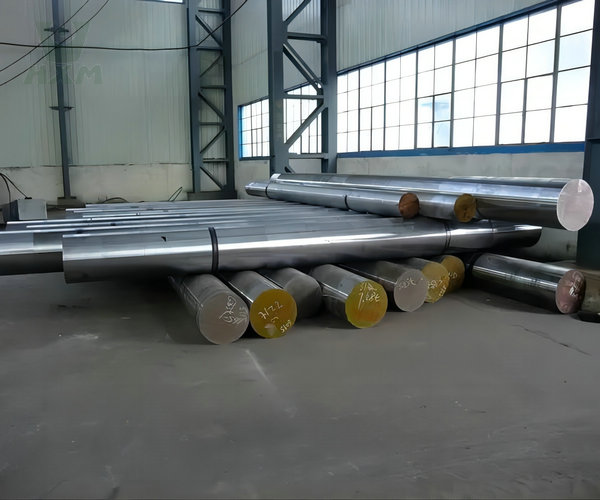
Tool Steels Suppliers, Tool Steels For Sale

Hardness: Cold work steel obtains a higher hardness (usually between HRC 55-65) through cold working (such as quenching, tempering, etc.)

Toughness: Cold-working steel has high toughness and wear resistance, and is suitable for manufacturing tools and molds that require high hardness and wear resistance.

Hardness: Martensitic stainless steel can obtain high hardness (usually HRC 50 and above) through quenching and tempering.

Toughness: By controlling the tempering temperature and time, the balance between its hardness and toughness can be adjusted, and it is often used to manufacture knives and industrial parts.

Tool steels like D2, A2, H13, alloy steels like 4140 / 4340, and wear-resistant steels like NM500.

Yes — It needs to be softened and annealed first, or processed using special tools.

Customizable quenching, tempering, nitriding, and cryogenic treatment are available.
Share:

Facebook
Twitter
Pinterest
LinkedIn

Contact Us For Metal Prices

Table of Contents

On Key

Related Posts

Welcome