When selecting high carbon steel for industrial manufacturing, tooling, or blade production, 1060 steel vs 1075 steel are two commonly compared materials. Both belong to the 10xx carbon steel series, but their differences in carbon content lead to distinct mechanical properties and applications.
1060 steel is known for its balanced hardness and machinability, while 1075 steel offers higher strength and wear resistance due to increased carbon content. Choosing the right material depends on your specific requirements, including hardness, toughness, and cost.
As a professional carbon steel supplier, Huaxiao Metal provides high-quality 1060 steel and 1075 steel products for global industrial applications, helping customers select the most suitable materials for their projects.
What is 1075 Steel?
1075 Steel pushes the limits of the 10-series carbon steels toward the “Very High Carbon” category. It is a favorite for tools that require a “bite.”
Key Performance Profiles:
- Wear Resistance: Significantly higher than 1060. The extra carbon forms more iron carbides, protecting the edge against abrasion.
- Spring Temper: Due to its higher yield strength, 1075 is frequently used as a Spring Steel in industrial clutches and flat springs.
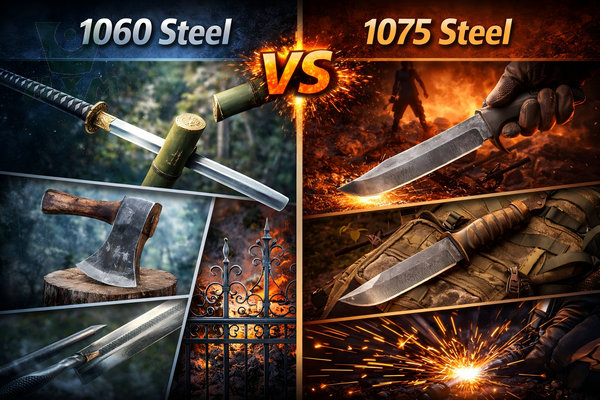
- Huaxiao Metal Application: Ideal for bushcraft knives, machetes, industrial scrapers, and high-tension springs.

What is 1060 Steel?
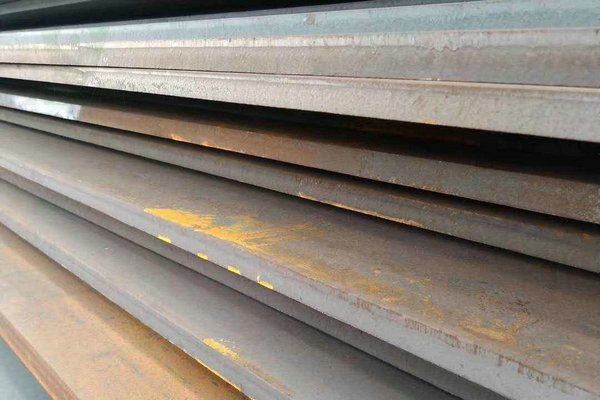
1060 Steel is a high-carbon plain steel widely recognized as the “Goldilocks” grade. It strikes an elite balance between strength and ductility.
Key Performance Profiles:
- Hardenability: Lower than 1075, making it the premier choice for Differential Hardening (Clay Tempering).
- Impact Strength: Exceptional. It absorbs kinetic energy without catastrophic failure.
- Huaxiao Metal Application: We recommend 1060 for Katana blades, axes, and agricultural machinery parts where the tool must survive hitting hard knots or bones.
1060 Steel vs 1075 Steel Quick Comparison
| Property | 1060 Steel | 1075 Steel |
|---|---|---|
| Steel Type | High carbon steel | High carbon steel |
| Carbon Content | 0.55–0.66% | 0.70–0.80% |
| Hardness Potential | Medium-High | High |
| Toughness | Good | Moderate |
| Wear Resistance | Good | Excellent |
| Machinability | Better | Lower |
| Cost | Lower | Slightly higher |
| Typical Uses | Machinery, tools | Blades, springs |
The key difference lies in carbon content, which directly affects hardness, strength, and wear resistance.
1060 Steel vs 1075 Steel Standards & International Equivalents
Understanding standards ensures compatibility in global procurement.
1060 Steel
SAE/AISI: 1060
UNS: G10600
DIN Equivalent: C60
1075 Steel
SAE/AISI: 1075
UNS: G10750
DIN Equivalent: C75
👉 These standards are critical when sourcing internationally to avoid material mismatch.
1060 Steel vs 1075 Steel: Chemical Composition Comparison
1060 Steel Composition
Typical composition:
Carbon: 0.55–0.66%
Manganese: 0.60–0.90%
Silicon: 0.15–0.35%
This composition provides a balance between strength and machinability, making 1060 steel suitable for a wide range of industrial applications.
1075 Steel Composition
Typical composition:
Carbon: 0.70–0.80%
Manganese: 0.50–0.80%
Silicon: 0.15–0.35%
The higher carbon content results in:
increased hardness
improved edge retention
better wear resistance
However, it also reduces ductility and machinability.
1060 Steel vs 1075 Steel: Mechanical Properties Comparison
| Property | 1060 Steel | 1075 Steel |
|---|---|---|
| Tensile Strength | 620–850 MPa | 700–1000 MPa |
| Yield Strength | 350–500 MPa | 400–600 MPa |
| Hardness (HRC) | Up to 55 | Up to 60 |
| Toughness | Good | Moderate |
| Ductility | Higher | Lower |
1075 steel can achieve higher hardness levels, making it more suitable for applications requiring sharp edges and wear resistance.
Machinability, Weldability & Formability
This is a critical factor for buyers.
1060 Steel
Machinability: Good
Weldability: Moderate (preheating recommended)
Formability: Better than 1075
1075 Steel
Machinability: Lower
Weldability: Difficult
Formability: Limited
👉 If your project involves heavy machining, 1060 steel is the better choice.
Hardness and Wear Resistance
1060 Steel
Hardness up to 55 HRC
Good wear resistance
Better impact resistance
1075 Steel
Hardness up to 60 HRC
Superior wear resistance
Better edge retention
This makes 1075 steel more suitable for cutting tools and blades.
1060 Steel vs 1075 Steel Heat Treatment Differences
1060 Steel Heat Treatment
Typical process:
Austenitizing: 800–830°C
Quenching: Oil or water
Tempering: 200–400°C
Result: Balanced hardness and toughness.
1075 Steel Heat Treatment
Typical process:
Austenitizing: 800–850°C
Quenching: Oil
Tempering: 150–300°C
Result: Higher hardness but reduced toughness.
Applications: Where Each Steel Performs Best
Applications of 1060 Steel
1060 steel is widely used in applications requiring balanced performance and cost efficiency:
industrial tools
machinery components
shafts and gears
agricultural equipment
Its good machinability makes it ideal for large-scale production.
Applications of 1075 Steel
1075 steel is preferred in applications where high hardness and wear resistance are critical:
knives and blades
springs
saw blades
cutting tools
Its higher carbon content allows for sharper edges and longer service life.
1060 Steel vs 1075 Steel Cost Comparison
In general:
1060 steel is more affordable
1075 steel is slightly more expensive
Reasons:
higher carbon content
more demanding heat treatment
increased wear resistance performance
For cost-sensitive projects, 1060 steel is often the preferred choice.
1060 Steel vs 1075 Steel Advantages and Disadvantages
1060 Steel Advantages
lower cost
good machinability
balanced properties
1060 Steel Disadvantages
lower hardness than 1075
moderate wear resistance
1075 Steel Advantages
higher hardness
better edge retention
excellent wear resistance
1075 Steel Disadvantages
reduced toughness
more difficult machining
Which Steel Should You Choose?
Choose 1060 steel if you need:
cost-effective material
better machinability
balanced performance
Choose 1075 steel if you need:
maximum hardness
high wear resistance
blade performance
For industrial tools and general applications, 1060 steel is often sufficient. For cutting tools and blades, 1075 steel is usually the better choice.
FAQ: 1060 Steel vs 1075 Steel
What is the main difference between 1060 and 1075 steel?
The main difference is carbon content. 1075 steel has higher carbon content, resulting in greater hardness and wear resistance.
Is 1075 steel better than 1060 steel?
It depends on the application. 1075 steel is better for blades and cutting tools, while 1060 steel is better for general industrial use.
Can 1075 replace 1060 for sword making?
Yes, but with caution. A 1075 sword will stay sharper but may be more brittle than a 1060 sword. Huaxiao Metal recommends 1060 for longer blades (Katanas) and 1075 for shorter, harder-working blades.
Is 1075 considered a spring steel?
Often, yes. In many industrial applications, 1075 is used for flat springs and saw blades due to its high elastic limit.
Which steel is better for knives?
1075 steel is generally better for knives due to its higher hardness and edge retention.
Who is a reliable supplier for 1060 and 1075 steel?
Reliable suppliers such as Huaxiao Metal provide high-quality carbon steel products with stable supply and competitive pricing.
Conclusion: 1060 Steel vs 1075 Steel
Both 1060 steel and 1075 steel are widely used high carbon steels with different advantages.
1060 steel offers balanced performance and affordability
1075 steel provides higher hardness and superior wear resistance
The choice depends on your application requirements. For cost-effective manufacturing, 1060 steel is ideal. For cutting performance and durability, 1075 steel is the better option.
If you are looking for professional 1060 steel suppliers or 1075 steel manufacturers, Huaxiao Metal can provide high-quality materials, competitive pricing, and global export support.
Choosing a Reliable Carbon Steel Supplier
When sourcing high carbon steel such as 1060 or 1075, it is essential to work with a reliable supplier.
Huaxiao Metal is an experienced carbon steel exporter offering:
1060 steel bars, plates, and coils
1075 high carbon steel products
customized sizes and specifications
With strict quality control and global export experience, Huaxiao Metal helps customers secure stable supply and competitive pricing.