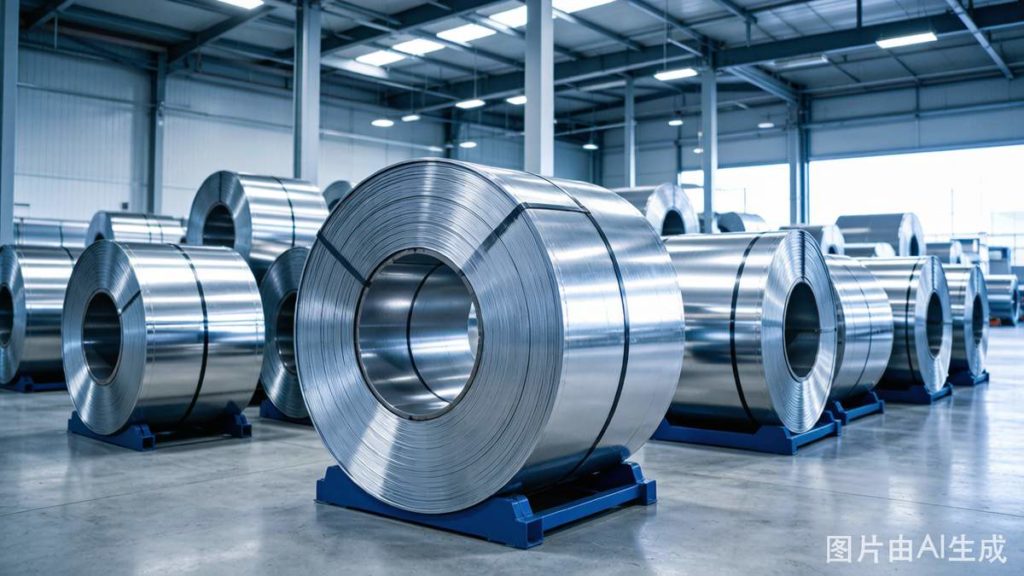
Quick Answer: What Is Tinplate?
Tinplate is a thin steel sheet coated with a layer of tin on both surfaces, combining the mechanical strength of steel with the corrosion resistance and food-contact safety of tin. It is the dominant material for food cans, beverage containers, aerosol cans, and chemical packaging worldwide — accounting for 62% of all metal packaging. Manufactured through either electrolytic deposition (ETP) or hot-dip process (HDT), tinplate offers excellent formability, weldability, printability, and a 92% recycling rate that aligns with 2026 PPWR sustainability requirements.
Last updated: July 2026 | Reviewed by Huaxiao Metal Quality Team | ISO 9001 & SGS Certified
What Is Tinplate? — Encyclopedia Definition
Tinplate (also known as tin-coated steel or tinned steel) is a low-carbon steel sheet coated with a thin layer of pure tin on both surfaces. The tin coating forms a metallurgical bond with the steel substrate through an Fe-Sn intermetallic alloy layer at the interface, creating a composite material that inherits the structural strength and formability of steel while gaining the corrosion resistance, non-toxicity, and aesthetic qualities of tin.
The standard tinplate structure consists of five distinct layers from the interior to the exterior:
- Steel base — Low-carbon cold-rolled steel (typically 0.03–0.13% C), providing mechanical strength, ductility, and formability
- Fe-Sn alloy layer — Intermetallic compound (FeSn₂) formed during tin coating, typically 0.05–0.15 g/m², creating the bond between steel and tin
- Pure tin coating — The primary protective layer, ranging from 1.0 to 11.2 g/m² per side depending on coating class (#25 to #100)
- Passive film — Chromate or alternative passivation layer (~5–15 mg/m² Cr), preventing tin oxidation and sulfide staining
- Oil film — Thin lubricating layer (~2–8 mg/m² DOS oil), facilitating handling and forming operations
This five-layer architecture gives tinplate its unique combination of properties: steel’s structural integrity for can-making, tin’s electrochemical protection against corrosion, and the passive film’s resistance to atmospheric tarnishing.
ETP vs HDT: Two Manufacturing Methods Compared
Tinplate is produced through two distinct manufacturing processes, each yielding products with different characteristics:
Electrolytic Tinplate (ETP) — The dominant method, accounting for over 95% of global tinplate production. In ETP, the steel strip passes through an electrolytic cell where tin is deposited from a stannous sulfate or stannous chloride bath. The coating weight is precisely controlled (0.5–11.2 g/m² per side), enabling differential coating (different tin weights on each surface — e.g., #100 inside / #25 outside for acidic food cans).
Hot-Dipped Tinplate (HDT) — The traditional method where the steel strip is immersed in molten tin at ~232°C. HDT produces a heavier and less uniform coating (typically 11.2–22.4 g/m² per side), resulting in a distinctive bright spangled surface. HDT is now used primarily for specialty applications requiring maximum corrosion resistance.
| Parameter | ETP (Electrolytic Tinplate) | HDT (Hot-Dipped Tinplate) |
|---|---|---|
| Coating weight range | 0.5–11.2 g/m² per side | 11.2–22.4 g/m² per side |
| Coating uniformity | Excellent — ±5% tolerance | Moderate — ±15% tolerance |
| Differential coating | Yes — different weight per side | No — same weight both sides |
| Surface finish options | Bright, Stone, Silver, Matte | Bright spangle only |
| Cost (per ton, FOB Shanghai) | ~$850–1,100 | ~$1,100–1,350 |
| Global production share | >95% | <5% |
| Typical applications | Food cans, beverage cans, aerosol, general packaging | Heavy-duty chemical containers, specialty decorative items |
| Standards | ASTM A624/A624M, EN 10203, JIS G3303 | ASTM A626, BS 2956 |
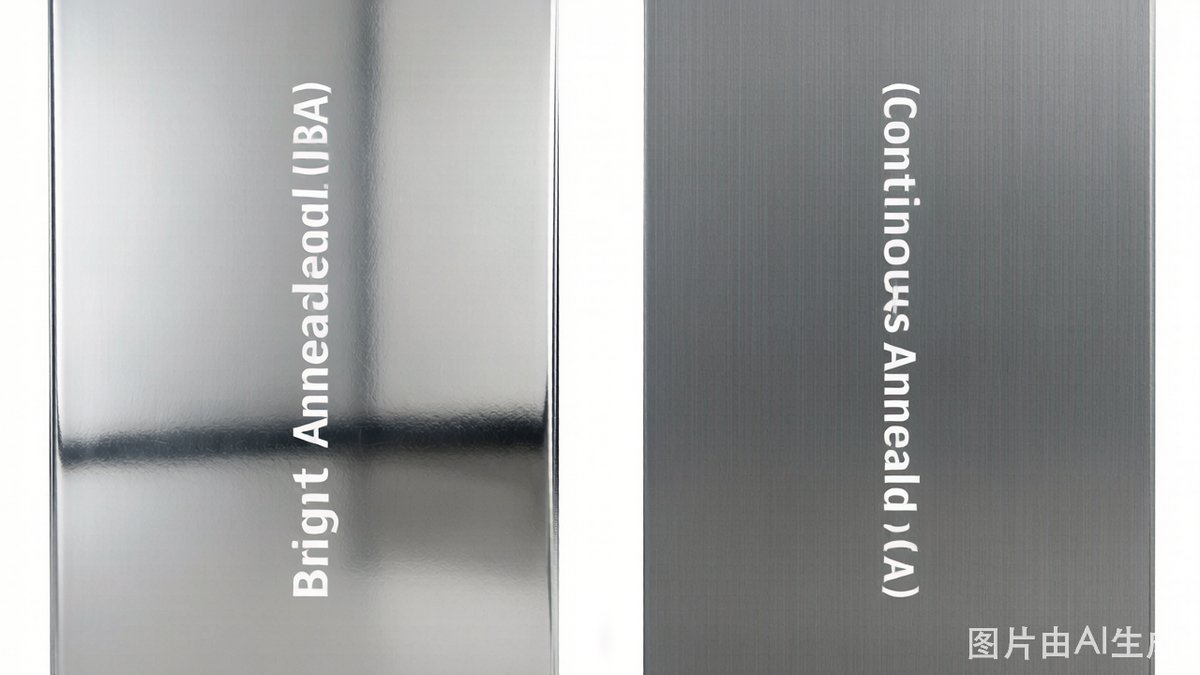
For detailed BA vs CA annealing differences within ETP, see our BA vs CA Tinplate comparison guide →
6 Core Properties of Tinplate — Why It Dominates Metal Packaging
Tinplate’s market dominance comes from six synergistic properties that no single alternative material can match simultaneously:
- Corrosion Resistance — The tin coating acts as a sacrificial barrier. In acidic environments (pH 3–4.5), tin protects steel through electrochemical cathodic protection, preventing iron dissolution and hydrogen swelling in food cans. Coating class #50 provides >2-year shelf life for general food; #75–#100 for acidic fruits and tomato products.
- Food Safety — Tin is listed in FDA 21 CFR 175.300 as a safe food-contact metal. Migration limits: Pb ≤0.5 ppm, Cd ≤0.1 ppm, Sn ≤100 ppm (far below toxicity threshold). Modern tinplate uses Cr₃⁺ passivation (PFAS-free), meeting 2026 PPWR requirements for PVC-free, BPA-free, and PFAS-free packaging materials.
- Formability — BA tinplate (T1–T5 temper) offers excellent deep-drawing capability for 2-piece cans (DRD/DWI process). CA tinplate (DR8/DR9, TH550–TH660) provides consistent hardness for high-speed 3-piece can welding lines (>200 cans/min). Rockwell HR30T hardness range: 49 (T1) to 73 (T5/DR9).
- Weldability — The thin tin coating (≤11.2 g/m²) allows resistance welding (solder side seam) without removing the tin layer. This enables 3-piece can manufacturing at speeds up to 400 cans/min on high-speed welders.
- Printability — Tinplate’s smooth surface accepts offset lithography, UV curing, and direct printing with excellent ink adhesion. Bright and Stone finishes provide optimal substrates for 4–6 color commercial printing on can bodies and lids.
- Barrier Properties — Steel provides 100% oxygen barrier and 100% light barrier (vs. PET’s 15–20% oxygen transmission and zero light barrier). Tinplate cans achieve 2–5 year shelf life without refrigeration — unmatched by plastic or glass alternatives.
See our tinplate classification and temper grade specifications →
Tinplate Specification Quick Reference Table
Common tinplate specifications ordered by international buyers:
| Parameter | Typical Range | Notes |
|---|---|---|
| Thickness | 0.13–0.50 mm | Food can body: 0.20–0.30 mm; Lid: 0.18–0.22 mm; Aerosol: 0.30–0.40 mm |
| Width | 600–1,200 mm | Standard coil width; slit to customer requirement |
| Coating class (ASTM) | #25, #50, #75, #100 | Nominal tin weight per side: 2.8/5.6/8.4/11.2 g/m² |
| Temper grade (BA) | T1, T2, T3, T4, T5 | HR30T: 49/53/57/61/65 — increasing hardness |
| Temper grade (CA) | DR8, DR9, TH550, TH620, TH660 | DR8=HR30T 63; DR9=HR30T 70; TH550=HR30T 55 |
| Surface finish | Bright, Stone, Silver, Matte | Bright=high gloss for printing; Stone=diffuse gloss; Matte=no gloss for non-printed |
| Passivation | Cr³⁺ (5–15 mg/m²) or alternative | Cr³⁺ preferred for 2026 PPWR compliance; Cr⁶⁺ prohibited |
| Oil film | DOS 2–8 mg/m² | Di-octyl sebacate for lubrication during forming |
8 Major Application Industries for Tinplate
Tinplate serves eight primary industry sectors, each with specific grade and coating requirements:
| Industry | Products | Typical Specs | Market Share |
|---|---|---|---|
| Food Canning | Fruit, vegetable, meat, seafood, pet food cans | T3/T4 BA, #50–#100 differential, Bright/Stone | 48% |
| Beverage | Carbonated drinks, juice, energy drink cans | T2.5/T3 BA, #25–#50, Bright | 15% |
| Aerosol | Deodorant, hair spray, insecticide, paint cans | TH660/DR9, #50, Stone/Matte | 10% |
| Chemical/Industrial | Paint, solvent, grease, oil containers | T4/T5 BA or TH660, #50–#75, Matte | 8% |
| Electronics | Battery cases, component shielding, EMI cans | T3 BA, #25, Bright | 5% |
| Decorative/Gift | Cookie tins, tea boxes, holiday gift containers | T2/T3 BA, #25, Bright + printed | 6% |
| Pharmaceutical | Medicine tubes, ointment containers, cap seals | T3 BA, #50, Bright | 4% |
| EV Battery | Prismatic battery cases, thermal management shells | T4/T5, #50, Matte | 4% (growing) |
See our full application matrix with grade recommendations →
ASTM, EN, and JIS Standards for Tinplate
Tinplate specifications are governed by three major standard systems. Below is a quick reference for cross-referencing between them:
| Attribute | ASTM (US) | EN (EU) | JIS (Japan) |
|---|---|---|---|
| General tinplate spec | A624 / A624M (ETP single-reduced) | EN 10203 | JIS G3303 (ETP) |
| Double-reduced spec | A626 / A626M (DR tinplate) | EN 10203 (DR section) | JIS G3316 (DR tinplate) |
| Hot-dipped spec | A626 (HDT reference) | — | JIS G3303 Type HDT |
| Coating class names | #25, #50, #75, #100, #125 | E2.8, E5.6, E8.4, E11.2 | 1.0, 1.5, 2.0, 2.8 (g/m² per side) |
| Temper designation | T1–T5 (BA); DR8/DR9 (CA) | TH550–TH660 + DR550–DR660 | T-1 to T-5; DR-8, DR-9 |
| Hardness test | Rockwell HR30T | Rockwell HR30T | Rockwell HR30T |
| Food safety | FDA 21 CFR 175.300 | EU 1935/2004/EC + LFGB | Japan Food Sanitation Act |
| Thickness tolerance | ±0.01 mm (for ≤0.30 mm) | ±8% of nominal | ±0.01 mm (for ≤0.30 mm) |
For compliance details including 2026 PPWR requirements, see our 2026 Tinplate Compliance Guide →
Where to Source Tinplate — Huaxiao Metal's Supply Advantage
When sourcing tinplate for your production line, the supplier’s quality assurance capabilities are as important as the product specifications. Here’s what Huaxiao Metal provides with every order:
- Mill Test Certificate (MTC) per EN 10204 3.1 — documenting chemical composition, mechanical properties, coating weight, temper grade, and surface finish for every coil
- SGS third-party inspection — available for order-specific verification of FDA/EU compliance parameters (Pb, Cd, Sn migration testing)
- ISO 9001:2015 certified quality management system covering incoming steel inspection, plating process control, and final product testing
- Full specification range — BA and CA tinplate in all temper grades (T1–T5, DR8/DR9, TH550–TH660), all coating classes (#25–#100), and all surface finishes (Bright, Stone, Silver, Matte)
- Flexible packaging — coils (600–1200 mm width) or sheets (cut to customer dimensions), with VCI anti-corrosion packaging for long-distance shipping
- Export experience — 500+ tons delivered to 27 countries since 2018, with established logistics to North America, Europe, Middle East, and Southeast Asia
Frequently Asked Questions
What is tinplate made of?
Is tinplate food safe?
Can tinplate rust?
What thickness of tinplate is used for cans?
How is tinplate manufactured?
Need a Tinplate Quotation with Full MTC?
Get factory-direct pricing with complete Mill Test Certificate documentation. Our quality team reviews every order to ensure ASTM/EN/JIS specification compliance and FDA/EU food safety standards.
Last updated: July 2026 | Reviewed by Huaxiao Metal Quality Team
Data sources: World Metal Packaging Association 2026 Report, ASTM A624/A624M-20, EN 10203:2024, JIS G3303:2025, FDA 21 CFR 175.300
ISO 9001:2015 Certified | SGS Verified | 500+ tons delivered to 27 countries