Quick Answer: How to Machine Inconel Successfully?
Inconel machining requires low cutting speeds (15–45 m/min), rigid setups with zero vibration, positive rake carbide or ceramic tooling, and high-pressure coolant (70+ bar). The golden rule: keep the tool cutting, never rub — work hardening from rubbing destroys tools within seconds. Below, we break down the exact speeds, feeds, tool geometries, and coolant strategies for turning, milling, drilling, and cutting every common Inconel grade, along with machinability comparisons, common failure modes, and troubleshooting.
1. Why Is Inconel So Difficult to Machine?
Any machinist who has worked with Inconel knows the feeling: you set up the part, hit cycle start, and within seconds the insert is burned, the surface looks torn, and the tool is done. Inconel is not just a “tough” material — it actively fights the cutting process through three simultaneous mechanisms:
Rapid Work Hardening
The cutting action itself hardens the surface layer of Inconel. Within 0.1–0.3 mm of the cutting zone, hardness can jump from 150–200 HB to 350–450 HB. If the tool rubs instead of cuts (too light feed, worn edge, dwell), the hardened layer deflects subsequent passes and destroys fresh inserts instantly.
Extremely Low Thermal Conductivity
Inconel conducts heat at <12 W/m·K — roughly 1/4 that of carbon steel and 1/15 that of aluminum. Instead of heat flowing into the chip, it concentrates at the tool tip. Cutting zone temperatures reach 900–1100°C, softening carbide and accelerating diffusion wear.
High-Temperature Strength Retention
Unlike steel, which softens significantly above 500°C, Inconel retains >80% of its room-temperature yield strength at 600°C. The material at the shear zone remains stubbornly tough rather than softening — so the tool has to mechanically shear a strong, gummy material under extreme heat.
The #1 Mistake in Inconel Machining
Too light a feed rate. Many machinists instinctively slow down the feed when they see rapid tool wear — but this makes it worse. Below ~0.05 mm/rev, the tool rubs instead of cuts, generating intense work hardening without removing material. The workpiece surface hardens, the next pass digs into a harder layer, and the insert burns. Rule: maintain minimum chip thickness at all times. If you must slow down, reduce speed, never feed.
2. Tool Material Selection: Carbide vs. Ceramic vs. CBN
Choosing the right tool material is the single most important decision in Inconel machining. Each material has a specific window of effectiveness:
| Tool Material | Best For | Speed Range | Tool Life | Cost per Edge | Notes |
|---|---|---|---|---|---|
| Carbide (K10/K20) | General turning, milling, drilling | 15–45 m/min | ⭐⭐⭐ | $–$$ | Workhorse material. Must be coated (TiAlN, AlCrN, AlTiN). Use fine-grain (0.5–1.0 µm) substrate for best edge toughness. |
| Coated Carbide (PVD TiAlN/AlCrN) | Turning, finishing passes | 20–50 m/min | ⭐⭐⭐⭐ | $$ | TiAlN coating provides thermal barrier (oxidation resistance to 800°C). AlCrN offers better hot hardness. PVD preferred over CVD — sharper edge, lower cutting forces. |
| Whisker-Reinforced Ceramic | Rough turning, high-MRR roughing | 200–350 m/min | ⭐⭐⭐ | $$–$$$ | Al₂O₃ + SiC whiskers (e.g., Greenleaf WG-300, Sandvik CC670). Requires absolutely rigid setup — any vibration shatters the insert. No coolant (thermal shock risk). Excellent for roughing aged 718. |
| CBN (Cubic Boron Nitride) | Finishing hardened 718/X-750 (40+ HRC) | 80–200 m/min | ⭐⭐⭐⭐⭐ | $$$–$$$$ | Best tool life on 45+ HRC material. Brittle — only for continuous cuts, no interrupted cutting. Use negative rake (-5° to 0°) for edge strength. |
| HSS / HSS-Co | ⛔ NOT recommended | N/A | ⭐ | $ | Loses hardness above 550°C. Cutting zone reaches 900°C+ — HSS fails within seconds. Only usable for very small (<2 mm) shallow holes in annealed 600 with flood coolant, and tool life will still be measured in minutes. |
Check Industry Experience in Oil & Gas Projects
Experience matters more than marketing claims.
A trustworthy Inconel 625 pipe supplier should have:
Export experience for oil & gas markets
Familiarity with offshore, subsea, or chemical environments
Understanding of project documentation requirements
Suppliers with real project experience can:
Recommend suitable wall thickness
Suggest inspection standards
Avoid over- or under-specification
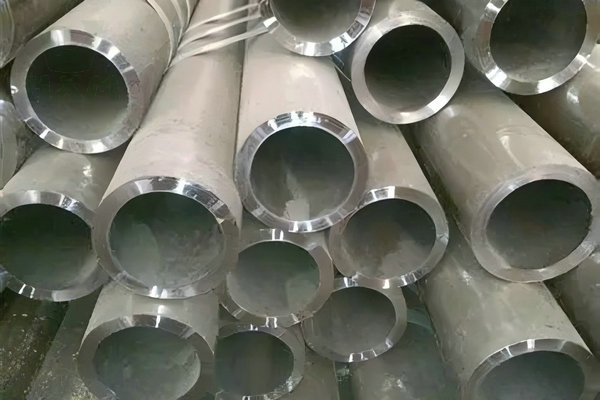
Inconel 625 Alloy Tubes & Pipes
Inconel 625 Alloy Tubes & Pipes Supplier & Manufacturer (UNS N06625) Inconel 625 alloy tubes and pipes are widely used in high-temperature, high-pressure, and corrosive
Compare Inconel 625 Pipe Price Rationally
Inconel 625 is a nickel-based alloy, and its price fluctuates with raw material costs.
When comparing quotes:
- Avoid prices that are significantly lower than the market average
- Confirm whether pricing includes inspection, testing, and packaging
- Ask about MOQ and delivery time
A professional supplier will explain:
- Why prices vary
- How alloy composition affects cost
- Options for cost optimization without compromising performance
👉 The cheapest Inconel 625 pipe is rarely the most economical choice in the long term.
Stock Availability and Delivery Capability
Oil & gas projects often operate on tight schedules.
Reliable suppliers should offer:
Standard size stock availability
Fast production scheduling
Export-grade packaging for long-distance shipping
Ask questions like:
Do you have Inconel 625 pipes in stock?
What is the typical lead time?
Can you support urgent projects?
Technical Support and After-Sales Service
Professional Inconel 625 suppliers do more than ship materials.
Look for suppliers that provide:
Pre-sales technical consultation
Material selection advice
After-sales support
This is especially important for:
High-temperature systems
Corrosive fluid transportation
Long-term operation environments
Why Global Buyers Choose Huaxiao Metal as Their Inconel 625 Pipe Supplier
Huaxiao Metal supplies Inconel 625 alloy tubes and pipes to global oil & gas, chemical, and marine industries.
Our advantages include:
Strict compliance with ASTM / ASME standards
Seamless & welded Inconel 625 pipe supply
Competitive pricing with stable quality
Professional export and documentation support
FAQ – Inconel 625 Pipe Supplier & Oil & Gas Applications
Why is Inconel 625 preferred for oil and gas piping systems?
Inconel 625 pipes are widely used in oil and gas projects because of their excellent resistance to corrosion, oxidation, and high temperatures.
They perform exceptionally well in offshore, subsea, and sour service environments, where standard stainless steel pipes may fail prematurely.
This makes Inconel 625 an ideal material for critical oil & gas piping systems.
What standards should an Inconel 625 pipe supplier comply with?
A reliable Inconel 625 pipe supplier should comply with:
ASTM B444 / ASME SB444
UNS N06625
EN 10204 3.1 Mill Test Certification
Suppliers should also provide chemical composition reports, mechanical properties, and PMI testing upon request.
Are seamless Inconel 625 pipes better than welded pipes for oil & gas?
For most oil and gas applications, seamless Inconel 625 pipes are preferred due to their:
Higher pressure resistance
Better structural integrity
Lower risk of weld-related defects
However, welded Inconel 625 pipes can also be suitable for specific applications when produced under strict quality control.
How can I evaluate the quality of an Inconel 625 pipe manufacturer?
You can evaluate an Inconel 625 manufacturer by checking:
Compliance with ASTM / ASME standards
Manufacturing and inspection capabilities
Past oil & gas project experience
Availability of technical support and documentation
A professional supplier will be transparent about processes, testing, and delivery capability.
How do I get an accurate Inconel 625 pipe price quotation?
To receive an accurate Inconel 625 pipe price, you should provide:
Pipe size (OD & wall thickness)
Quantity
Standard (ASTM / ASME)
Application environment
You can contact Huaxiao Metal directly to get a fast and competitive quotation with technical support.
In Conclusion: Make the Right Choice for Critical Projects
Choosing the right Inconel 625 pipe supplier is not just a purchasing decision—it’s a risk management strategy.
If you are sourcing Inconel 625 pipes for oil & gas or other demanding applications, working with an experienced and transparent supplier will help ensure performance, safety, and long-term reliability.
👉 Contact Huaxiao Metal today for technical consultation or a fast quotation.