Quick Answer: Inconel 600 vs 625 — Which One Do You Need?
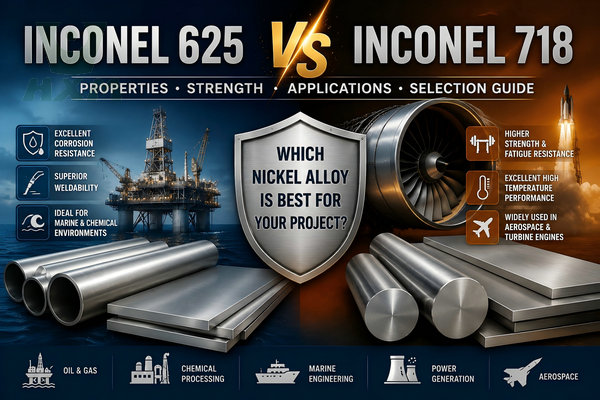
Inconel 600 is your choice when the fight is against heat, oxidation, carburization, or caustic chemicals — it’s the chemical plant workhorse with 72% nickel, serviceable to 1095°C, and costs $32–65/kg. Inconel 625 is your choice when the enemy is chlorides, seawater, pitting, or reducing acids — it brings 9% molybdenum, a PREN ≥48, and 827–1034 MPa strength, at $45–95/kg. If neither condition is clearly dominant, read on for the full head-to-head comparison with data you can take to your engineering team.
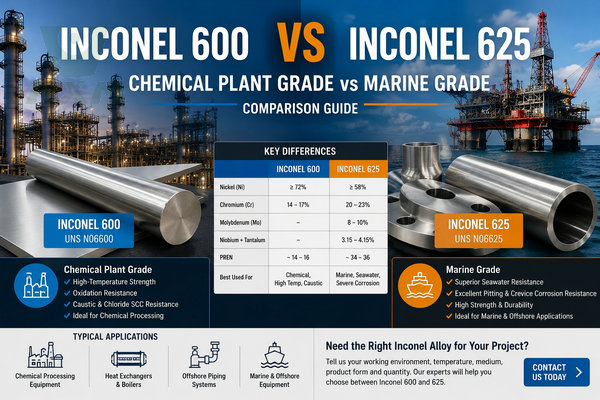
Why This Comparison Matters
Inconel 600 and Inconel 625 are two of the most widely specified nickel alloys in the world — but they solve fundamentally different problems. A chemical plant engineer specifying 625 for a caustic evaporator is overspending by 40–60% with zero performance gain. An offshore engineer specifying 600 for a seawater piping system is inviting pitting failure within months. This guide exists to prevent both mistakes.
The core difference comes down to one element: molybdenum. Inconel 600 has none. Inconel 625 has 9%. Every performance difference between these two alloys — corrosion, strength, cost, weldability, temperature limits — traces back to this single compositional choice.
💡 The Mo Factor: Molybdenum is the single most powerful alloying element for pitting and crevice corrosion resistance in nickel alloys. It’s also expensive (~$50,000–70,000/tonne on the LME). Whether your application needs molybdenum determines whether you need 625 or can save money with 600.
Quick Decision: 600 vs 625 at a Glance
🏭 Inconel 600
Chemical Plant Grade
Best for: High-temperature oxidation, carburization, nitriding, caustic soda, chlorine-free chemical processing
72% Ni · 0% Mo · 1095°C max
$32–65/kg · PREN ~15
✅ Caustic · Oxidation · Thermal Processing
❌ Seawater · Chlorides · Reducing Acids
🚢 Inconel 625
Marine & Corrosion Grade
Best for: Seawater, chloride SCC, pitting/crevice corrosion, reducing acids, high-strength requirements
58% Ni · 9% Mo · 980°C max
$45–95/kg · PREN ≥48
✅ Seawater · HCl · H₂SO₄ · High Strength
❌ Over 980°C · Tight Budget Caustic
Chemical Composition: What's Inside Each Alloy
| Element | Inconel 600 (UNS N06600) | Inconel 625 (UNS N06625) | Key Impact |
|---|---|---|---|
| Nickel (Ni) | 72.0% min | 58.0% min | Caustic SCC resistance, high-temperature oxidation |
| Chromium (Cr) | 14.0–17.0% | 20.0–23.0% | Oxidation resistance, general corrosion |
| Iron (Fe) | 6.0–10.0% | 5.0% max | Cost reduction, solid-solution strengthening |
| Molybdenum (Mo) | — None — | 8.0–10.0% | THE critical difference: pitting, crevice, reducing acid resistance |
| Niobium (Nb) | — None — | 3.15–4.15% | Solid-solution strengthening, carbide stabilization |
| Carbon (C) | 0.15% max | 0.10% max | Carbide precipitation control |
| Manganese (Mn) | 1.0% max | 0.5% max | Deoxidation, hot workability |
| Silicon (Si) | 0.5% max | 0.5% max | Oxidation resistance (minor) |
| Aluminum (Al) | — None — | 0.4% max | Deoxidation |
| Titanium (Ti) | — None — | 0.4% max | Carbide stabilization (minor) |
💡 The Composition Story in One Sentence
Inconel 600 is a simple, high-nickel binary Ni-Cr-Fe alloy — its corrosion resistance comes from nickel and chromium alone. Inconel 625 is a complex, multi-element superalloy with molybdenum, niobium, aluminum, and titanium — each element adds a specific capability (pitting resistance, strength, stabilization) that 600 simply doesn’t have. This is why 625 costs more: you’re buying a much more sophisticated metallurgical system.
Mechanical Properties Comparison
| Property | Inconel 600 (Annealed) | Inconel 625 (Annealed) | Notes |
|---|---|---|---|
| Tensile Strength | 550–690 MPa (80–100 ksi) | 827–1034 MPa (120–150 ksi) | 625 is 40–50% stronger due to Mo+Nb solid-solution strengthening |
| Yield Strength (0.2% offset) | 240–310 MPa (35–45 ksi) | 414–655 MPa (60–95 ksi) | 625’s higher yield gives better structural load capacity at moderate temperatures |
| Elongation | 30–45% | 30–60% | Both excellent. 625’s range depends on anneal temperature |
| Hardness | 65–95 HRB | 75–95 HRB | Comparable in annealed condition |
| Density | 8.47 g/cm³ | 8.44 g/cm³ | Essentially identical — no weight penalty either way |
| Melting Range | 1354–1413°C | 1290–1350°C | 600 melts ~60°C higher |
| Thermal Conductivity | 14.9 W/m·K @ 20°C | 9.8 W/m·K @ 20°C | Both low — 600 conducts ~50% better (easier to machine) |
Yield Strength vs Temperature: Inconel 600 vs 625
Higher MPa = stronger. Bars scaled to 625 room-temp yield (535 MPa = 100%).
Above 870°C, the strength gap closes as 625's solid-solution strengthening begins to dissolve. At very high temperatures (>980°C), 600 takes the lead.
Corrosion Resistance: The Deciding Factor
Corrosion Resistance: The Deciding Factor
Corrosion Performance Scorecard
| Corrosion Mechanism | Inconel 600 | Inconel 625 | Winner |
|---|---|---|---|
| High-Temperature Oxidation | ⭐⭐⭐⭐⭐ Excellent to 1095°C | ⭐⭐⭐⭐ Very good to 980°C | 600 |
| Carburization | ⭐⭐⭐⭐ Very good | ⭐⭐⭐ Good | 600 |
| Nitriding | ⭐⭐⭐⭐ Very good | ⭐⭐⭐ Good | 600 |
| Caustic SCC (NaOH, KOH) | ⭐⭐⭐⭐⭐ Industry standard | ⭐⭐⭐⭐ Very good | 600 (tie, cheaper) |
| Chloride SCC | ⭐⭐⭐⭐ Excellent (high Ni) | ⭐⭐⭐⭐⭐ Excellent | 625 |
| Pitting Corrosion | ⭐ Poor (PREN ~15) | ⭐⭐⭐⭐⭐ Excellent (PREN ≥48) | 625 |
| Crevice Corrosion | ⭐ Poor | ⭐⭐⭐⭐⭐ Excellent | 625 |
| Seawater / Marine Atmosphere | ❌ Not recommended | ⭐⭐⭐⭐⭐ Excellent | 625 |
| Sulfuric Acid (H₂SO₄) | ⭐⭐ Limited | ⭐⭐⭐⭐ Good (reducing) | 625 |
| Hydrochloric Acid (HCl) | ❌ Poor | ⭐⭐⭐ Moderate | 625 |
| Nitric Acid (HNO₃) | ⭐⭐⭐⭐ Very good | ⭐⭐⭐ Good | 600 |
| Phosphoric Acid (H₃PO₄) | ⭐⭐ Limited | ⭐⭐⭐⭐ Very good | 625 |
PREN: The Pitting Resistance Number That Tells You Everything
The Pitting Resistance Equivalent Number (PREN) is calculated from chemical composition and predicts how well an alloy resists localized corrosion in chloride environments:
Inconel 600 PREN ≈ 15–18
PREN = %Cr + 3.3×%Mo + 16×%N
= 16 + 3.3×0 + 16×0
= ~16
⚠ Comparable to 304/316 stainless steel. Not suitable for any application where pitting is a known failure mode. Seawater, brackish water, and any chloride-rich environment will cause pitting.
Inconel 625 PREN ≥ 48
PREN = 21.5 + 3.3×9 + 16×0
= 21.5 + 29.7
= ~51 (minimum: 48)
✅ Excellent. PREN ≥40 is generally considered “seawater-resistant.” 625’s PREN far exceeds this threshold. Suitable for offshore platforms, seawater piping, desalination plants, and splash zone service.
Deep Dive: Where 600 Wins on Corrosion
Don’t write off 600 — in its domain, it’s the undisputed champion with over 70 years of proven service:
🧪 Caustic Soda (NaOH) — 600’s Home Territory
Inconel 600 is the industry standard material for caustic soda service across all concentrations and temperatures. The high nickel content (72% min) provides near-immunity to caustic stress corrosion cracking — a failure mode that destroys stainless steels. 600 is specified for NaOH evaporators, heaters, piping, and storage vessels in chlor-alkali plants worldwide. While 625 also handles caustic well, it offers no meaningful performance advantage while costing 40–60% more. Using 625 here is simply over-engineering.
🔥 High-Temperature Oxidation — 1095°C Continuous Service
600’s 72% Ni + 16% Cr composition forms a dense, adherent Cr₂O₃ protective scale that remains stable to 1095°C. It’s the standard material for furnace muffles, heat-treat baskets, thermocouple sheaths, and petrochemical reformer tubes. 625’s maximum recommended service temperature is 980°C — above this, the molybdenum and niobium phases begin to coarsen and lose their strengthening effect, and the protective scale becomes less stable.
⚙ Carburization & Nitriding Resistance
In carburizing and nitriding atmospheres (common in heat-treat furnaces and petrochemical crackers), 600’s high nickel content slows carbon and nitrogen diffusion into the alloy. The protective Cr₂O₃ scale acts as a diffusion barrier. 625, with its lower nickel content and molybdenum content (Mo forms carbides that can locally deplete chromium), is slightly less resistant to these mechanisms.
Deep Dive: Where 625 Wins on Corrosion
🌊 Seawater & Marine Environments — 625’s Fortress
Inconel 625 with its 9% molybdenum is one of the very few metallic materials that is fully resistant to seawater corrosion in all conditions — stagnant, flowing, splash zone, and submerged. It does not pit, does not crevice-corrode, and does not suffer chloride SCC in marine environments. This makes it the material of choice for offshore platform piping, seawater cooling systems, submarine components, desalination plants, and marine exhaust systems. 600, lacking molybdenum, will pit in seawater within weeks to months depending on temperature and flow conditions.
🧪 Reducing Acids — HCl, H₂SO₄, H₃PO₄
In oxidizing acids like nitric acid (HNO₃), stainless steels and high-chromium alloys rely on chromium to form a passive film. 600, with 16% Cr, performs well here. But in reducing acids (HCl, H₂SO₄, H₃PO₄), the passive film breaks down and the alloy corrodes actively. This is where molybdenum becomes essential — Mo stabilizes the passive film and dramatically improves resistance to reducing acid attack. 625’s 9% Mo makes it viable for sulfuric acid up to ~40% concentration at moderate temperatures, and for hydrochloric acid at low concentrations and ambient temperature. 600 has essentially no resistance to these environments.
🔍 Pitting & Crevice Corrosion — PREN ≥48 vs PREN ~15
The difference in pitting resistance between these two alloys is not subtle — it’s a 3× gap in PREN. In any environment where chlorides are present (even in ppm levels at elevated temperatures), 625’s elevated molybdenum and chromium content provide a critical safety margin. Common scenarios where 625 prevents failure while 600 would pit: brackish cooling water, offshore atmospheric exposure (salt spray), chemical process streams with chloride contamination, and bleach (NaOCl) environments.
High-Temperature Performance
| Property | Inconel 600 | Inconel 625 | Winner |
|---|---|---|---|
| Max Continuous Service (Oxidizing) | 1095°C (2000°F) | 980°C (1800°F) | 600 |
| Max Continuous Service (Reducing) | 1038°C (1900°F) | 980°C (1800°F) | 600 |
| Creep Rupture Strength @ 650°C / 100,000h | ~55 MPa | ~110 MPa | 625 (2× stronger) |
| Creep Rupture Strength @ 760°C / 10,000h | ~24 MPa | ~50 MPa | 625 |
| Oxidation Rate @ 980°C (mg/cm²/100h) | ~0.12 | ~0.18 | 600 |
| Carburization Depth @ 927°C / 1000h | ~0.15 mm | ~0.22 mm | 600 |
| Scaling Temperature (Discontinuous) | 1175°C | 1038°C | 600 |
💡 High-Temperature Decision Rule: If the failure mode is oxidation, scaling, or environmental attack → choose 600 for temperatures above 980°C. If the failure mode is creep deformation under load at 500–760°C → choose 625 for its 2× higher creep rupture strength.
Cost Comparison & Value Analysis
| Product Form | Inconel 600 (USD/kg) | Inconel 625 (USD/kg) | 625 Premium |
|---|---|---|---|
| Sheet / Plate (3–10 mm) | $38–55 | $52–85 | +37–55% |
| Round Bar (10–100 mm Ø) | $32–48 | $45–72 | +41–50% |
| Seamless Pipe / Tube | $55–78 | $72–120 | +31–54% |
| Forgings | $40–65 | $58–95 | +45–46% |
| Welding Wire / Filler | $45–70 | $60–100 | +33–43% |
💰 The Value Equation: When 625 Is Worth the Premium
The 40–60% cost premium for 625 is justified when the alternative is premature failure, unplanned shutdown, or safety risk. In a chemical plant, one day of unplanned downtime can cost $100,000–500,000+. In an offshore platform, the logistics of replacing a corroded pipe section can dwarf the material cost by 10–50×. Rule: if chlorides are present or pitting is possible, pay for 625. If the environment is purely oxidizing/caustic/thermal, save money with 600.
Application Scenarios: Where Each Grade Wins
Caustic Soda Evaporators
Industry standard for NaOH concentration plants. 72% Ni provides near-immunity to caustic SCC. 625 works but adds zero value at 50% higher cost.
Seawater Cooling Piping
Offshore platforms, ships, desalination. PREN ≥48 is essential — 600 would pit within months. 625 is one of the few alloys fully resistant to all seawater conditions.
🔥Choose 600
Heat-Treat Furnace Components
Muffles, baskets, radiant tubes, retorts. 1095°C rating + carburization/nitriding resistance. 600 has dominated this application for decades.
Thermocouple Sheaths
Type K thermocouple protection tubes up to 1100°C. 600’s oxidation resistance and longevity at extreme temperatures are unmatched by 625.
Submarine & Naval Components
Propeller shafts, seawater valves, pump components. 625 resists stagnant seawater crevice corrosion — a critical failure mode for submarines at depth.
Petrochemical Reformer Tubes
Steam-methane reformers operating at 850–950°C in carburizing atmospheres. 600’s Cr₂O₃ scale resists both oxidation and carbon ingress.
Chemical Plant HCl Handling
Any process stream containing hydrochloric acid, even at low concentrations. 600 has essentially no resistance to HCl — 625’s Mo content provides the necessary protection.
Flue Gas Desulfurization (FGD)
Scrubbers and ducting in coal-fired power plants. The combination of SO₂, chlorides, and condensate demands molybdenum-bearing alloys. 600 is inadequate here.
Nuclear Steam Generator Tubing
Historically the primary material for PWR steam generator tubes. Although many plants have retrofitted to 690 (30% Cr) for improved PWSCC resistance, 600 remains in service in older plants and is still specified for balance-of-plant components.
Aerospace Exhaust & Ducting
Thrust reversers, exhaust nozzles, bellows. 625’s combination of high strength, thermal fatigue resistance, and salt-spray corrosion resistance makes it ideal for engine exhaust components.
Chemical Process Piping (General)
If chloride-free: 600 is more economical. If chloride-containing or acidic: 625 is mandatory. Always analyze the full process stream chemistry before deciding.
Dissimilar Metal Weld Overlay
625 filler (ERNiCrMo-3) is the universal solution for weld overlays on carbon/low-alloy steel in corrosive service. The overlay inherits 625’s corrosion resistance at a fraction of the cost of solid 625.
Step-by-Step Selection Framework
Walk through this decision tree. At each step, answer the question honestly — the path will lead you to the right alloy.
1. Is the environment oxidizing (air, O₂, CO₂, H₂O) at temperatures above 980°C?
2. Does the environment contain chlorides (seawater, brackish water, HCl, FeCl₃, bleach)?
YES → Inconel 625. 600 has PREN ~15 and will pit. If chlorides are present at any concentration, 625’s 9% Mo is non-negotiable. NO → continue to step 3.
3. Is the primary corrosive agent caustic soda (NaOH) or caustic potash (KOH)?
4. Does the application require high mechanical strength (>500 MPa yield) at 25–650°C?
5. Is the environment a reducing acid (H₂SO₄, HCl, H₃PO₄) or an acidic process stream?
6. Is the application a furnace, heat-treat, or thermal processing component (muffle, basket, radiant tube, retort)?
YES → Inconel 600. Carburization/nitriding/oxidation resistance + 1095°C service + lower cost make 600 the default choice for thermal processing. NO → continue to step 7.
7. Is budget the primary constraint and none of the above conditions point to 625?
YES → Inconel 600. At 40–60% lower cost, 600 is the economical choice for general oxidizing and mildly corrosive service where neither chlorides nor reducing acids are present. If budget is secondary and you want maximum corrosion safety margin: choose 625.
600 vs 625 vs 601 vs 718: Extended Reference
Walk through this decision tree. At each step, answer the question honestly — the path will lead you to the right alloy.
Sometimes the choice isn’t just between 600 and 625 — you may need to bring 601 or 718 into the conversation. Here’s the four-grade quick reference:
| Feature | Inconel 600 | Inconel 601 | Inconel 625 | Inconel 718 |
|---|---|---|---|---|
| Nickname | Chemical Plant Grade | Furnace Grade | Marine Grade | Aerospace Grade |
| Key Element | 72% Ni (highest) | 1.4% Al (Al₂O₃ film) | 9% Mo (pitting) | 5.3% Nb (γ” precip.) |
| PREN | ~15 | ~24 | ≥48 | ~26 |
| Max Temp (Oxidizing) | 1095°C | 1200°C | 980°C | 650°C |
| Tensile Strength | 550–690 MPa | 550–700 MPa | 827–1034 MPa | 1275–1375 MPa |
| Cost vs 600 | Baseline | +5–15% | +40–60% | +50–80% |
| Best For | Caustic, oxidation, carburization, nitric acid | Ultra-high-temp oxidation, carburization to 1200°C | Seawater, chlorides, reducing acids, high strength | Maximum strength to 650°C, rotating aero parts |
Frequently Asked Questions
Which is better for chemical plants — Inconel 600 or 625?
Inconel 600 is generally the better and more economical choice for chemical plant applications involving high-temperature oxidation, carburization, nitriding, or caustic solutions. Its 72% minimum nickel content provides outstanding resistance to chloride stress corrosion cracking in caustic environments, and it withstands continuous service up to 1095°C. Inconel 625 should be chosen when the process environment contains reducing acids (HCl, H₂SO₄), severe pitting/crevice corrosion conditions, or requires a PREN ≥48 — but it’s 40–60% more expensive and has a lower maximum service temperature (980°C vs 1095°C).
Can Inconel 600 be used in seawater?
Inconel 600 is not recommended for seawater service. It lacks molybdenum and has a very low PREN rating (approximately 15–18), making it susceptible to pitting and crevice corrosion in chloride-rich environments. For seawater, splash zone, or any marine application, Inconel 625 with its 9% molybdenum and PREN ≥48 is the correct choice. If budget is tight and seawater is the only concern, a 6% Mo super-austenitic stainless steel (e.g., 254 SMO, AL-6XN) may also be considered as a lower-cost alternative to 625.
What is the price difference between Inconel 600 and 625?
Inconel 625 is typically 40–60% more expensive than Inconel 600. Approximate pricing: Inconel 600 ranges from $32–65/kg depending on product form, while Inconel 625 ranges from $45–95/kg. The premium for 625 comes from its 9% molybdenum content (molybdenum is an expensive alloying element), higher nickel floor (58% min, though lower than 600’s 72%), and niobium additions. Both are subject to nickel and molybdenum LME price fluctuations on a monthly basis.
Which grade has better high-temperature performance?
Inconel 600 has better high-temperature performance for oxidation and carburization resistance. It can withstand continuous service up to 1095°C (2000°F) in oxidizing atmospheres, while Inconel 625 is rated to 980°C (1800°F). However, for high-temperature strength (creep rupture), Inconel 625 performs better up to ~650°C due to solid-solution strengthening from molybdenum and niobium — but above 650°C, the strengthening precipitates in 625 begin to dissolve and 600 catches up. For the highest temperature purely oxidation-limited applications, 600 is the better choice.
Does Inconel 600 resist pitting corrosion?
Inconel 600 has poor pitting corrosion resistance. Its PREN (Pitting Resistance Equivalent Number) is approximately 15–18 — comparable to 304/316 stainless steel. This is because 600 contains no molybdenum, the key element for pitting resistance. In chloride-containing environments (seawater, brackish water, HCl), 600 will pit and crevice-corrode. For pitting resistance, Inconel 625 with PREN ≥48 or, for the most extreme conditions, Inconel 686 (PREN ≥65) should be used.
Which grade handles caustic soda (NaOH) better?
Inconel 600 is the superior choice for caustic soda service. Its high nickel content (72% min) provides exceptional resistance to caustic stress corrosion cracking (SCC) across all concentrations and temperatures — 600 is the industry standard for NaOH evaporators, heaters, and piping. Inconel 625 also performs well in caustic environments but offers no significant advantage over 600 in this application, while costing 40–60% more. 600 is the economical, proven choice for caustic service.
Can Inconel 600 and 625 be welded together?
Yes, Inconel 600 and 625 can be welded together — this is a common practice in chemical plants and offshore platforms where different sections face different environments. The recommended filler metal is ERNiCrMo-3 (Inconel 625 filler / AWS A5.14). This filler is selected because: (1) it has excellent weldability and hot-cracking resistance; (2) the molybdenum in the 625 filler provides a safety margin for the weld zone’s corrosion resistance; (3) it prevents dilution-related corrosion issues that could occur if 600 filler were used on a 625 section exposed to chlorides. PWHT is generally not required for either alloy.
Is Inconel 600 or 625 easier to machine?
Inconel 600 is easier to machine than Inconel 625. 600 has a machinability rating of approximately 15–20% (vs B1112 steel), while 625 rates at 12–16%. 600’s lower work-hardening rate and absence of abrasive molybdenum carbides make it more forgiving. 625’s 9% molybdenum and niobium additions increase toughness and abrasive tool wear. For 600: carbide inserts at 25–45 m/min. For 625: carbide inserts at 20–35 m/min. Both require positive rake, rigid setups, and high-pressure coolant.
When should I choose Inconel 625 over 600?
Choose Inconel 625 over 600 when one or more of these conditions exists:
(1) The environment contains chlorides (seawater, brackish water, HCl, FeCl₃) — 625’s PREN ≥48 vs 600’s ~15;
(2) Pitting or crevice corrosion is a known failure mode;
(3) The application requires higher strength at moderate temperatures (827–1034 MPa vs 550+ MPa);
(4) Reducing acids (sulfuric, hydrochloric, phosphoric) are present;
(5) The component is a dissimilar metal weld overlay where 625 filler is the standard solution. If none of these conditions apply, 600 is the more economical choice.
Where can I buy Inconel 600 and 625 with MTC?
Huaxiao Metal supplies both Inconel 600 and Inconel 625 with full Mill Test Certificates (MTC) per EN 10204 3.1 or 3.2. We stock sheets, plates, bars, tubes, pipes, forgings, and fittings in both grades. All material is traceable to the original mill heat number. Contact us at [email protected] or WhatsApp +86-13761906384 for a quote within 12 hours.
Need Inconel 600 or 625? Get Both from One Supplier
Related Inconel Alloy Products
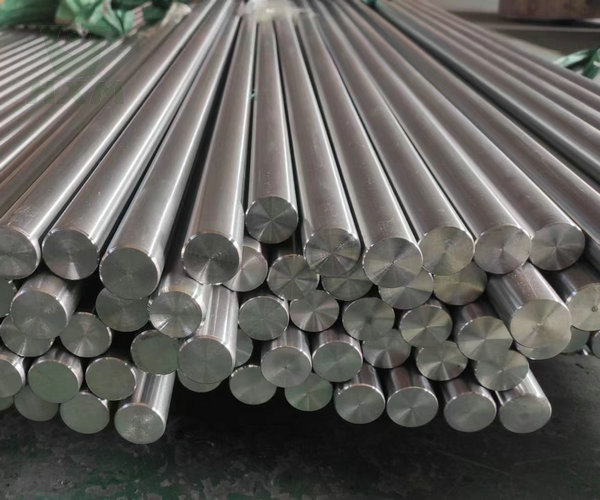
Inconel 617
Home › Steel Products › Special Alloy › Inconel Alloy › Inconel 617 Inconel 617 Supplier – UNS N06617 / W.Nr. 2.4663 Nickel Alloy Products UNS N06617 / 2.4663 — Co-Reinforced
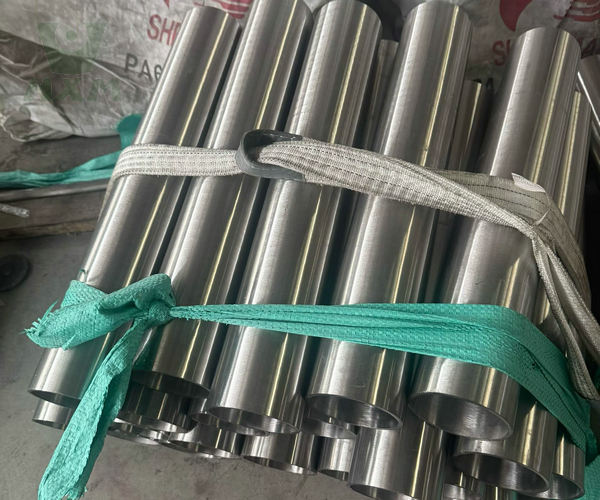
Inconel 601
Home › Steel Products › Special Alloy › Inconel Alloy › Inconel 601 Inconel 601 — Al-Enhanced Heat Resistant Alloy UNS N06601 / 2.4851 / NiCr23Fe — Al₂O₃ protective film, industry-leading carburization
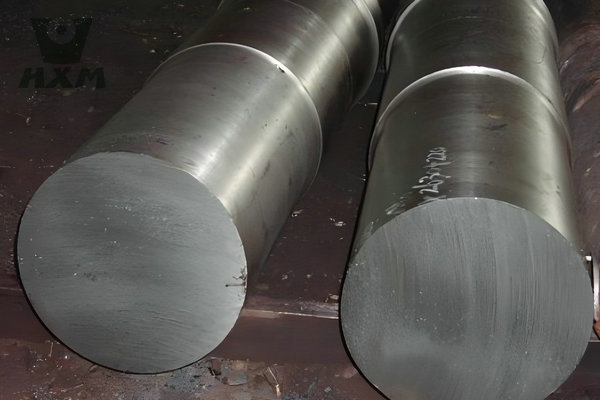
Inconel X-750
Inconel X-750 The Spring & Fastener Superalloy UNS N07750 — precipitation-hardened nickel superalloy with unmatched spring relaxation resistance to 815°C (1500°F). When springs must hold their
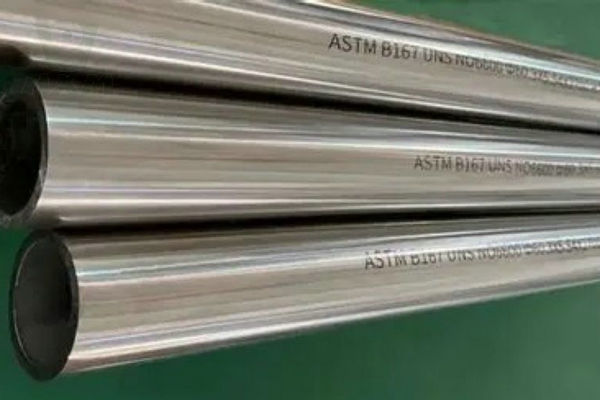
Inconel 600
Home › Steel Products › Special Alloy › Inconel Alloy › Inconel 600 Inconel 600 Supplier – UNS N06600 Nickel Alloy Products UNS N06600 / 2.4816 — Standard Ni-Cr High-Temperature Alloy
Inconel 718
Inconel 718 Nickel Superalloy — AMS 5662/5663 Bar, Forging, Sheet Supplier The strongest commercially available nickel-iron-chromium alloy. Gamma-prime & gamma-double-prime precipitation hardened to 1375 MPa
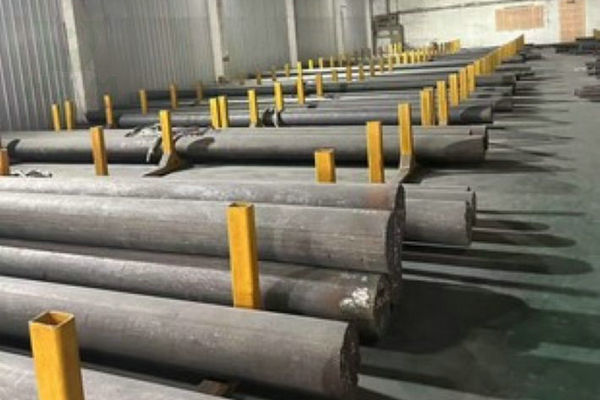
Inconel 625
Inconel 625 (UNS N06625 / 2.4856) — The Corrosion Champion of Nickel Superalloys Best Seller — Best Corrosion Resistance Huaxiao Metal supplies Inconel 625 sheet,