1010 Carbon Steel is a low-carbon steel with excellent machinability and moderate strength. It is commonly used in industrial applications where high strength is not required but formability and cost-effectiveness are important.
Key Features of 1010 Carbon Steel:
Carbon content: 0.08–0.13%
Manganese: 0.30–0.60%
Low hardness, easy to shape, weldable
Suitable for cold forming and general structural applications

Looking for reliable 1010 steel suppliers? Contact Huaxiao Metal for a quote today!
What Is 1010 Steel?
1010 steel is a low carbon steel with a carbon content of approximately 0.10%. It strikes a balance between strength and formability, making it suitable for structural parts, automotive components, and machinery manufacturing.
Compared to 1008 steel, 1010 steel is slightly stronger while still maintaining good formability.
Need to purchase 1010 steel for your manufacturing needs? Contact us today for pricing.
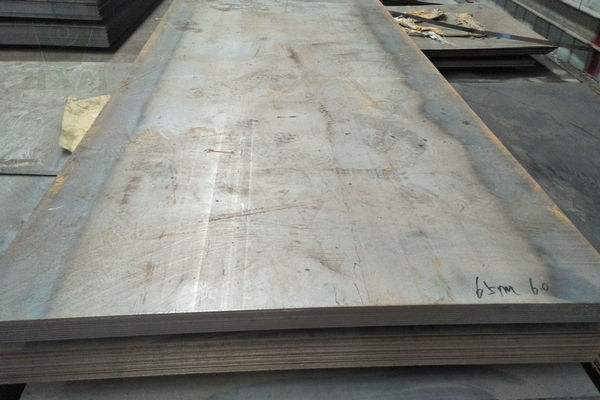
1010 Steel
1010 Steel (UNS G10100) – Supplier, Manufacturer & Price – Huaxiao Metal 1010 Carbon Steel is a widely used low-carbon steel known for its excellent
1010 Carbon Steel Data Sheet
Learn the key specifications of 1010 low-carbon steel, including its chemical composition, physical and mechanical properties, and global equivalent grades. These detailed tables will help buyers and manufacturers select the right material.
Does your project require 1010 carbon steel? Contact Huaxiao Metal for technical support or a detailed data sheet.
1010 Steel Equivalent Grades
| Standard | Equivalent Grade | Region |
|---|---|---|
| ASTM / SAE | AISI 1010 / SAE 1010 | USA |
| UNS | G10100 | USA |
| DIN | 1.1121 | Germany |
| JIS | S10C | Japan |
| EN | C10E / C10R | Europe |
| ISO | C10 | International |
| GB/T | 10# (comparable) | China |
Need cross-standard compatibility? Our sales team can help you find matching carbon steel grades for global sourcing.
1010 Low Carbon Steel Chemical Composition
| Element | Typical Range |
|---|---|
| C | 0.08 – 0.13% |
| Mn | 0.30 – 0.60% |
| P | ≤ 0.040% |
| S | ≤ 0.050% |
| Fe | Balance |
Looking for 1010 carbon steel with consistent chemical performance? Ask our team about mill certificates and quality control standards.
Steel 1010 Mechanical Properties
| Property | Typical Value | Condition |
|---|---|---|
| Tensile Strength | ≥ 305 MPa | Cold Rolled / Annealed |
| Yield Strength | ≥ 165 MPa | Cold Rolled / Annealed |
| Elongation (in 50mm) | ≥ 28% | Standard Annealed |
| Brinell Hardness | ~95 HB | Annealed |
| Elastic Modulus | ~200 GPa | Room Temperature |
Planning to form, bend, or weld 1010 carbon steel? These mechanical properties make it ideal for stamping, machining, and fabrication.
1010 Carbon Steel Physical Properties
| Property | Value |
|---|---|
| Density | 7.87 g/cm³ |
| Melting Point | ~1425 – 1540 °C |
| Thermal Conductivity | 51.9 W/m·K @ 25°C |
| Electrical Resistivity | ~0.000018 Ω·m |
| Thermal Expansion | 12.1 µm/m·°C |
1010 Steel in Modern Industry
As we move into 2026, the demand for sustainable and recyclable materials makes 1010 steel even more relevant.
Fasteners: Specialized bolts and rivets that don’t require high tensile strength but need high toughness.
Sheet Metal Work: Used for panels, enclosures, and brackets where the surface finish (after cold rolling) is critical.
Automotive Tubing: Used in fluid-carrying tubes and structural supports where welding integrity is non-negotiable.
Heat Treatment: Can 1010 be Hardened?
A common question we receive is whether 1010 steel can be heat-treated. Since the carbon content is low, conventional quenching will not significantly harden the core. However, Case Hardening (Carburizing) is highly effective. By diffusing carbon into the surface, you can achieve a wear-resistant “outer shell” while maintaining a tough, ductile core.
FAQ
What is the primary difference between 1010 and 1018 carbon steel?
The main difference lies in carbon content and strength. 1010 steel contains approximately 0.10% carbon, making it more ductile and better for severe cold-forming or deep drawing. 1018 steel has about 0.18% carbon, providing higher strength and better machinability, but it is slightly less flexible for intricate bending than 1010.
Is 1010 carbon steel suitable for welding?
Yes, 1010 carbon steel is considered highly weldable. Due to its low carbon and manganese content, it can be welded using any standard process (MIG, TIG, Stick, or Resistance welding) without the risk of cold cracking. Pre-heating and post-weld heat treatment are generally not required.
Can 1010 steel be hardened through heat treatment?
Because 1010 steel has a low carbon percentage, it cannot be significantly hardened by standard quenching and tempering. However, it can be case-hardened (carburized). This process adds a hard, wear-resistant surface layer while keeping the internal core tough and ductile.
What are the common equivalent grades for 1010 steel?
Depending on the international standard, 1010 steel is often compared to:
ASTM/AISI: 1010
JIS: S10C
DIN/EN: C10 or 1.0301
GB (China): 10# steel
What surface finishes can I choose for 1010 steel sheets?
As a professional supplier, Huaxiao Metal offers 1010 steel in several finishes:
Cold Rolled (CR): For a smooth, shiny surface and tight thickness tolerances.
Hot Rolled (HR): For cost-effective structural applications.
Pickled & Oiled (P&O): To remove scale and prevent rust during transit.
Why is 1010 steel preferred for automotive components?
1010 steel is favored in the automotive industry for its excellent formability and cost-efficiency. It is ideal for stamping complex shapes like brackets, clutch plates, and small housing components where high-strength alloys are not necessary but reliable performance is a must.
In Conclusion:
1010 Carbon Steel is a versatile, low-carbon steel widely used in automotive, machinery, and light structural applications. By understanding its chemical composition, mechanical properties, and industrial applications, you can make an informed choice for your project.
CTA: Contact Huaxiao Metal today to request a quote for 1010 Carbon Steel products