As an engineer, fabricator, or procurement manager, selecting the correct carbon steel grade is a critical decision that impacts project cost, performance, and longevity. Three of the most common grades specified under the JIS (Japanese Industrial Standard) are SS400, S45C, and S50C.
At Huaxiao Metal, we understand that choosing the wrong grade can lead to structural failure or unnecessary costs.
But what are the real differences, and which one is right for your application? This article will introduce the characteristics and uses of carbon steel. The representative carbon steels are SS400, S45C, and S50C.
Understanding the JIS Naming Convention
Before diving into the technical details, it is crucial to understand what these names mean:
SS400 (Structural Steel): The “400” represents its minimum tensile strength of 400 MPa. It is a general-purpose mild steel.
S45C (Carbon Steel): The “45” indicates a mean carbon content of 0.45%. This is the JIS equivalent of AISI 1045 steel.
S50C (High Carbon Steel): The “50” indicates a mean carbon content of 0.50%. It offers higher hardness than S45C.
SS400 vs. S45C vs. S50C Comparison
For a quick overview, here’s a summary of the key differences between these three popular carbon steel grades.
| Feature | SS400 | S45C | S50C |
| Standard | JIS G 3101 | JIS G 4051 | JIS G 4051 |
| Type | Mild / Low Carbon Structural Steel | Medium Carbon Steel | Medium-High Carbon Steel |
| Carbon Content | Not specified, typically < 0.25% | 0.42% – 0.48% | 0.47% – 0.53% |
| Key Characteristic | Excellent formability & weldability | Good balance of strength & toughness | High hardness & wear resistance |
| Tensile Strength | 400-510 MPa | ≥ 570 MPa (Annealed) | ≥ 610 MPa (Annealed) |
| Weldability | Excellent | Fair (Requires preheating) | Poor (Not recommended) |
| Machinability | Good | Good (Annealed condition) | Fair (More difficult) |
| Common Use | Structural beams, plates, and general fabrication | Machine parts, shafts, gears, bolts | High-wear parts, molds, and automotive components |
| Heat Treatable | No (Not typically heat-treated) | Yes (Quenching & Tempering) | Yes (For maximum hardness) |
As a leading supplier of carbon steel in China, Huaxiao Metal maintains a massive inventory of SS400, S45C, and S50C in bars, plates, and coils. Whether you need a single container or a long-term supply contract, we provide factory-direct pricing and technical support.
What is the Commonly Used Carbon Steel?
When it comes to metal materials, we must first understand steel. Here we will introduce the definition, types and characteristics of carbon steel.
Characteristics of Carbon Steel
Carbon steel is a type of steel (steel), not alloy steel (special steel).
Before introducing the characteristics of carbon steel, let us first sort out the definition of steel.
Steel is an alloy based on iron. Iron in its pure iron state is brittle and prone to rust, making it unusable as an industrial product. Therefore, carbon “C”, manganese, phosphorus, etc. are usually added to iron and used in the form of an alloy. “Steel” refers to a substance with a carbon content of approximately 0.02% to 2.14%.
Those with a carbon content of more than 2.1% are called “cast iron”, and those with a carbon content of about 2.1% to 6.67% are treated as cast iron. When the amount of carbon increases above this level, it becomes brittle again and cannot be used for industrial purposes.
In JIS, iron with a carbon content of less than 0.02% is classified as “pure iron”, steel with a carbon content of 0.02% to 2.14% is classified as “steel”, and cast iron with a carbon content of more than this is classified as “iron”. Pay attention to the definitions of “iron” and “cast iron”.
The amount of carbon contained in iron, its common name, and JIS name are as follows.
Name | Iron | Steel | Cast Iron |
Carbon Content | less than 0.02% | 0.02%~2.14% | 2.1%~6.67% |
JIS Name | Pure Iron | Steel | Iron |
When iron contains more carbon, the iron becomes harder and more brittle. It is not easily deformed even if it is subjected to force, but it is easily broken and shattered when it is subjected to impact force or a force exceeding the allowable range. Therefore, materials for machinery and structures are required to have both hardness and strength.
Steel contains just the right amount of carbon to give iron both its hardness and strength.
Moreover, materials that add manganese, chromium, titanium, etc. to steel to make it have various characteristics called alloy steel and special steel.
Special steels with various characteristics depending on the purpose, such as steel that does not easily rust and steel that has high heat resistance, have been developed.
Materials in steel that are not alloy steel or special steel are called carbon steel. That is, carbon steel is steel in its original state without special additives and processing. The amount of elements other than iron “Fe” and carbon “C” in carbon steel is regulated to be less than a predetermined value, for example, chromium is 0.3% or less and titanium is 0.05% or less.
There are various types of carbon steel, which are divided into the following categories according to the amount of carbon contained, purpose of use, strength, etc.
Carbon Content | ~0.1% | 0.1%~0.25% | 0.25%~0.3% | 0.3%~0.6% | 0.6%~2.14% |
Classification | Low Carbon Steel | Medium Carbon Steel | High Carbon Steel | ||
JIS Name | SPC material | SS material | − | SK material | |
SC material | |||||
Carbon steel is divided into low carbon steel, medium carbon steel and high carbon steel according to the carbon content.
Carbon content of 0.02% to 0.25% is called low carbon steel, 0.25% to 0.6% is called medium carbon steel, and 0.6% to 2.14% is called high carbon steel.
Steel becomes harder as it contains more carbon, so low carbon steel is used as a steel plate made by cold rolling that deforms the material at low temperatures, and high carbon steel is used for tools that require hardness, etc.
The most widely used steel. What is Carbon Steel SS400?
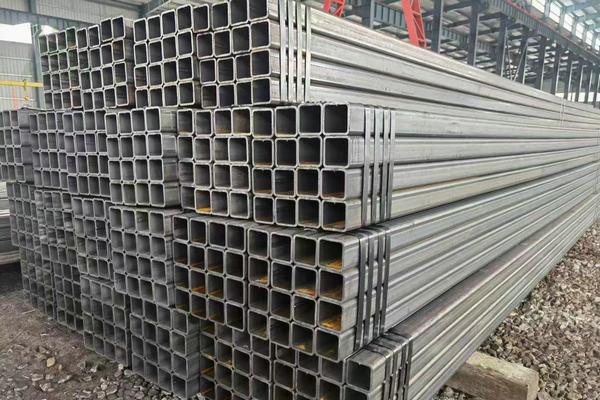
What kind of material does carbon steel SS400 have? Here we will introduce the features and uses of carbon steel SS400.
Characteristics of Carbon Steel SS400 (JIS G 3101)
SS400 is a type of SS material (Structural Steel) called rolled steel for general structural use.
As the name suggests, SS material is steel produced by rolling as a general structural material. The name of SS material is represented by the symbol “SS” followed by a three-digit number. It was formerly labeled SS41. The 3-digit number indicates the tensile strength of the material, which in the case of SS400 indicates structural steel with a tensile strength of 400N/mm2 or above. In addition to SS400, SS materials also include SS300, SS490, and SS540, but the most widely used one is SS400.
SS400 is characterized by its low price and easy availability compared with other metal materials.
It also has the characteristics of easy welding, cutting, and other processing. It is often circulated in sheet form, and it can also be used for sheet metal processing, laser cutting, etc. But quenching is not possible. In addition, since it rusts easily, anti-rust treatments such as electroplating and black dyeing are required.
Uses of SS400
Its primary use is in non-critical structural applications where high strength is not the main requirement. Think of:
Building structures, beams, and columns
Bridges and ship components
General metal fabrication and machine base plates
Tanks and containers
When to Choose SS400: Choose SS400 when your priority is cost-effectiveness, excellent weldability, and general structural integrity over high strength or wear resistance.
Need a reliable supply of SS400 steel?
Advantages and Disadvantages of SS400
What are the advantages and disadvantages of SS400, the most widely used steel?
Advantage
- Cheap and easy to get
- Easy to weld
- Also suitable for sheet metal, cutting, and other processing
- Extremely versatile
Because it is a widely distributed general-purpose material, it is cheaper and easier to obtain than other metal materials. The material is soft compared to stainless steel, so it is easy to process such as cutting and sheet metal processing, and can be used for various purposes. It is also suitable for welding as it has a lower carbon content and is less susceptible to heat. However, when you want to weld thicker materials such as a plate thickness of 25mm or more, it is best to use welding materials such as SM materials instead of SS400.
Disadvantages
- Cannot be quenched
- The texture is also softer among iron and steel materials
- Because it is easy to rust, anti-corrosion measures such as electroplating and painting are required.
SS400 is a very common material, so it is not a particularly strong material as an iron steel material. When stronger materials are needed, other materials need to be researched. And because it has a low carbon content and cannot be quenched, it cannot be processed to obtain hardness only on the surface. It is also prone to rust and requires protection by electroplating, painting, and oxide film (black skin).
Commonly Used surface Treatments for SS400
SS400 is prone to rust, so surface treatments such as nickel plating and chrome plating are often performed. Most of the SS materials we see in our lives, such as bridges, are electroplated materials that have been further coated. In situations where high corrosion resistance is not required, such as in places that are not exposed to water, materials that have been treated with a black scale (oxide film) are sometimes used. The blackened steel plates laid at the entrances and exits of construction projects and on the ground are SS400 treated with black leather.
List of commonly used surface treatments for SS400
- Fe3O4 film (dyed black): Use chemicals to oxidize the surface of iron, thereby being covered with a film of Fe3O4. Prevent corrosion.
- Electrolytic nickel plating: Nickel phosphorus plating is performed using chemical reduction. Performed together with heat treatment to increase surface hardness and improve wear resistance.
- Hard chrome plating: It is chrome plating that is thicker than decorative chrome plating. Improved wear resistance and sliding properties.
- Trivalent chromate: This is a treatment performed as a post-plating treatment to improve the quality of electroplating. Mainly used for electroplating.
S45C is a Commonly Used Material Alongside SS400
S45C (JIS G4051) is the Japanese equivalent of AISI 1045 carbon steel. If your drawing specifies 1045, S45C is your go-to standard in Asia.
S45C is also widely used as a mechanical material. Here we introduce the properties of S45C.
Characteristics of S45C Medium Carbon Steel (JIS G 4051)
S45C is a type of SC material (Steel Carbon) called carbon steel for mechanical structures.
SC materials are identified by the symbol “SC” followed by a 2-digit number. The number part indicates the carbon content of the material. If it is S45C, it means it contains 0.45% carbon. It was previously marked S450C, so in old drawings, etc. you may see S450C written there.
S45C and SS400 are both very commonly used materials. It is the most popular material among known SC materials. Therefore, it is relatively cheap, easy to obtain, and used in various places.
Wear resistance, hardness, etc. can be controlled through heat treatment such as quenching, so it is often used in mechanical parts that require durability, such as gears. On the other hand, it is easy to rust, so anti-rust treatments such as oiling and painting are required.
Uses of S45C Medium Carbon Steel (JIS G 4051)
S45C is mostly used for mechanical parts, especially the parts inside the machine.
Examples include automobile engine peripheral parts and gears, as well as standard mechanical parts such as pulleys and brackets. When you want to make something with iron-based materials and when high strength is not required, choose SS400. When strength and durability are required, S45C can be said to be the first recommended alternative material. S45C is such a common mechanical component material.
Advantages and Disadvantages of S45C
What are the advantages and disadvantages of S45C? Let’s introduce them in turn.
Advantages
- Strength imparted by heat treatment
- Cutting can be easily accomplished before heat treatment
- High versatility
It is a widely distributed general-purpose material, so it is cheaper and easier to obtain than other metal materials. If it is before quenching, it is easier to perform cutting processing, so when manufacturing gears, etc., heat treatment is generally performed after cutting processing. On the other hand, regarding grinding processing, heat treatment is usually performed after cutting processing, and then grinding is performed for dimension adjustment and the like.
Disadvantages
- Not suitable for welding
- Not commonly used as sheet metal
- Surface treatment is required due to easy rusting
S45C is a material suitable for heat treatment. In other words, its properties will change due to heat, so it is not suitable for welding using heat.
Commonly Used Surface Treatments for S45C
The selection method of surface treatment is the same as that of SS400.
S45C is the go-to material for machine parts that require a good balance of strength and durability:
Shafts, axles, and spindles
Gears, sprockets, and cams
High-strength bolts and studs
Couplings and connecting rods
When to Choose S45C: Choose S45C when you need a part with higher strength and wear resistance than SS400, and you plan to machine and/or heat-treat it to achieve specific mechanical properties.
S50C is a Harder Material Than S45C
Materials that are easy to compare side by side with S45C include S50C. What kind of material is S50C made of?
Characteristics of S50C High Carbon Steel (JIS G 4051)
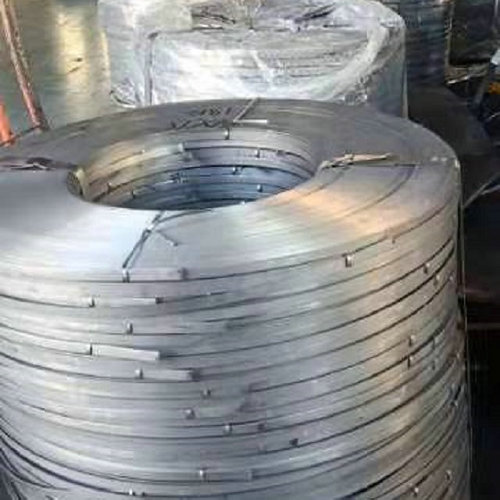
S50C is the same carbon steel used for mechanical structures as S45C and is a type of SC material.
S50C contains 0.50% carbon. As mentioned before, iron has the property that the more carbon it contains, the harder it becomes. Therefore, S50C is harder than S45C, but correspondingly more brittle. Moreover, the cost of materials is higher than that of SS400 and S45C.
S50C, like S45C, is a material often used for mechanical parts, etc. However, S50C is also classified as a material with a large amount of carbon among SC materials. Not only the hardness, tensile strength, but also wear resistance are higher than S45C, so it is used for parts requiring higher strength.
The S50C is also capable of heat treatment. It has poor corrosion resistance and needs anti-rust treatment.
SC materials with more carbon content than S50C include S55C, for example. S55C is harder than S50C and is a material with excellent wear resistance and other properties. In addition to the strength of the material, the distinction between S50C and S50C must also consider the shape of the circulating material.
The advantages, disadvantages, and commonly used surface treatments of S50C are the same as S45C and S55C.
Uses of S50C High Carbon Steel (JIS G 4051)
S50C is selected for applications where surface hardness is the most critical factor:
Dies and punches
High-wear automotive and machine components
Molds for plastics
Hand tools and agricultural implements
When to Choose S50C: Choose S50C when your application demands maximum hardness and wear resistance, and where toughness and weldability are not major concerns.
Mechanical and Physical Properties of SS400, S45C and S50C
The following is a summary of the specifications of the SS400, S45C and S50C introduced earlier. When designing, etc., it is recommended to pay attention to these values and perform calculations.
Mechanical Properties
The mechanical properties of SS400, S45C, and S50C are specified by JIS as shown in the table below.
※The values stated are representative, not guaranteed values.
Types | Grade | Heat Treatment(℃) | Representative Values of Mechanical Properties | ||||
Tensile Strength(N/mm2) | Endurance(N/mm2) | Elongation | Hardness | ||||
Steel | SS400 | − | 400~510 | 215 and above | 21% and above | − | |
Carbon Steel | S45C | Normalizing | 810~860 | 570 and above | 345 and above | 20 and above | 167~229HBW |
Annealing | about 800 | − | − | − | 137~170HBW | ||
Quenching | 810~860 | 690 and above | 490 and above | 17 and above | 201~269HBW | ||
Tempering | 550~650 | ||||||
S50C | Normalizing | 810~860 | 610 and above | 365 and above | 18% and above | 179~235HBW | |
Annealing | about 800 | − | − | − | 143~187HBW | ||
Quenching | 810~860 | 740 and above | 540 and above | 15% and above | 212~277HBW | ||
Tempering | 550~650 | ||||||
Physical Properties
The physical properties of SS400, S45C, and S50C are specified by JIS as shown in the table below. There is not much difference in the physical properties of S45C and S50C.
※The values stated are representative, not guaranteed values.
Physical Properties of SS400
| Physical Properties | Physical Value |
| Longitudinal elastic coefficient (Young’s modulus) [GPa] | 205~206 |
| Transverse Elastic oefficient [GPa] | 79~82 |
| Poisson’s Ratio (normal temperature) | 0.27~0.29 |
| Density [g/cm3] | 7.84~7.86 |
| Proportion | 7.84~7.86 |
| Melting Point [℃] | 1660~1770 |
| Thermal Conductivity [W/(m・K)] | 44~60 |
| Thermal Expansion Coefficient [10-6/K] | 10.7~11.6 |
| Inherent Resistance [10-8Ω・m] | 13.3~19.7 |
| Specific eat [J/(kg・K)] | 0.474~0.494 |
Physical Properties of S50C
| Melting Point | about 1,660〜1,680℃ |
| Density(g/cm³) | 7.84 |
| Young’s Modulus (Longitudinal elastic coefficient) GPa | 205 |
| Modulus of Rigidity (Transverse elastic coefficient)GPa | 82 |
| Poisson’s Ratio | 0.25 |
| Linear Expansion Coefficient(ppm/K) | 11.7 |
| Specific Heat at Constant Pressure(J/kg・K) | 489〜494 |
| Thermal Conductivity(W/m・K) | 44 |
Key Differences: Weldability vs. Machinability
Weldability (SS400 Wins)
SS400 is the champion of welding. Because of its low carbon content, it does not crack easily during the cooling process. S45C and S50C, however, require pre-heating (200°C+) and slow cooling to prevent hydrogen-induced cracking.
Machinability (S45C Wins)
While SS400 is soft, it can be “gummy” during CNC machining. S45C provides the best balance, allowing for a mirror-like surface finish and high-speed cutting. This makes it the preferred grade for precision shafts.
Comparison Guide: For a deeper look at how 1045 compares to other common grades, see our 1018 vs. 1045 Steel Comparison.
International Equivalent Grades Chart
These JIS grades often have equivalents under other international standards. This can help source or specify materials globally.
| JIS (Japan) | ASTM (USA) | DIN (Germany) | BS (UK) |
| SS400 | A36 / A283 Gr.D | St37-2 / S235JR | 40B / 43B |
| S45C | 1045 / 1049 | C45 / CK45 | 080M46 |
| S50C | 1050 | C50 / CK50 | 080M50 |
Note: Equivalents are approximate. Always consult material specifications for direct comparison.
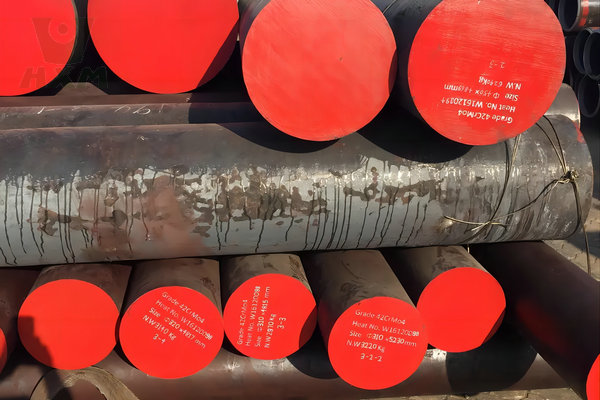
Standard Sizes for SS400, S45C and S50C
Types | Grades | Shapes | Unit | Standard Size |
For general structure | SS400 | Flat Steel | t | 6,9,12,13,14,16,19,22,25,28,30,32,35,38,40, |
Square Steel | □ | 9,13,16,19,22,25,32,38,44,50,65,75,90,100 | ||
cold rolled steel bar | SS400D | Flat Steel | t | 2, 3, 4, 4.5, 5, 5.5, 6,7,8,9,10,11,12,13,14, |
Hexagonal Steel | Opposite side H | 3,5,6,7,8,9,10,11,12,13,14,17,19,21,22,23, | ||
Round Bar | D | 2,3,4,5,6,7,8,9,10,11,12,13,14,15,16,17,18, | ||
For mechanical structure | S45C-D | Round Bar | D | 2, 2.5, 3, 3.5, 4, 4.5, 6,7,8,9, 9.5, 10,11, |
S45C | Flat Steel | t | 3, 4.5, 5,6,8,9,10,12,16,19,22,25,30,32,38,50 | |
S50C | Flat Steel | t | 6, 9.5, 12.7, 13,16,19,22,25,27,32,38, | |
Square Steel | □ | 12.7, 13,16,19,25,28,32,38,44,50,55, |
However, this standard size is specified by JIS and does not represent the actual circulation situation. Moreover, the circulation status will also change due to current events. Therefore, please confirm the shape and size of the material using the material manufacturer’s manual, etc.
Application Scenarios: Where to Use Which?
When to choose SS400:
Construction bridge structures.
General hardware and brackets.
Storage tanks and simple plates.
Note: Choose this if cost is your primary concern and strength is secondary.
When to choose S45C (AISI 1045):
Automotive transmission shafts and axles.
Hydraulic cylinder rods.
Medium-load gears and sprockets.
Note: This is the most popular grade for moving mechanical parts.
When to choose S50C:
Plastic mold bases.
Heavy-duty agricultural machinery parts.
High-strength fasteners and pins.
FAQ: Common Questions from Global Buyers
Can I use S45C instead of SS400?
Yes, S45C is significantly stronger. However, it is more expensive and harder to weld. If your project involves extensive welding of thin plates, stick with SS400.
Is S45C exactly the same as AISI 1045?
Technically, S45C is a JIS standard and 1045 is an ASTM/AISI standard. While their carbon content is identical, S45C has slightly stricter phosphorus and sulfur limits in some mill batches. For 99% of applications, they are interchangeable.
Why is S50C often used for molds instead of S45C?
S50C offers slightly better edge retention and core hardness in thicker plates, which is critical for the stability of plastic injection molds.
Does SS400 rust faster than S45C?
Both will rust if exposed to moisture. However, because S45C is often used for precision parts, it is usually supplied with anti-rust oil or requires plating (like hard chrome).
In Conclusion
SS400 and S45C are the most commonly used materials as mechanical and structural materials, and S50C is the most commonly used material after them. It can even be said that “when thinking about making parts and machinery out of metal, the first choices are SS400 and S45C.”
Making the Right Choice for Your Project
For structural, weldable, and economical needs: SS400 is the clear winner.
For strong, machinable parts requiring a balance of toughness and hardness: S45C is the industry standard.
For applications demanding maximum surface hardness and wear resistance: S50C is the superior choice.
Still have questions? Choosing the perfect steel grade can be complex. The team at Huaxiao Metal has decades of experience helping clients select the optimal material for their projects.
Contact us today for a free consultation or to get a quick quote on your material requirements.