As a leading global metal supplier, we often get questions about different material standards. One of the most common is: “What exactly is SUS material?” If you’re sourcing materials for a project, understanding this designation is crucial for making the right choice.
This guide provides a definitive look at SUS material for engineers, designers, and procurement managers.
In summary (TL;DR):
What it is: SUS is the material designation for stainless steel under the Japanese Industrial Standards (JIS). The name “SUS” stands for “Steel Use Stainless.”
Key Grades: The most common grades include SUS304 (the versatile workhorse), SUS316 (superior corrosion resistance), and SUS430 (heat-resistant and cost-effective).
Global Equivalence: SUS grades have direct equivalents in other international standards, such as ASTM (American) and GB (Chinese).
Why it matters: Choosing the correct SUS grade directly impacts the longevity, performance, and cost-effectiveness of your final product.
Understanding the Terminology: SUS vs. JIS, ASTM, and GB
Navigating international metal standards can be a complex task. Here’s a simple breakdown of how SUS relates to other common standards:
| Standard | Marking | Example Grade | Description | Typical Application |
|---|---|---|---|---|
| JIS (Japan) | SUS + number | SUS304, SUS316, SUS430 | Japanese standard for stainless steel; “SUS” prefix indicates stainless steel; numbers represent alloy composition and properties | Japanese and Asian market procurement, export to JIS standard equipment |
| ASTM / AISI (USA) | SS or grade number | 304, 316, 430 | American standard system; SS = Stainless Steel, or direct grade number | North America and international market procurement, engineering projects |
| GB (China) | Chinese standard code | 06Cr19Ni10 (SUS304), 0Cr17Ni12Mo2 (SUS316), 0Cr17 (SUS430) | Chinese standard, often expressed as chemical composition | Domestic procurement, export projects, standard comparison |
SUS (JIS): This is the official designation within the Japanese Industrial Standards (JIS). When a material is labeled “SUS,” it certifies that it meets the specific composition and quality requirements set by Japan.
ASTM / AISI: This is the standard used in the United States, managed by the American Society for Testing and Materials. For example, the well-known “304 Stainless Steel” is the ASTM designation.
GB: This is the Chinese National Standard (Guobiao). China has its own set of codes for stainless steel grades.
For practical purposes, many grades are directly equivalent. For instance, JIS SUS304 is the same as ASTM 304 and GB 06Cr19Ni10. Understanding these equivalencies is vital for global sourcing and component specification.
What is SUS Material?
“SUS” stands for “Steel Use Stainless” and is the prefix used in the Japanese JIS standard for stainless steel. The first letter s in the period indicates the meaning of steel, the second letter indicates the meaning of use, and the third letter indicates the meaning of stainless. The numbers following SUS indicate the specific alloy composition and mechanical properties.
For example, SUS304 is the most commonly used austenitic stainless steel.
SUS stainless steel is primarily alloyed with chromium (Cr) and nickel (Ni), providing excellent corrosion resistance, high temperature resistance, good workability, and weldability. Because of its stable performance and wide applicability, SUS stainless steel is widely used globally.
Why SUS Stainless Steel is Widely Used
Excellent Corrosion Resistance
Stainless steel typically contains more than 10.5% chromium, which forms a passive oxide layer to prevent further oxidation and corrosion.
High Temperature and Chemical Resistance
Austenitic SUS grades resist high temperatures, while ferritic grades have good oxidation resistance. Suitable for acid, alkali, and salt environments.
Good Fabrication Performance
SUS stainless steel can be easily welded, cold-formed, and deep drawn, suitable for kitchen equipment, food processing, and decorative components.
Hygienic and Easy to Clean
Smooth surface, non-toxic, ideal for food and pharmaceutical industries.
Detailed Breakdown of Common SUS Material Grades
While hundreds of SUS grades exist, a few dominate the market due to their excellent balance of properties and cost.
What is SUS304 Material?
SUS304 refers to 304 stainless steel.SUS is the Japanese material standard, 304 stainless steel is by the United States ASTM standard production out of the stainless steel grade.304 is equivalent to our country’s (0Cr18Ni9) stainless steel, Japan also cited the United States called, said: SUS304.
Due to the high content of nickel and austenitic single-phase organization at room temperature, it has a high corrosion resistance compared with Cr13 stainless steel, high plasticity and toughness at low, room, and high temperatures, as well as better cold forming and weldability.
SUS316 - The Marine & Medical Grade
When you need a step up in corrosion resistance, especially against chlorides (like saltwater) and industrial chemicals, SUS316 is the answer. The key difference is the addition of molybdenum (Mo), which significantly enhances its durability in harsh environments.
Key Properties:
- Superior resistance to pitting and crevice corrosion from chlorides.
- Excellent strength and creep resistance at elevated temperatures.
- Maintains the good formability and weldability of SUS304.
Common Applications:
- Marine hardware and coastal architecture
- Medical and pharmaceutical equipment
- Chemical processing and storage tanks
- Food and beverage equipment handling acidic products
Source high-quality SUS316 for your demanding project.
SUS430 - The Heat-Resistant & Cost-Effective Choice
SUS430 is a ferritic stainless steel, meaning it has a different crystalline structure from the 300 series. It is a straight chromium steel and contains no nickel, making it a more economical option. Its main advantages are good heat resistance and formability.
Key Properties:
- Good corrosion and heat resistance, superior to carbon steels.
- Resistant to stress corrosion cracking.
- Magnetic.
- Lower cost due to the absence of nickel.
Common Applications:
- Automotive exhaust systems and mufflers
- Appliance trim (refrigerators, dishwashers)
- Industrial kitchen counters and splashbacks
- Heat exchangers
Explore our cost-effective SUS430 options.
Mechanical Properties of SUS Material
| Property\Material | SUS304 (Austenitic) | SUS316 (Austenitic) | SUS410 (Martensitic) | SUS420 (Martensitic) | SUS430 (Ferritic) |
|---|---|---|---|---|---|
| Ultimate Tensile Strength (UTS) | 520 – 720 MPa | 515 – 690 MPa | 440 – 650 MPa | 700 – 850 MPa | 450 – 600 MPa |
| Yield Strength (0.2% offset) | ≥ 205 MPa | ≥ 205 MPa | ≥ 275 MPa | ≥ 500 MPa | ≥ 275 MPa |
| Elongation | ≥ 40% | ≥ 40% | ≥ 20% | ≥ 20% | ≥ 22% |
| Hardness (HRB/HRC) | 70 – 90 HRB | 70 – 90 HRB | 20 – 40 HRC | 50 – 56 HRC | 70 – 80 HRB |
Ultimate Tensile Strength (UTS): The maximum stress a material can withstand before breaking under tension or strain.
Yield Strength: The stress point at which a material begins to deform plastically. Beyond this point, the material is permanently deformed.
Elongation: The ductility of a material, expressed as a percentage of its original length.
Hardness: The ability of a material to resist deformation, usually measured using Rockwell hardness (HRB/HRC).
What does Stainless Steel 370 and 470 Mean?
In the U.S. standard, 300 represents the austenitic series, 400 represents the martensitic series. 370/470 should be austenitic stainless steel is not commonly used, may be added some kind of rare metal elements.
Stainless steel designations, such as “370” and “470,” generally refer to the stainless steel family, specifically its composition and properties. However, these specific numbers (370 and 470) are not standard grades or designations of stainless steel according to recognized AISI (American Iron and Steel Institute) or ASTM (American Society for Testing and Materials) standards.
How to Choose the Right SUS Material for Your Project
Selecting the correct grade is a critical engineering and financial decision. Ask these questions:
What is the primary environment? Will the material be exposed to saltwater, chemicals, high humidity, or extreme temperatures?
Mild / Indoor: SUS430 or SUS304 may be sufficient.
Outdoor / Coastal / Industrial: SUS316 is the safer, long-term choice.
What mechanical stresses will it endure? Does it need to be bent, stretched, or welded?
For complex shapes and deep drawing, the austenitic grades (SUS304, SUS316) are superior.
Is it for a food or medical application?
SUS304 is widely accepted for most food applications.
SUS316 is often specified for medical implants and equipment due to its higher biocompatibility and resistance to bodily fluids.
Still unsure? Our material experts can provide a free consultation to help you choose the perfect grade for your specific needs.
Why Source Your SUS Material from Huaxiao Metal?
Choosing a supplier is as important as selecting the stainless steel material itself. At Huaxiao Metal, we provide more than just metal; we provide confidence.
High-Quality Products: Strict quality control to ensure compliance with international standards.
Competitive Prices: Direct factory pricing to help reduce your procurement costs.
Reliable Delivery: Efficient logistics to meet your project timelines.
Expert Support: Technical advice and after-sales services tailored to your requirements.
Decades of Expertise: With over 15 years in the industry, we have the knowledge to guide you to the optimal and most cost-effective material solution.
Uncompromising Quality: All our products conform to strict JIS and international standards. We provide Material Test Certificates (MTCs) with every order to guarantee chemical composition and mechanical properties.
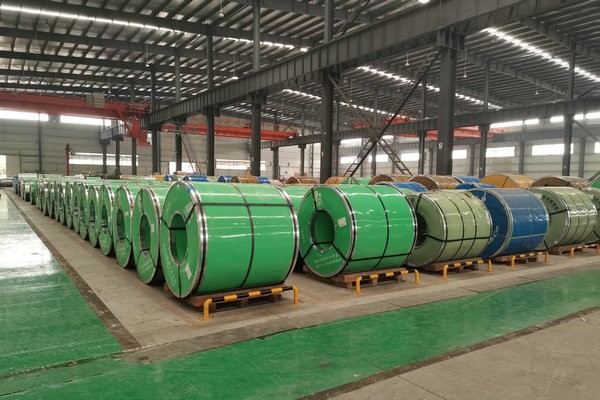
Global Logistics & Inventory: We maintain a large inventory of common SUS grades in coil, sheet, and plate form, ready for immediate shipment to your location anywhere in the world.
Partner with Huaxiao Metal to secure premium SUS materials that drive your business success.
Are you ready to source SUS stainless steel for your next project? Contact Huaxiao Metal today for competitive pricing, detailed product specifications, and customized solutions. Our team is eager to assist you with your inquiries and provide prompt quotations.
Get in touch now and experience the Huaxiao Metal advantage!
FAQ
Are SUS304 and SS304 the same?
Yes, they are essentially the same stainless steel, just with different naming standards. SUS304 follows the JIS standard, while SS304 follows the American ASTM/AISI standard.
Why are some stainless steels labeled SUS, and others SS/ASTM?
Because stainless steel standards are not uniform, and different countries/standards organizations use different naming methods. However, many grades are equivalent across different standards.
What is the main difference between SUS316 and SUS304?
SUS316 contains molybdenum (Mo), giving it better resistance to chloride corrosion than SUS304. It is suitable for highly corrosive environments such as marine, chemical, pharmaceutical, and food industries.
Is SUS430 magnetic?
Yes, SUS430 is a ferritic stainless steel and is magnetic. Its corrosion resistance is lower than SUS304/316, but it is cheaper.
What standards should be considered when purchasing SUS stainless steel?
It is necessary to confirm the corresponding standards (JIS / ASTM / GB), chemical composition, mechanical properties, surface treatment, and dimensional tolerances of the material to ensure it meets application requirements.
What services does Huaxiao Metal provide?
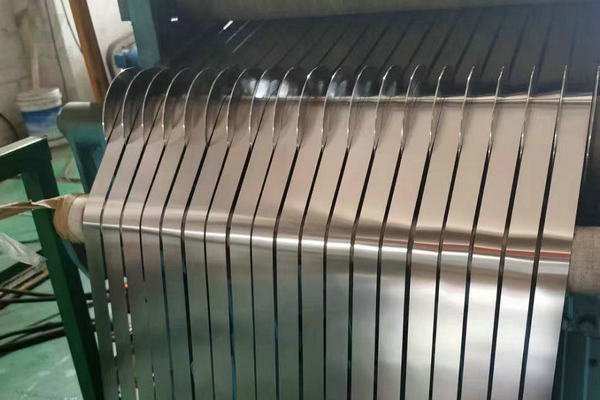
Supply of sheet/coil/strip/pipe/bar, custom size cutting, welding, surface treatment, export logistics services, and Material Reporting Certificate (MTC).