Powder steel powder metallurgy is a metallurgical method using metal powder as raw material. It is a special process that uses a certain amount of metal powder to synthesize, mix, sinter, and other processes to smelt a new type of metal material that can be used to manufacture tools and accessories.
Powder forging refers to the use of metal powder as raw material, through cold pressing, sintering, hot forging or hot isostatic pressing of powder, isothermal die forging, or directly from powder hot isostatic pressing and subsequent processing to make precision forgings of the required shape. It is a new process that combines traditional powder metallurgy with precision die forging.
Powder steel is just a general term. All steels made using powder metallurgy technology can be called powder steel, including powder high-speed steel, powder tool steel, powder stainless steel, etc. Powder steel has high carbon content, low carbon content, good rust resistance, and poor rust resistance. We can see that many of the more expensive series of first-line brands (Lent, Tengse, YAXELL, etc.) are powder steel series.
Powder steel is a high-quality powder alloy high-speed steel developed by continuous improvement and breakthrough of alloy powder technology, referred to as powder high-speed steel. Powder high-speed steel includes ASP2ELMAX and other products. It can obtain very high hardness (HRC63~7). This steel belongs to a kind of high-speed steel, not stainless steel.
Powder metallurgy steel is becoming more and more the mainstream of tool production. At present, steel smelting powers such as the United States, Japan, Sweden, and Germany have launched a variety of powder steels, many of which are good materials for making tools. In addition, it is very resistant to high temperatures and relatively wear-resistant, so it will be used on many machine tools. Powder steel will be seen in aviation manufacturing or special parts.
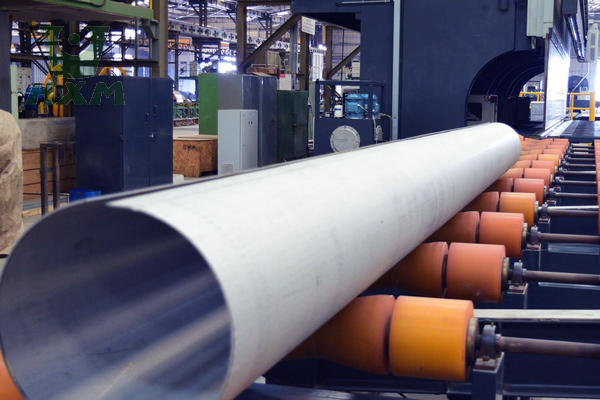
How is Powder Steel Manufactured?
The manufacturing process of powder steel includes:
① Atomization
Molten metal is atomized by a gas or water jet to form fine metal powder.
② Mixing and Composition Adjustment
Alloying elements such as vanadium, molybdenum, chromium, and tungsten are added according to performance requirements.
③ Compaction
The metal powder is pressed into a billet under high pressure.
④ Sintering
High temperature causes the powder particles to fuse.
⑤ Hot Isostatic Pressing (HIP) – The Core of Powder Steel
High temperature and high pressure completely densify the billet, eliminating porosity and making the structure stronger and tougher.
The core value of powder metallurgy lies in:
- Near-perfect material uniformity
- The ability to manufacture microstructures with fineness unattainable by traditional processes
- The ability to produce complex shapes
These are advantages that traditional steel cannot achieve.
What Is the Difference Between Powdered Steel and Ordinary High-speed Steel?
Manufacturing Process
Powder steel: Made by powder metallurgy process, the alloy components are made into powder and then sintered under high temperature and pressure. This process can better control the alloy composition and microstructure.
Ordinary high-speed steel: Made by traditional metallurgical process, through smelting, casting, forging, and heat treatment.
Composition
Powder steel: The alloy composition can be more accurately controlled, and a higher proportion of alloying elements such as vanadium, molybdenum, and tungsten can be added to improve material properties.
Ordinary high-speed steel: Limited by traditional metallurgical processes, the uniformity and content of alloy composition are relatively low.
Performance
Hardness and wear resistance:
Powder steel: Due to the uniform alloy composition and fine grains, the hardness and wear resistance are higher.
Ordinary high-speed steel: The hardness and wear resistance are higher, but not as good as powder steel.
Toughness:
Powder steel: It has higher toughness and impact resistance and is not easy to break.
Ordinary high-speed steel: It has high hardness but relatively low toughness and is easier to break.
Uniformity:
Powder steel: Due to the powder metallurgy process, the alloy elements are evenly distributed, there is no segregation phenomenon, and the performance is more stable.
Ordinary high-speed steel: There is a certain component segregation, and the performance uniformity is poor.
Microstructure
Powder steel: The grains are fine, the microstructure is more uniform, and there are fine and evenly distributed carbide particles.
Ordinary high-speed steel: The grains are coarse, the microstructure is not as uniform as powder steel, and the distribution of carbide particles is less uniform.
Application
Powder steel: It is used to manufacture high-end cutting tools, precision molds, and parts that require extremely high wear resistance and toughness, such as high-performance tools and molds.
Ordinary high-speed steel: It is widely used in the manufacture of general cutting tools, drills, milling cutters, and turning tools.
Price
Powder steel: Due to the complex manufacturing process and high production cost, the price is relatively expensive.
Ordinary high-speed steel: The production process is relatively mature and the cost is relatively low, so the price is relatively cheap.
Core Advantages of Powder Steel
① High Hardness & Extremely Strong Wear Resistance
Fine and uniform carbides give it exceptional wear resistance.
② High Toughness (No Chipping, No Cracks)
It maintains excellent toughness even at high hardness, making it the first choice for high-end cutting tools.
③ Extremely High Structural Uniformity
Completely free of segregation, with a stable metallographic structure.
④ High Batch Quality Consistency
Perfect for automated mass production industries.
⑤ Long Service Life and Low Overall Cost
Although the unit price is higher, the actual service life can be 2–5 times that of traditional steel.
Common Types of Powder Steel
(1) Powder High-Speed Steel (PM-HSS)
Common Applications: Cutting tools, industrial blades, punches
Typical Grades:
- M390
- CPM S90V / S110V
- CPM 3V / 4V
- Vanadis Series
(2) Powder Tool Steel
Suitable for cold working, hot working, and plastic molds.
(3) Powder Stainless Steel
Both wear-resistant and corrosion-resistant, suitable for mechanical parts, cutting tools, etc.
Typical Applications of Powder Steel
Powder steel is widely used in industries requiring extremely high performance:
- Industrial cutting tools / CNC cutting tools
- Precision stamping dies
- Plastic molds, die-casting molds
- Gears, bearings, pump valve wear parts
- Aerospace parts
- Automotive engine and transmission system components
- High-end kitchen knives, outdoor knives
Powder steel excels in all demanding, high-efficiency applications.
Why are more and more manufacturers using powder steel/powder metallurgy?
This is the most important reason for the rapid growth in demand for powder steel.
① Significantly improved performance and longer service life
Tool life can be increased by 2–5 times.
Die life can be increased by 30%–300%.
② More uniform material structure and more stable performance
No segregation or coarse carbides, which is impossible with traditional steel smelting.
③ Suitable for manufacturing complex, precision parts (near-net-shape forming)
Powder metallurgy can directly form complex structures, significantly reducing processing costs.
④ High material utilization, further cost savings
Traditional machining requires the removal of a large amount of material, while powder metallurgy material utilization can reach 95–98%.
⑤ Customizable composition (not possible with traditional processes)
The content of vanadium, molybdenum, tungsten, etc., can be adjusted according to the application to achieve optimal performance.
⑥ Strong batch consistency, ideal for automated production lines
Modern manufacturing increasingly relies on stability, and powder steel fully meets this requirement.
⑦ Meeting the demands of modern industry for high-performance materials
High speed, automation, high pressure, high wear… powder steel excels in all these areas.
Therefore, from cutting tool manufacturers to machinery manufacturing, automotive parts, and the aerospace industry, powder steel is rapidly replacing traditional steel.
Summary of Advantages and Disadvantages of Powder Steel
Advantages:
- High hardness
- High wear resistance
- High toughness
- Uniform microstructure, no segregation
- Strong batch consistency
- Can be used to manufacture complex parts
- Long service life, high overall cost-effectiveness
Disadvantages:
- Relatively high price
- Complex manufacturing process
- Not suitable for large forgings
In Conclusion
Powder steel is a crucial material for future high-end manufacturing.
With its unique manufacturing process and superior performance, it is becoming the mainstream choice for industries such as cutting tools, molds, automobiles, aerospace, and precision equipment.
If you are looking for:
- More wear-resistant materials
- Longer-lasting cutting tools or molds
- High-strength, high-toughness parts materials
Then, powder steel is undoubtedly one of the best solutions.