Same product, different name? Not exactly. Here’s what buyers need to know about terminology, pattern types, and choosing the right material — explained by a senior metallurgical engineer.
Diamond plate, checker plate, and tread plate all refer to the same product category: a metal sheet with a raised anti-slip pattern on one side. The difference is regional terminology — “diamond plate” dominates in North America, “checker plate” (or “chequer plate”) in the UK and Commonwealth, and “tread plate” serves as the umbrella industry term. However, some manufacturers reserve “diamond plate” specifically for sheets with an elongated diamond-shaped pattern, and use “checker plate” for lentil, 5-bar, or round bean patterns. In practice, when you ask any supplier for any of these terms, you’ll get quoted for the same anti-slip metal sheet.
But if you’re a buyer — especially an international buyer sourcing from multiple regions — the nuances matter. Understanding these terms helps you communicate specifications clearly, avoid ordering the wrong product, and get exactly what your project needs. Let’s break down each term, pattern type, and material choice in detail.
Terminology by Region: What Do People Call It?
The diamond plate product has at least seven common names in English alone. Here’s who uses what:
| Term | Region | Common Context |
|---|---|---|
| Diamond Plate | USA, Canada | Universal — construction, fabrication, industrial supply |
| Checkered Plate / Checker Plate | USA (secondary), Asia | Standard term in China (花纹板), India, and Southeast Asia |
| Chequer Plate / Chequered Plate | UK, Australia, NZ, South Africa | Preferred Commonwealth spelling. Industry standard in British English |
| Tread Plate | Global (industry term) | Umbrella term used by engineers, architects, and spec writers |
| Floor Plate | USA, Canada | Used when specifying for industrial flooring applications |
| Durbar Plate | Europe, UK | Branded term for a specific diamond-like pattern; now generic in some markets |
| 花纹板 (Huā Wén Bǎn) | China | Literally “patterned plate” — standard term in Chinese procurement |
Key takeaway: If you’re writing specs for an international project, use “diamond plate / tread plate” as the primary term and list acceptable equivalents in parentheses. This avoids confusion regardless of where your supplier is based.
Pattern Types Compared: Diamond, Lentil, 5-Bar, and Round Bean
All diamond plates are not created equal. The raised pattern affects slip resistance, appearance, cleanability, and even regional code compliance.
Diamond Pattern
The classic elongated diamond shape. Excellent multi-directional slip resistance — the pattern catches foot traffic from any angle. The most widely available and specified pattern globally. Standard for industrial flooring, truck beds, and stair treads in North America and Europe.
Most Common | Global StandardLentil / Lentil Pattern
Round or oval raised bumps with a smoother appearance and moderate slip resistance. Very popular in Asian markets (China, Japan, Korea, India) for both industrial and decorative applications. Easier to clean than diamond pattern due to fewer crevices.
Asia Preferred | Smoother Look5-Bar Pattern
Five parallel raised bars per repeat. Dominant in Europe (especially Germany, France, Benelux) for stair treads and flooring. Provides directional slip resistance — excellent when the bars run perpendicular to the walking direction.
Europe Preferred | Distinctive LookRound Bean Pattern
Small circular raised bumps. Moderate slip resistance with a very clean, almost decorative finish. Used primarily for wall protection panels, decorative accents, and light-duty commercial flooring where aesthetics matter almost as much as function.
Decorative | Light to Medium DutyPattern Selection: A Quick Decision Guide
If you’re unsure which pattern to specify:
Heavy-duty industrial flooring? → Diamond or 5-Bar
Food processing / easy-clean required? → Lentil (fewer crevices)
Architectural / visible application? → Lentil or Round Bean (cleaner look)
Shipping to Europe? → 5-Bar matches local expectations
Shipping to Asia? → Lentil is the default expectation
Not sure? → Diamond pattern — it’s accepted everywhere and available in all materials
Material Showdown: Carbon Steel vs Stainless Steel vs Aluminum
This is where most buyers get stuck. The right material depends entirely on where and how the diamond plate will be used. Let’s compare the three candidates across every dimension that matters.
Head-to-Head Specification Comparison
| Property | Carbon Steel | Stainless Steel (304/316L) | Aluminum |
|---|---|---|---|
| Density | 7.85 g/cm³ | 7.93 g/cm³ | 2.71 g/cm³ |
| Weight (4mm × 4’×8′) | ~37.2 kg | ~37.6 kg | ~12.9 kg |
| Key Standard | ASTM A786 | ASTM A793 | ASTM B209 |
| Slip Resistance | ⭐⭐⭐⭐⭐ Excellent | ⭐⭐⭐⭐⭐ Excellent | ⭐⭐⭐⭐ Good |
| Corrosion Resistance | ⭐ Poor (rusts without coating) | ⭐⭐⭐⭐⭐ Excellent | ⭐⭐⭐ Good (surface oxidizes) |
| Weldability | ⭐⭐⭐⭐⭐ Excellent | ⭐⭐⭐⭐ Good | ⭐⭐ Fair |
| Temperature Limit | Up to ~500°C | Up to ~800°C (304/316L) | Up to ~200°C |
| Weight per $ (value) | ⭐⭐⭐⭐⭐ Best | ⭐⭐ Fair | ⭐⭐⭐ Good |
| Typical Life Span | 10-15 years (coated) | 30+ years | 15-25 years |
| Magnetic? | Yes | 304: No / 430: Yes | No |
| Food-Grade? | No (unless coated) | ✅ Yes (304/316L) | ✅ Yes |
| Recyclable? | ✅ Yes | ✅ Yes | ✅ Yes |
When to Choose Each Material
Choose Carbon Steel Diamond Plate When:
- Your application is indoors or in a dry environment (warehouse, factory floor, interior stair tread)
- You’re painting or galvanizing the plate for outdoor use
- Budget is the primary constraint — carbon steel is 4-5× cheaper than stainless
- You need excellent weldability for on-site fabrication
- Weight is not a concern (e.g., fixed building installations)
- Example: Factory mezzanine flooring, truck bed lining, heavy machinery platforms
Choose Stainless Steel Diamond Plate When:
- Constant moisture, salt, or chemical exposure (marine, chemical plants, outdoor coastal)
- The surface will be washed down regularly (food processing, pharmaceuticals, commercial kitchens)
- Hygiene is critical — non-porous, bacteria-resistant surface
- Your application is visible to customers — stainless looks premium without additional finishing
- You’re building for longevity (30+ year lifespan) and total cost of ownership matters more than upfront price
- Example: Seafood processing plant floor, yacht deck plates, pharmaceutical cleanroom platforms, architectural stair treads
Choose Aluminum Tread Plate When:
- Weight matters — aluminum is 65% lighter than steel (vehicle flooring, trailer ramps, portable equipment)
- You need corrosion resistance without the cost of stainless (outdoor signage, architectural trim)
- The application involves frequent handling or assembly (toolbox panels, equipment enclosures)
- You want a bright, reflective appearance without coating or painting
- Example: Fire truck and ambulance flooring, trailer fenders, decorative wall panels, truck tool boxes
Need Help Deciding?
Relevant Standards for Diamond Plate / Checker Plate
When ordering, always specify the applicable standard. This ensures the plate meets the mechanical and dimensional requirements for your project.
| Material | Standard | Covers |
|---|---|---|
| Carbon Steel | ASTM A786 | Hot-rolled carbon, low-alloy, HSLA, and alloy steel floor plates — the primary US standard |
| Carbon Steel (China) | GB/T 3277 | Hot-rolled checkered steel plates and strips — Chinese national standard |
| Carbon Steel (Europe) | EN 10025-2 | Hot-rolled structural steel products — covers S235/S275/S355 series used for European checker plate |
| Stainless Steel | ASTM A793 / A480 | Stainless steel floor plate — flat-rolled stainless requirements |
| Stainless Steel (Europe) | EN 10088-2 | Stainless steel sheet/plate and strip for general purposes |
| Aluminum | ASTM B209 | Aluminum and aluminum-alloy sheet and plate — covers tread plate alloys |
Pro tip: For international procurement, always request an MTC (Mill Test Certificate) to EN 10204 3.1. This gives you full traceability of the heat number, chemical composition, and mechanical test results regardless of which national standard the material was produced to.
Ready to Order? Choose Your Material
All three materials available factory-direct from Huaxiao Metal — ISO certified, MTC included, shipped globally.
Stainless Steel Diamond Plate
ASTM A793 | 304, 316L, 430
Th: 1.5–12mm
Corrosion-proof
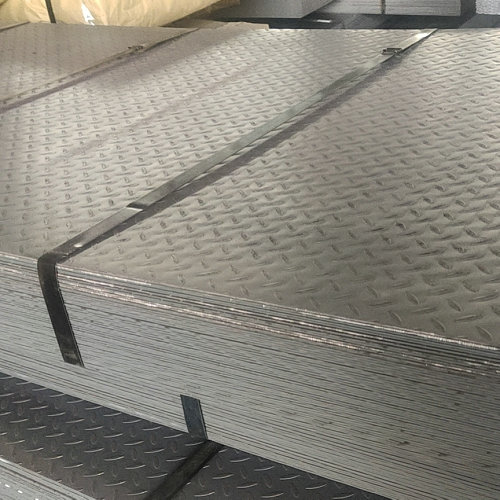
Carbon Steel Diamond Plate
ASTM A786 | A36, Q235B, A572
Th: 2.75–100mm
Most cost-effective
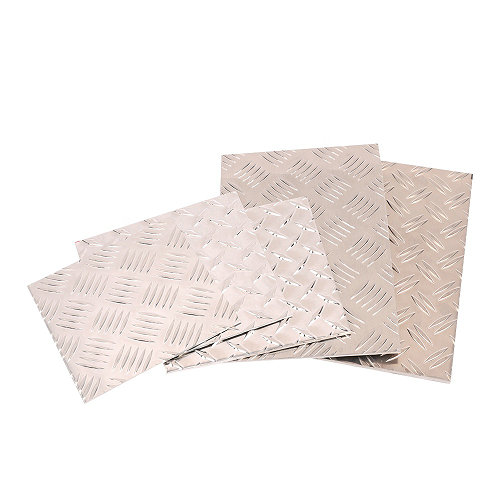
Aluminum Tread Plate
ASTM B209 | 3003, 5052, 6061
Th: 1.0–12mm
65% lighter than steel
Frequently Asked Questions
Are diamond plate and checker plate the same thing?
In practice, yes — they refer to the same product category. “Diamond plate” is the dominant term in North America; “checker plate” (or “chequer plate”) in the UK and Commonwealth. However, some manufacturers use “diamond plate” specifically for sheets with an elongated diamond pattern and “checker plate” as a broader term covering lentil, 5-bar, and round bean patterns. When ordering, specify the pattern type to avoid confusion.
Is "tread plate" another name for the same thing?
“Tread plate” is the umbrella industry term used by engineers, architects, and spec writers. It covers all raised-pattern anti-slip metal sheets regardless of the pattern shape or material. When a specification says “tread plate,” it usually means diamond-patterned, but you should confirm with the spec writer. In practice, most suppliers will quote diamond/checker plate when asked for “tread plate.”
Which material is most cost-effective for diamond plate?
Carbon steel diamond plate offers the lowest cost per kg. However, total cost of ownership tells a different story: stainless steel lasts 30+ years with zero maintenance, while carbon steel needs painting or galvanizing and eventual replacement. For indoor industrial applications, carbon steel is the clear winner on upfront cost. For food processing or marine environments, stainless steel’s 30-year lifespan often makes it the more economical choice over time.
Does the pattern affect the plate's structural strength?
The pattern adds approximately 5% to the total weight but does not significantly increase structural strength. The strength of the plate is determined by its base thickness and material grade, not the pattern. When calculating load capacity, use the base plate thickness (not the total height including the pattern). The pattern’s purpose is purely functional — anti-slip and aesthetic — not structural.
Can stainless steel diamond plate be welded to carbon steel?
Technically yes, but it requires special procedures. Use a 309 or 312 stainless filler rod (designed for dissimilar metal welding) to prevent cracking at the weld interface. The carbon steel side should be clean and rust-free. However, the weld joint will always be a corrosion weak point — the carbon steel side will rust. For critical applications, avoid welding stainless to carbon steel if possible, or ensure the carbon steel side is fully sealed against moisture.
What's the difference between hot-rolled and cold-rolled diamond plate?
Hot-rolled diamond plate is produced by hot-rolling the slab through patterned rolls above the recrystallization temperature. It has a rougher surface (mill scale), looser tolerances, and is available in thicker gauges (3mm+). Cold-rolled starts as hot-rolled plate and is further processed at room temperature — smoother surface, tighter thickness tolerance, and available in thinner gauges (down to 0.5mm). Carbon steel diamond plate is almost always hot-rolled. Stainless steel and aluminum diamond plate can be either, though hot-rolled is more common for standard industrial applications.