
Choosing between 15-5 PH and 17-4 PH stainless steel is a pivotal decision for high-strength engineering. While both are premier precipitation-hardening alloys, the primary difference lies in their microstructure: 15-5 PH is a ferrite-free version of 17-4 PH, offering superior transverse toughness and consistency in thicker sections. In this Huaxiao Metal technical guide, we provide a direct comparison of 15-5 PH vs 17-4 PH, analyzing mechanical properties, corrosion resistance, and cost-effectiveness to help you select the optimal alloy for aerospace, defense, and demanding industrial applications.
What Are 15-5 PH and 17-4 PH Stainless Steels?
17-4 PH: Contains approximately 17% Chromium and 4% Nickel.
15-5 PH: Contains approximately 15% Chromium and 5% Nickel.
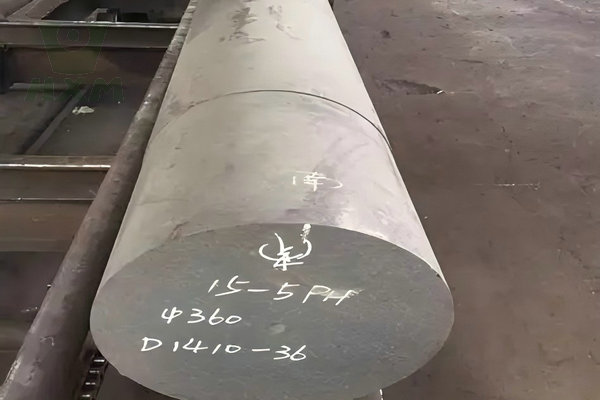
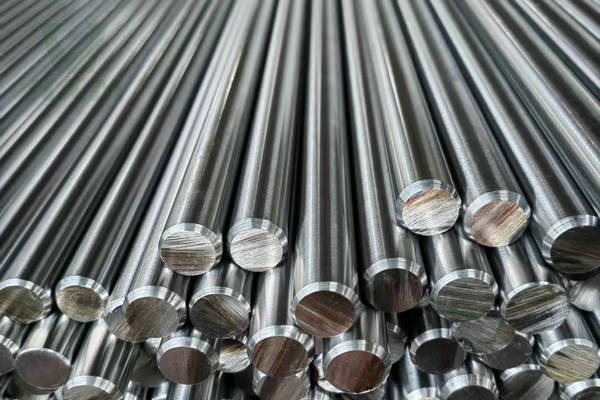
Key Performance Comparison: 15-5 PH vs 17-4 PH Stainless Steel
| Feature / Property | 17-4 PH (UNS S17400) | 15-5 PH (UNS S15500) | Why it Matters? |
|---|---|---|---|
| Tensile Strength | Excellent (Up to 1310 MPa) | Excellent (Up to 1310 MPa) | Both offer peak structural strength. |
| Microstructure | Martensitic w/ Ferrite | Ferrite-Free (Refined) | 15-5 PH is more uniform. |
| Transverse Toughness | Moderate | Excellent (High) | Crucial for safety in multi-axis loading. |
| Ductility | Medium | Higher | Better resistance to crack propagation. |
| Weldability | Good | Superior | Reduced risk of cold cracking. |
| Corrosion Resistance | Good (Comparable to 304) | Slightly Superior | Better consistency in harsh media. |
| Preferred Industry | General Industrial / Pumps | Aerospace / Defense / Oil | High-reliability environments. |
| Manufacturing Cost | Lower (Cost-Effective) | Higher (Premium Process) | Impact on project budget. |
| Common Forms | Bars, Sheets, Strips | Large Forgings, Heavy Plates | 15-5 PH performs better in thick sections. |
Choose 17-4 PH if your project requires a cost-effective, high-strength material for standard industrial components like pump shafts or valves.
- Choose 15-5 PH for critical aerospace components or large-diameter forgings where transverse toughness and structural integrity cannot be compromised.
Chemical Composition Comparison: 15-5 PH vs. 17-4 PH
| Element | 17-4 PH (wt. %) | 15-5 PH (wt. %) | Impact on Performance |
|---|---|---|---|
| Chromium (Cr) | 15.0 – 17.5 | 14.0 – 15.5 | Lower Cr in 15-5PH helps eliminate delta ferrite. |
| Nickel (Ni) | 3.0 – 5.0 | 3.5 – 5.5 | Higher Ni range improves toughness. |
| Copper (Cu) | 3.0 – 5.0 | 2.5 – 4.5 | Essential for precipitation hardening. |
| Niobium (Nb) | 0.15 – 0.45 | 0.15 – 0.45 | Stabilizes the alloy during heat treatment. |
| Carbon (C) | ≤ 0.07 | ≤ 0.07 | Kept low to maintain ductility. |
| Phosphorus/Sulfur | Standard | Lower/Controlled | 15-5PH uses ESR/VAR melting for higher purity. |
As shown above, 15-5 PH has a more balanced chemical composition. By slightly reducing the chromium content and optimizing the nickel content, 15-5 PH eliminates the δ-ferrite bands present in 17-4 PH. This improvement, combined with advanced melting technologies such as electroslag remelting (ESR), makes 15-5 PH the gold standard for aerospace forgings and critical structural components, where any failure is unacceptable.
Need a full Mill Test Certificate (MTC) for our 15-5 PH and 17-4 PH stocks? Contact Huaxiao Metal’s technical team today.
Strength Comparison
Both 17-4PH and 15-5PH can achieve extremely high mechanical strength after aging heat treatment.
Typical H900 condition values:
| Property | 17-4PH | 15-5PH |
|---|---|---|
| Tensile Strength | ~1310 MPa | ~1310 MPa |
| Yield Strength | ~1170 MPa | ~1170 MPa |
| Hardness | HRC 40–47 | HRC 40–47 |
In terms of pure strength, the difference is relatively small.
However, the key difference appears in:
- fracture toughness
- ductility
- transverse mechanical performance
- structural consistency
This is why 15-5PH is often selected for high-end aerospace systems.
Toughness & Reliability Comparison
This is where 15-5PH shows its biggest advantage.
Compared with 17-4PH, 15-5PH provides:
- better transverse toughness
- improved ductility
- cleaner microstructure
- reduced delta ferrite
- better fracture resistance
These improvements become especially important in:
- thick-section forgings
- aerospace components
- high-load rotating systems
- safety-critical equipment
For general industrial projects, 17-4PH usually performs very well.
But for high-integrity structural applications, many engineers prefer 15-5PH.
Corrosion Resistance: How Do They Compare?
Industrial Atmospheres: General factory and urban environments.
Oil & Gas Systems: Upstream and midstream components.
Marine Environments: Above-water structural parts (not for continuous immersion).
Mild Chemical Exposure: Handling mild acids and alkalis.
A key takeaway for procurement: while 15-5 PH and 17-4 PH offer much higher strength, neither typically matches the chloride pitting resistance of 316 stainless steel in aggressive saltwater or highly acidic environments.
17-4 PH: Provides an excellent balance of high strength and cost-efficiency for general-purpose valves and shafts.
- 15-5 PH: Delivers improved structural reliability and consistency in high-stress, demanding conditions where failure is not an option.
Heat Treatment & Aging: Fine-Tuning Performance
Common Heat Treatment Conditions:
| Condition | Aging Temp (°F/°C) | Key Characteristics | Best For… |
|---|---|---|---|
| H900 | 900°F (482°C) | Maximum strength and highest hardness. | High-load structural parts. |
| H1025 | 1025°F (552°C) | Balanced strength, ductility, and impact toughness. | General engineering components. |
| H1150 | 1150°F (621°C) | Highest ductility and best fracture toughness. | Parts requiring high crack resistance. |
Machinability & Fabrication: Efficiency in Production
In the workshop, both 17-4 PH and 15-5 PH are considered “user-friendly” compared to other ultra-high-strength superalloys. They can be machined in the Solution Annealed state and then heat-treated to final hardness, which minimizes distortion.
1. Machining Experience
17-4 PH: It is the industry workhorse for CNC machining. Because it is widely available and more affordable, most machine shops have established “speeds and feeds” for this grade. It is the go-to for precision shafts and valve components.
15-5 PH: While the cutting speeds are similar to 17-4 PH, 15-5 PH often provides better surface finish and tool life. Why? Because its refined, ferrite-free structure leads to more consistent chip formation and fewer inclusions.
2. Why the Supply Chain Matters
17-4 PH dominates the general industrial market because of its large supply chain. If you need a standard size bar tomorrow, Huaxiao Metal likely has it in stock.
15-5 PH is more specialized. It is frequently reserved for aerospace precision components and critical structural assemblies where the slightly higher material cost is offset by the reduced risk of internal defects during machining.
Industry Use Case: Why 15-5 PH is the Aerospace Gold Standard
While 17-4 PH is the industry workhorse, 15-5 PH was specifically refined to meet the ultra-strict safety standards of the aerospace sector.
Why Aerospace Buyers Prefer 15-5 PH:
Superior Transverse Properties: Crucial for safety in 3D-loading environments (like flight controls).
Cleaner Microstructure: Reduced impurities through ESR/VAR melting means fewer internal failure points.
Typical Applications: Landing gear assemblies, high-pressure actuator systems, and structural airframe fittings.
Where 17-4 PH Still Dominates:
Despite the rise of 15-5 PH, 17-4 PH remains the most cost-effective solution for:
High-Volume Hardware: Fasteners, shafts, and valve components where extreme transverse toughness isn’t the primary failure mode.
Industrial Aerospace: Non-critical ground support equipment and secondary engine accessories.
At Huaxiao Metal, we supply both 15-5 PH and 17-4 PH with full traceability and certifications required for aerospace and defense projects. Not sure which grade meets your MS or AMS specifications? Our technical team is here to help.
Cost Comparison: Is 15-5 PH Worth the Premium?
One of the most frequent questions we receive at Huaxiao Metal is: “Why is 15-5 PH more expensive than 17-4 PH?“
Generally, 15-5 PH can cost 20% to 50% more than 17-4 PH, depending on the form and specifications. The price gap is driven by three main factors:
Refined Melting Process: 15-5 PH often undergoes ESR (Electroslag Remelting) or VAR (Vacuum Arc Remelting). These extra steps remove impurities and gas, significantly increasing production costs but ensuring a “cleaner” metal.
Chemistry Control: The tighter tolerances for Chromium and Nickel in 15-5 PH require more precise alloying during melting.
Market Supply & Demand: 17-4 PH is produced in massive quantities globally for general industrial use, leading to better economies of scale. 15-5 PH is a more specialized “boutique” alloy for aerospace and defense.
Huaxiao Metal’s Purchasing Tip:
If your application involves standard industrial parts with no multi-axis high-stress requirements, 17-4 PH offers the best ROI (Return on Investment). However, for critical parts where the cost of failure is astronomical (like aerospace), the premium for 15-5 PH is a necessary investment in safety.
Which One Should You Choose?
Still undecided? Use this quick checklist from Huaxiao Metal to make your final procurement decision:
Choose 17-4 PH Stainless Steel if:
Budget is a priority: You need a high-strength material with the best cost-to-performance ratio.
Standard Applications: You are manufacturing pump shafts, valve internal parts, or general fasteners.
- Availability: You need a wide range of stock sizes with short lead times.
Choose 15-5 PH Stainless Steel if:
Safety is Critical: Your project involves aerospace, defense, or high-pressure nuclear components.
Large Forgings: You are working with thick sections where internal structural consistency is mandatory.
- Multi-Axis Stress: Your part will face complex loads requiring maximum transverse toughness.
Still not sure? Let our technical team analyze your project requirements.
Why Buyers Source PH Stainless Steel from Huaxiao Metal
As a specialist in high-performance alloys, Huaxiao Metal provides more than just raw materials; we provide integrated supply chain solutions.
17-4 PH Stainless Steel: Available in precision-cut plates, sheets, and coils.
15-5 PH Stainless Steel: Premium bars, large-diameter forgings, and heavy plates.
Custom Components: Precision machined parts tailored to your CAD drawings.
✔ Advanced CNC Machining: Precision milling, drilling, and turning.
✔ Expert Heat Treatment: H900, H1025, H1150, and customized aging cycles.
✔ Custom Dimensions: Plasma, laser, and water-jet cutting to size.
- ✔ Global Logistics: Export-grade packaging with reliable sea/air shipping.
We ensure 100% traceability for all materials. Available certifications include:
EN 10204 3.1 MTC (Mill Test Certificate)
Third-Party Inspection: SGS, TUV, BV, or ABS.
- ISO 9001:2015 Quality Management Compliance.
FAQ about 15-5 PH vs 17-4 PH Stainless Steel
Is 15-5PH stronger than 17-4PH?
The strength levels are very similar. The biggest advantage of 15-5PH is improved toughness and structural reliability.
Why is 15-5PH used in aerospace?
Because it offers better fracture toughness, cleaner microstructure, and improved transverse mechanical properties.
Is 17-4PH cheaper than 15-5PH?
Yes. 17-4PH is generally more cost-effective and more widely available.
Can both materials be heat treated?
Yes. Both alloys can be aged to different conditions such as H900, H1025, and H1150.
Which alloy is better for industrial valves?
17-4PH is more commonly used because of its strength, machinability, and lower cost.
Conclusion
Both 15-5PH and 17-4PH are excellent precipitation hardening stainless steels with very high strength and good corrosion resistance.
For general industrial applications, 17-4PH usually provides the best balance of:
- strength
- machinability
- availability
- cost
For aerospace and critical structural systems, 15-5PH offers:
- better toughness
- improved reliability
- superior structural consistency
The right choice depends on your project requirements, reliability targets, and budget.
👉 Contact Huaxiao Metal today for technical support, stock availability, and the latest PH stainless steel pricing.