As a professional supplier that handles these two materials every day, Huaxiao Metal will provide you with a clear and direct comparison in this guide, and give practical application-based suggestions to help you make the most informed decision.
Let’s compare 5160 steel vs 1095 steel to explore their respective characteristics and advantages in different applications. With a better understanding of these two steels, we can better understand their role in manufacturing and how to make an informed choice based on your specific needs.
What Is 5160 Steel?
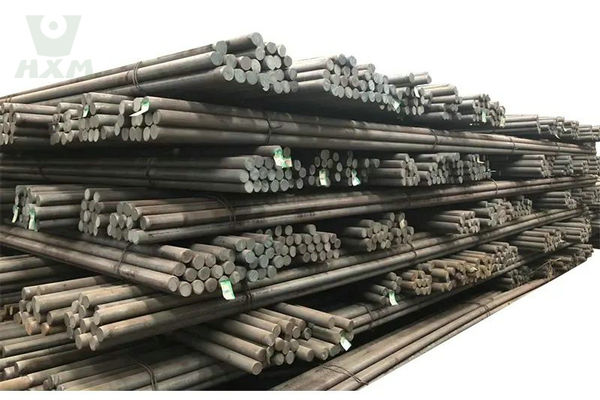
5160 steel is a type of high-carbon alloy steel primarily used in the manufacturing of various types of springs and cutting tools. It falls under the category of spring steels and is known for its excellent toughness, durability, and resistance to deformation. The “5160” number indicates the composition of the steel according to the Society of Automotive Engineers (SAE) classification system.
Looking Forward to Becoming One of Your 5160 Steel Suppliers
What Is 1095 Steel?
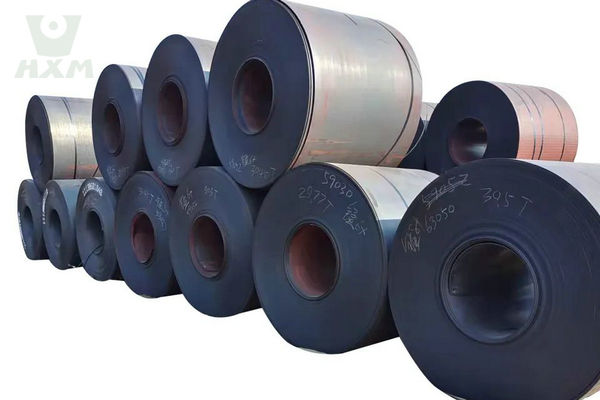
1095 steel is a high-carbon steel widely used in various cutting tools, particularly knives, due to its exceptional edge retention and sharpness. It falls within the category of carbon steels, which are known for their relatively high carbon content and minimal alloying elements. 1095 steel is popular among bladesmiths and knife enthusiasts who prioritize cutting performance and precision.
Looking Forward to Becoming One of Your 1095 Steel Suppliers
5160 Steel Vs 1095 Steel – What’s the Difference
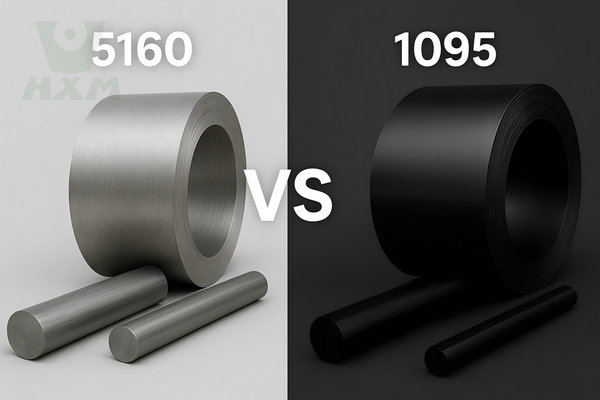
5160 steel vs 1095 steel is two commonly used high-carbon alloy steels with distinctive properties that make them well-suited for various applications, particularly in the realms of the blade and spring manufacturing. Let’s delve into the differences between these two steels to understand their unique characteristics and advantages in different contexts.
Chemical Compositions of 5160 Steel Vs 1095 Steel
The chemical makeup of steel determines hardness, toughness, and corrosion resistance. The following table summarizes the typical composition of 5160 and 1095 steels:
| Element | 5160 Steel (%) | 1095 Steel (%) | Notes |
|---|---|---|---|
| Carbon (C) | 0.55–0.65 | 0.90–1.03 | Higher carbon in 1095 provides greater hardness. |
| Chromium (Cr) | 0.70–0.90 | 0.00–0.30 | Chromium in 5160 increases toughness and wear resistance. |
| Manganese (Mn) | 0.75–1.00 | 0.30–0.50 | Affects hardness and tensile strength. |
| Silicon (Si) | 0.30–0.60 | 0.10–0.30 | Silicon improves strength. |
| Phosphorus (P) | ≤0.035 | ≤0.035 | Impurity element, lower is better. |
| Sulfur (S) | ≤0.035 | ≤0.040 | An impurity element affects machinability. |
Key Takeaways: The chromium content of 5160 makes it tougher and more impact-resistant, while the higher carbon content of 1095 makes it harder and holds an edge longer.
Looking Forward to Becoming One of Your 5160 and 1095 Steel Suppliers
Physical and Mechanical Properties
Mechanical properties directly influence steel performance. Below is a comparative table:
| Property | 5160 Steel | 1095 Steel | Notes |
|---|---|---|---|
| Hardness (HRC) | 48–52 | 55–60 | 1095 is harder; 5160 is tougher. |
| Tensile Strength | 850–1100 MPa | 700–900 MPa | 5160 is stronger in dynamic loads. |
| Yield Strength | 600–900 MPa | 500–700 MPa | 5160 is better for spring applications. |
| Toughness | Excellent | Moderate | 5160 absorbs shock better. |
| Corrosion Resistance | Moderate | Low | Both steels require proper maintenance. |
| Machinability | Good | Good | 1095 may require careful heat treatment. |
Summary:
- 5160 Steel: Ideal for heavy-duty blades, automotive springs, and high-stress components.
- 1095 Steel: Best for knives, cutting tools, and applications requiring a sharp edge and hardness.
Hardness and Edge Retention:
5160 steel has a good balance of hardness and toughness, making it suitable for applications where both wear resistance and impact resistance are important. It can achieve a decent edge but is known more for its durability.
1095 steel is renowned for its exceptional edge retention due to its high carbon content. It can achieve an extremely sharp edge and holds it well. However, this also makes it more susceptible to chipping and breaking under heavy impact.
5160 Steel Vs 1095 Steel Toughness:
5160 steel’s chromium content contributes to its toughness, allowing it to withstand bending and flexing without fracturing easily. This makes it a popular choice for spring applications, where the material needs to endure repeated loading and unloading.
1095 steel, while exceptionally hard, is more brittle compared to 5160. This makes it less suitable for applications where flexibility and impact resistance are crucial.
5160 Steel Vs 1095 Steel Corrosion Resistance:
When comparing the corrosion resistance of 5160 steel and 1095 steel, it’s important to note that both of these steels are high-carbon alloys, and as such, they are not inherently stainless and are susceptible to rust and corrosion when exposed to moisture and harsh environments. However, there are differences in their corrosion resistance due to their chemical compositions and properties.
5160 Steel Corrosion Resistance:
- 5160 steel contains chromium, which contributes to its toughness and hardenability, but the chromium content is relatively modest compared to stainless steels. While the chromium in 5160 does offer some corrosion resistance, it is not as corrosion-resistant as stainless steels. As a result, 5160 steel may develop surface rust and corrosion over time if not properly cared for or if exposed to moisture and corrosive elements.
1095 Steel Corrosion Resistance:
- 1095 steel, being a simpler alloy with a higher carbon content and no significant alloying elements like chromium, is generally less resistant to corrosion than 5160 steel. It can be even more prone to rusting and corrosion when exposed to moisture or corrosive environments.
Looking Forward to Becoming One of Your 5160 and 1095 Steel Suppliers
5160 Steel Vs 1095 Steel Heat Treatment:
The heat treatment process plays a crucial role in determining the mechanical properties and performance of both 5160 steel and 1095 steel. Proper heat treatment transforms these high-carbon steels into materials with the desired hardness, toughness, and other characteristics. Let’s explore the heat treatment processes for both steels:
5160 Steel Heat Treatment:
Annealing: Start by heating the steel to a temperature between 1450°F and 1500°F (790°C to 815°C) and holding it there for a sufficient time to ensure uniformity. Slowly cool the steel in the furnace or allow it to cool in still air. This process reduces internal stresses and makes the steel easier to machine and work.
Normalizing: Heat the steel to a temperature slightly above its transformation range (around 1600°F to 1650°F or 870°C to 900°C) and then allow it to cool in air. Normalizing refines the grain structure, enhancing toughness and reducing the risk of distortion during hardening.
Hardening: Heat the steel to around 1475°F to 1550°F (800°C to 845°C) and then quench it in oil or water to rapidly cool it. This process achieves the desired hardness. After quenching, the steel is very hard but also brittle.
Tempering: To improve toughness and relieve internal stresses, temper the hardened steel by reheating it to a temperature between 350°F and 600°F (175°C to 315°C), depending on the desired balance between hardness and toughness. The higher the tempering temperature, the lower the resulting hardness.
1095 Steel Heat Treatment:
Annealing: Heat the steel to a temperature between 1475°F and 1525°F (800°C to 830°C) and hold it there for a sufficient time. Slowly cool the steel in the furnace or allow it to cool in still air. Annealing reduces hardness, making the steel easier to machine or shape.
Hardening: Heat the steel to around 1475°F to 1525°F (800°C to 830°C) and then quench it in oil or water. This rapid quenching achieves maximum hardness in the steel. However, 1095 steel is more prone to cracking during quenching due to its high carbon content. Preheating the steel before quenching can reduce this risk.
Tempering: Temper the hardened steel to reduce brittleness and improve toughness. Temper at temperatures between 350°F and 600°F (175°C to 315°C), similar to the tempering process for 5160 steel.
Both 5160 steel and 1095 steel require careful control of heating and cooling rates during the heat treatment process to achieve the desired balance between hardness and toughness. It’s important to note that specific heat treatment parameters may vary based on the desired application and the equipment available. Working with high-carbon steels like these requires skill and expertise to avoid issues such as cracking and distortion during the heat treatment process.
5160 Steel Vs 1095 Steel Cost:
The cost of 5160 steel vs 1095 steel can vary depending on a number of factors, including current market conditions, availability, suppliers, and the form in which the steel is purchased (raw material, finished product, etc.). In general, the cost of raw steel is influenced by factors such as production methods, alloying elements, and demand.
1095 steel is a simpler alloy with a higher carbon content but lacks important alloying elements such as chromium. Therefore, it is generally less expensive compared to 5160 steel. However, costs may still vary based on market conditions and availability.
It is worth noting that the cost of these steels may vary over time due to fluctuations in raw material prices, changes in production methods, and other economic factors. In addition, the cost of these steels as finished products (e.g. knives, tools, springs) can be affected by other factors such as manufacturing process, brand, and workmanship.
If you’re looking to buy 5160 steel or 1095 steel, I recommend checking with multiple suppliers, comparing prices, and considering the overall value and performance that the steel can provide for your intended use.
5160 Steel Vs 1095 Steel Advantages and Limitations:
5160 Steel:
Advantages:
- High toughness and flexibility
- Good wear resistance
- Ideal for springs, swords, and heavy-duty knives
Limitations:
- Lower edge retention than high-carbon steels
- Requires proper corrosion protection
1095 Steel:
Advantages:
- High hardness and excellent edge retention
- Easy to sharpen
- Ideal for knives, cutting tools, and precise applications
Limitations:
- Less toughness; prone to chipping under impact
- Poor corrosion resistance without a protective coating
Looking Forward to Becoming One of Your 5160 and 1095 Steel Suppliers
5160 Steel Vs 1095 Steel Applications:
5160 Steel Applications:
- Leaf Springs: 5160 steel is widely used in the automotive industry to manufacture leaf springs for vehicles. Its combination of toughness and resistance to deformation makes it well-suited for this application, as leaf springs need to absorb and distribute the load generated by the vehicle’s weight and movement.
Coil Springs: Similar to leaf springs, 5160 steel is also used in the production of coil springs, which are used in various mechanical systems to store and release energy. Its ability to withstand repeated cycles of compression and extension makes it suitable for this purpose.
Cutting Tools: Some cutting tools and blades, such as certain types of knives and machetes, are made from 5160 steel due to its toughness and edge retention properties. While it might not have the same edge retention as some other steels, its durability makes it favorable for heavy-duty cutting tasks.
Chisels and Punches: Chisels and punches that require resistance to deformation and chipping can be made from 5160 steel. The steel’s ability to maintain its shape under impact is valuable in these applications.
1095 Steel Applications:
Knife Blades: 1095 steel is a popular choice for knife blades due to its excellent edge retention and ability to achieve a very sharp edge. Knives made from 1095 steel are often used for cutting tasks that demand precision and long-lasting sharpness.
Swords: In some traditional sword-making practices, 1095 steel is used to create blades because of its edge retention and hardness. However, swords made from 1095 steel may require careful heat treatment to ensure optimal performance.
High-Quality Cutting Tools: Similar to knife blades, 1095 steel is employed in the production of high-quality cutting tools such as razors, scalpels, and woodworking tools. Its ability to achieve a sharp edge is crucial in these applications.
Custom and Handcrafted Blades: Many knife enthusiasts and craftsmen favor 1095 steel for custom knife-making due to its ability to be carefully heat-treated to specific hardness levels. This allows for a high degree of customization in blade performance.
In summary, the applications of 5160 steel vs 1095 steel reflect their unique properties and strengths. 5160 steel is often chosen for applications that require toughness and resistance to deformation, such as springs and heavy-duty tools. On the other hand, 1095 steel is preferred for applications where edge retention and sharpness are paramount, making it a popular choice for knife blades and cutting tools that demand precision. The selection between these two steels should be based on the specific requirements of the intended application.
How to Choose the Right Steel?
The heart of 5160 steel is the addition of chromium. This not only slightly improves corrosion resistance, but more importantly, gives it unparalleled toughness. This means that tools made of 5160 steel are more likely to bend than break when subjected to strong impact.
Choose 5160 steel if your application scenario is:
Large chopping tools: such as bushcraft machetes, axes, and Bowie knives.
Swords: Need to withstand the impact of chopping and blocking.
High-strength automotive parts: such as leaf springs and suspension components.
You put toughness over extreme sharpness.
At Huaxiao Metal, the 5160 steel we supply is strictly tested for composition to ensure that the chromium content meets the standard, providing the most reliable toughness foundation for your products.
1095 is a simple and pure high-carbon steel with a carbon content of nearly 1.0%. The lack of excessive alloying elements allows it to reach extremely high hardness after proper heat treatment. High hardness directly leads to excellent edge retention, allowing knives to remain sharp for a long time.
Choose 1095 steel if your application scenario is:
Fine cutting knives: such as hunting knives, paring knives, and Japanese kitchen knives.
Tools that require extreme sharpness: such as surgical blades and razors.
Heat treatment beginners: Its heat treatment process is relatively straightforward and easier to master.
You prioritize sharpness and ease of sharpening over toughness.
Please note: High hardness also means that 1095 is relatively brittle and not suitable for fierce chopping. At the same time, it is very easy to rust and needs proper care (such as oiling). We can provide 1095 steel pre-coated with anti-rust oil to reduce your worries in storage and initial processing.
Conclusion: There is no best steel, only the right one
Looking for toughness for large, impact-resistant tools? -> Choose 5160.
Looking for hardness and extreme sharpness for precision cutting? -> Choose 1095.
Ultimately, the right choice depends on what you want from the end product. And no matter which one you choose, the purity and consistency of the raw materials will be the difference between success and failure. One batch of inconsistent material performance can ruin all your efforts.
Why Choose Huaxiao Metal as Your Steel Supplier?
Because we understand your pain points. We provide more than just steel, we provide certainty.
Quality Assurance: We provide proof of material composition to ensure that the 5160 you get is the high-toughness 5160, and the 1095 is the high-hardness 1095.
Stable Supply: Whether you are a small-batch trial production or large-scale production, we can guarantee a stable supply.
Value-added Service: Need to cut or pre-process to a specific size? Tell us your needs and let us help you save time and cost.
Are you ready to choose the right steel for your project?
FAQ
Can 5160 steel be used for kitchen knives?
Yes, but 5160 is better for larger, heavy-duty knives or swords due to its toughness. Proper maintenance prevents corrosion.
Can 5160 replace 1095 for knife making?
Yes, for large knives (over 6 inches) where toughness is prioritized over absolute hardness. For small folding knives, 1095 holds a better edge.
Is 1095 steel prone to breaking?
1095 steel is harder and less flexible than 5160. It may chip or crack under impact, so it’s best for precise cutting tools.
Which steel is easier to sharpen?
1095 steel is easier to sharpen due to its high carbon content. 5160 is tougher but slightly harder to maintain a sharp edge.
Which has better toughness, 5160 or 1095 steel?
5160 steel is significantly tougher than 1095. 5160 contains approximately 0.8% chromium, which enhances its impact resistance and fatigue life. While 1095 is harder, it is very brittle and prone to chipping or breaking under severe impact. Therefore, 5160 is the preferred choice for industrial parts that need to withstand vibration and impact (such as springs and large knives).
Which steel is easier to process in terms of heat treatment?
5160 has a higher tolerance for heat treatment errors. 5160 is an oil-quenched steel with a wider quenching window, making it less prone to cracking. 1095, on the other hand, requires extremely fast quenching oil or water/salt water, and its quenching window is extremely narrow (only a few seconds), easily leading to workpiece scrap or micro-cracks.
How do 5160 and 1095 compare in terms of corrosion resistance?
Both are carbon steels and are prone to rust. However, 5160, containing trace amounts of chromium, has slightly better corrosion resistance than 1095, which contains almost no alloying elements. In B2B industrial exports, Huaxiao Metal applies rust-preventive oil to the surfaces of both materials to ensure product quality during sea transport.
Can 5160 steel and 1095 steel be used interchangeably?
Not exactly. While both are high-carbon steels, their properties are different. 5160 steel offers superior toughness and shock resistance, making it ideal for springs and large blades. 1095 steel provides higher hardness and edge retention, making it better for knives and precision tools. Substitution may compromise performance depending on your application. For critical projects, consult with Huaxiao Metal engineers before replacing one with the other.
Can we get certified Huaxiao Metal 5160 or 1095 steel?
Yes, all steel products from Huaxiao Metal come with quality certifications. Contact us for quotes and specifications.
Which steel is better for automotive springs?
5160 Steel is preferred due to higher toughness and fatigue resistance.
How do I choose the right steel for my project?
If your project involves large components that need to withstand loads or impacts (such as automotive leaf springs, industrial scrapers, longswords), please select 5160 Steel.
If your project involves small tools that require extremely high sharpness and cannot withstand severe impacts (such as scalpels, woodworking chisels, folding knives), please select 1095 Steel.
In conclusion
To sum up, comparing the characteristics and applications of 5160 steel vs 1095 steel, we can clearly see the advantages and uses of these two high-carbon alloy steels in different fields. 5160 steel is widely used in the manufacture of springs and some knives and scissors tools due to its excellent toughness and deformation resistance. It excels in leaf springs in vehicle suspension systems and other applications that are subject to repeated stress. In addition, 5160 steel is also suitable for some cutting tools, and its durability and edge-holding ability make it ideal for certain heavy-duty cutting tasks.
1095 steel, on the other hand, is popular for its excellent edge retention and ability to achieve very sharp edges. This makes it the material of choice for many swords and cutting tools, especially for tasks requiring high precision and long-lasting sharpness. From high-quality knives to specific cutting needs, the sharpness and edge retention of 1095 steel makes it ideal for knife and scissors manufacturing and crafting.
When choosing to use 5160 steel or 1095 steel, there are trade-offs based on the specific requirements of the desired application. If resistance to deformation and heavy loads are required, then 5160 steel may be more suitable. And if long-term sharpness and cutting accuracy are required, then 1095 steel may be a better choice. Regardless, understanding the properties and applications of these two steels will help in making informed decisions to meet specific manufacturing needs.

This article was written by Tristan, Technical Director of Huaxiao Metals, who has over 15 years of experience in the metal industry