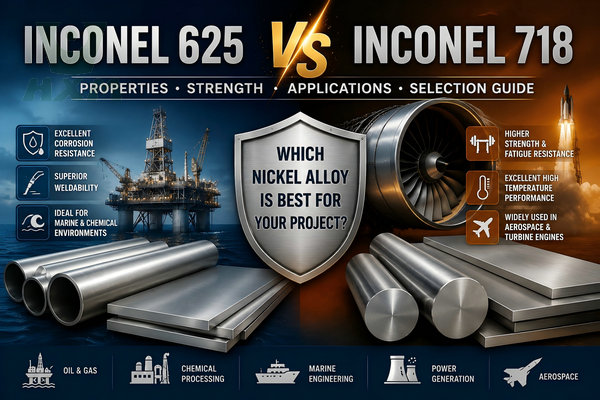
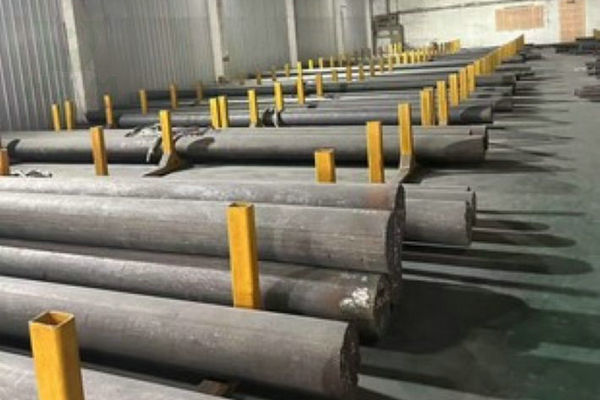
Choosing the right nickel-based superalloy is critical for ensuring long-term performance, reliability, and cost efficiency in demanding environments. Although Inconel 625 vs 718 are both high-performance nickel alloys developed for extreme temperatures and corrosive conditions, they are engineered with different priorities.
If you need the short answer: choose Inconel 625 when your priority is corrosion resistance — seawater, acids, chlorides, oxidizing environments. The 9% molybdenum in 625 gives it a PREN (Pitting Resistance Equivalent Number) of ≥ 48, making it virtually immune to pitting and crevice corrosion in marine service. Choose Inconel 718 when your priority is high-temperature strength — jet engines, gas turbines, cryogenic valves, or any application above 540°C where you need the strongest nickel alloy commercially available (1375 MPa tensile strength).
This article provides a detailed comparison of Inconel 625 vs Inconel 718, two nickel superalloys differ — chemical composition, mechanical properties at room and elevated temperatures, corrosion performance across real industrial environments, heat treatment requirements, cost trade-offs, and application-specific selection guidance. Whether you are sourcing for an offshore oil platform, an aerospace OEM, or a chemical processing plant, you will leave with a clear procurement decision.
💡 The One-Sentence Rule
Inconel 625 = solid-solution strengthened, corrosion is the superpower.
Inconel 718 = precipitation-hardened, strength is the superpower.
This single metallurgical difference drives every decision below.
The 30-Second Decision Rule
Match your application to the right grade in one step:
🌊 Inconel 625
The Corrosion Champion
Seawater & marine
Chemical processing
Flue gas desulfurization
NACE MR0175 sour service
Weld overlay / cladding
No post-weld heat treatment
✈️ Inconel 718
The Strength Champion
Jet engine components
Gas turbine discs & blades
Cryogenic valve stems
High-strength fasteners
Nuclear reactor internals
3D printed aerospace parts
Chemical Composition: The 9% Molybdenum Divide
The single biggest chemical difference between these two alloys is molybdenum. Inconel 625 contains approximately 9% Mo, while Inconel 718 contains only about 3% Mo. This difference fundamentally defines each alloy’s corrosion resistance profile.
Meanwhile, Inconel 718 compensates with niobium (Nb) at 5% — the key element that enables gamma-double-prime (γ”) precipitation hardening and makes 718 the strongest nickel alloy available.
| Element | Inconel 625 (wt%) | Inconel 718 (wt%) | Winner |
|---|---|---|---|
| Nickel (Ni) | 58.0 min | 50.0–55.0 | 625 (higher Ni = better corrosion) |
| Chromium (Cr) | 20.0–23.0 | 17.0–21.0 | 625 (slightly higher Cr) |
| Molybdenum (Mo) | 8.0–10.0 | 2.8–3.3 | 625 (3× difference) |
| Niobium (Nb) | 3.15–4.15 | 4.75–5.50 | 718 (key for γ” hardening) |
| Iron (Fe) | 5.0 max | Balance (~18) | 625 (lower Fe = better) |
| Titanium (Ti) | 0.40 max | 0.65–1.15 | 718 (Ti aids γ’ hardening) |
| Aluminum (Al) | 0.40 max | 0.20–0.80 | 718 (Al aids γ’ hardening) |
| Cobalt (Co) | 1.0 max | 1.0 max | Tie |
🧪 What This Tells You
625 invests its alloying budget in corrosion (Ni + Cr + Mo). 718 invests its alloying budget in strength (Nb + Ti + Al → precipitation hardening). The chemistry dictates the application. If your environment is aggressive chemically, stop reading and buy 625. If your application is strength-critical at temperature, keep reading about 718.
Mechanical Properties: Room Temperature
At room temperature, the strength difference is dramatic. Inconel 718 in the fully heat-treated (aged) condition achieves tensile strengths 30–40% higher than Inconel 625.
| Property | Inconel 625 (Annealed) | Inconel 718 (Aged) |
|---|---|---|
| Tensile Strength (UTS) | 827–1034 MPa (120–150 ksi) | 1275–1375 MPa (185–199 ksi) |
| Yield Strength (0.2% offset) | 414–655 MPa (60–95 ksi) | 1034–1165 MPa (150–169 ksi) |
| Elongation | 30–60% | 12–21% |
| Hardness | 170–230 HB | 331–415 HB (36–44 HRC) |
| Density | 8.44 g/cm³ | 8.19 g/cm³ |
| Modulus of Elasticity | 207 GPa (30,000 ksi) | 205 GPa (29,700 ksi) |
Elevated Temperature Performance
Here’s where 718 truly shines. Above 540°C, the precipitation-hardened microstructure of 718 retains strength far better than the solid-solution structure of 625.
| Temperature | Inconel 625 Yield Strength | Inconel 718 Yield Strength | Advantage |
|---|---|---|---|
| Room Temp (20°C) | 517 MPa | 1100 MPa | 718 (+113%) |
| 540°C (1000°F) | 380 MPa | 965 MPa | 718 (+154%) |
| 650°C (1200°F) | 275 MPa | 860 MPa | 718 (+213%) |
| 760°C (1400°F) | 125 MPa | 420 MPa | 718 (+236%) |
| 870°C (1600°F) | 60 MPa | 150 MPa | 718 (+150%) |
⚠️ Important Temperature Limit
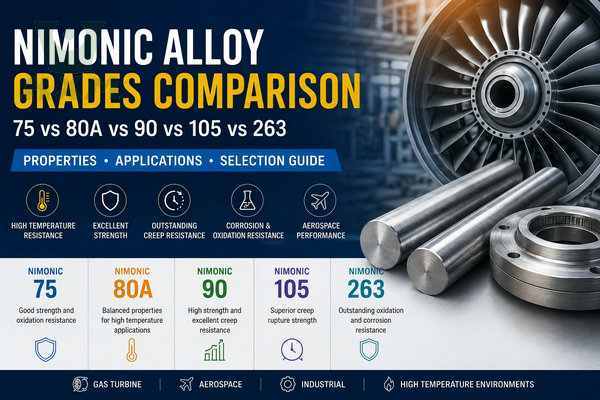
At 650°C, 718’s γ” phase begins to coarsen and transform to stable δ phase, causing strength to drop. For sustained service above 650°C, consider Waspaloy, Inconel 740H, or Nimonic alloys instead. Inconel 625 retains better oxidation resistance above 870°C, though with reduced strength.
Corrosion Resistance: Where the Mo Difference Matters
Molybdenum is the decisive element for pitting and crevice corrosion resistance in chloride-containing environments. The PREN = %Cr + 3.3 × %Mo + 16 × %N formula tells the story:
- Inconel 625: PREN ≥ 48 (20% Cr + 3.3 × 9% Mo + 16 × 0.02% N ≈ 49.8)
- Inconel 718: PREN ≥ 26 (17% Cr + 3.3 × 3% Mo + 16 × 0.02% N ≈ 27.2)
- For reference: 316L stainless steel: PREN ≥ 24
| Corrosive Environment | Inconel 625 | Inconel 718 | Notes |
|---|---|---|---|
| Seawater (flowing) | ⭐⭐⭐⭐⭐ Immune | ⭐⭐⭐ Good, limited data | 625 proven in 40+ years offshore |
| Seawater (stagnant/crevice) | ⭐⭐⭐⭐⭐ Immune | ⭐⭐ Crevice risk | 718 may corrode in stagnant seawater |
| Chloride SCC | ⭐⭐⭐⭐⭐ Immune | ⭐⭐⭐ Resistant (aged condition) | Both far better than austenitic SS |
| H₂SO₄ (sulfuric acid) | ⭐⭐⭐⭐ Good to 40% @ RT | ⭐⭐⭐ Good to 20% @ RT | 625’s higher Ni helps in reducing acids |
| HCl (hydrochloric acid) | ⭐⭐⭐ Moderate at low conc. | ⭐ Poor | Neither ideal for HCl without inhibitor |
| HNO₃ (nitric acid) | ⭐⭐⭐⭐ Excellent | ⭐⭐⭐ Good | Both good in oxidizing acids |
| NACE MR0175 sour service | ⭐⭐⭐⭐⭐ Fully qualified | ⭐⭐⭐ Qualified (max 40 HRC) | Both NACE approved; 718 hardness limited |
| Flue gas desulfurization | ⭐⭐⭐⭐⭐ Industry standard | ⭐⭐ Not recommended | 625 is the FGD reference material |
Heat Treatment: One Hardens, One Doesn't
This is the single most important processing difference between 625 and 718, and it affects cost, lead time, and machinability strategy.
Inconel 625: Simple & Forgiving
625 is solid-solution strengthened. It does not require precipitation hardening. The standard heat treatment is a simple solution anneal:
→
→
625 retains its properties even after welding — no post-weld heat treatment (PWHT) required. This dramatically reduces fabrication costs for large welded structures.
Inconel 718: Precise & Powerful
718 is precipitation-hardened via gamma-double-prime (γ”) and gamma-prime (γ’) phases. Achieving full strength requires a two-stage aging treatment:
→
→
→
→
625 Advantage
No aging = simpler processing
No PWHT after welding
Machine in final (annealed) condition
Lower processing cost
Faster turnaround
718 Requirement
Aging required (18 hr total)
PWHT after welding (restore strength)
Machine before aging (softer)
Higher processing cost
Longer lead time
Applications: Matching Grade to Industry
🛢️ Offshore Oil & Gas
Subsea manifolds, riser cladding, christmas tree components, umbilical tubing, and wellhead equipment. 625's NACE MR0175 qualification and seawater immunity make it the offshore standard. 718 used only for high-strength fasteners and valve stems where strength demands override corrosion requirements.
625 — Best Choice
✈️ Aerospace — Jet Engines
Compressor discs, turbine blades, casings, combustor hardware, and exhaust components. 718 dominates rotating parts where creep strength at 540–650°C is critical. Over 50% of a modern jet engine's weight can be Inconel 718. 625 is used for non-rotating parts (ducts, thrust reversers, bellows) where thermal fatigue matters more.
718 — Best Choice
⚗️ Chemical Processing
Reactors, heat exchangers, piping systems, and scrubbers handling mixed acids at moderate temperatures. 625's broad-spectrum corrosion resistance (oxidizing + reducing acids, chlorides) outperforms 718. Exception: 718 is used for high-temperature chemical valve internals above 500°C.
625 — Best Choice
💧 Marine & Desalination
Seawater pumps, desalination brine heaters, propeller shafts, and underwater connectors. 625 is the marine gold standard. 718 may be used in marine fasteners and shafts if crevice corrosion risk is controlled.
625 — Best Choice
☢️ Nuclear Power
Reactor internals, control rod mechanisms, hold-down springs, and core structural components. 718's combination of high strength + radiation resistance makes it the preferred material for PWR and BWR internals. 625 is used for corrosion-resistant cladding and welded overlays.
718 — Best Choice
💨 Gas Turbines (Land-Based)
Combustion cans, transition pieces, and turbine blades in industrial power generation turbines. 718's creep-rupture properties at 600°C are essential. 625 used for exhaust ducting and non-rotating hot section parts.
718 — Best Choice
⚒️ Flue Gas Desulfurization
Scrubber vessels, dampers, stack liners, and ducting in coal-fired and waste-to-energy power plants. 625 is the industry-standard FGD material — the aggressive sulfuric/chloride condensate environment demands PREN ≥ 48. 718 is not recommended.
625 — Best Choice
🔧 High-Strength Fasteners
Aerospace bolts, studs, and nuts requiring 180+ ksi strength at 540°C. 718 dominates because its precipitation-hardened microstructure delivers the highest bolting strength of any nickel alloy. 625 fasteners used where corrosion (not strength) drives the selection.
718 — Best Choice
Cost Comparison: Processing Drives the Premium
Both alloys are expensive relative to stainless steels, but 718 carries a 10–20% premium over 625. This premium comes from three sources:
| Cost Factor | Inconel 625 | Inconel 718 |
|---|---|---|
| Raw Material | Higher Ni (58%), 9% Mo — ~$45-65/kg | Lower Ni (52%), 3% Mo, 5% Nb — ~$40-55/kg |
| Heat Treatment Cost | Low (simple anneal only) | High (2-stage aging, 18 hours) |
| Fabrication (Welding) | Low (no PWHT needed) | High (PWHT required after welding) |
| Machining | Moderate (annealed, ~190 HB) | High (aged, ~350 HB; must machine pre-aging) |
| Estimated Total (plate) | $45–95/kg | $52–120/kg |
💰 Total Cost of Ownership
While 718 costs 10-20% more to purchase, the total cost of ownership may favor 718 in wear-critical applications where longer service life offsets the initial premium. Conversely, 625’s no-PWHT advantage can save 15-25% on total fabrication cost for large welded assemblies. Request a quote for both grades and compare total delivered cost, not just material price.
Weldability & Machinability: Practical Differences
Inconel 625
- Weldability: Excellent. The most weldable nickel superalloy. No PWHT required. ERNiCrMo-3 filler.
- Weld cracking risk: Very low. Resistant to hot cracking due to Nb + Mo ratio.
- Dissimilar welding: Preferred filler for welding 718 to itself and to other alloys.
- Machinability: Moderate. Work hardens. Use carbide tooling at 25-30 m/min. Always machined in annealed condition.
- Typical annealed hardness: ~190 HB — machinable with standard carbide tools.
Inconel 718
- Weldability: Good, but PWHT required to restore strength after welding.
- Weld cracking risk: Moderate. Strain-age cracking possible in highly restrained welds.
- Dissimilar welding: Welded with ERNiCrMo-3 (625 filler) for best crack resistance.
- Machinability: Difficult. Must machine before aging (solution-annealed, ~250 HB). Aged 718 at 36-44 HRC requires CBN or ceramic tooling.
- Typical aged hardness: ~36-44 HRC — very difficult to machine. Pre-aging machining is standard practice.
Product Forms Availability
| Product Form | Inconel 625 | Inconel 718 |
|---|---|---|
| Sheet / Plate | AMS 5599 — 0.5–76 mm | AMS 5596 — 0.5–76 mm |
| Round Bar | AMS 5666 — 6–500 mm dia | AMS 5662 / 5663 — 6–500 mm dia |
| Seamless Tube | AMS 5581 — 6–219 mm OD | AMS 5589 — 6–219 mm OD |
| Seamless Pipe | ASTM B444 — up to 8″ NPS | ASTM B637 — limited sizes |
| Forgings | AMS 5666 — rings, discs, blocks | AMS 5662 — rings, discs, blocks |
| Wire / Filler Metal | ERNiCrMo-3 — widely stocked | ERNiFeCr-2 — specialty item |
| Fittings / Flanges | ASTM B366 — widely available | Special order — longer lead time |
Explore Inconel Products at Huaxiao Metal
Ready to source? We stock both grades with full MTC traceability:
Decision Framework: Which One Do You Need?
Use this table to match your operating conditions to the right grade:
Seawater Exposure
Any seawater immersion, splash zone, or marine atmosphere. 625's PREN ≥ 48 guarantees pitting and crevice corrosion immunity that 718 cannot match.
625
Mixed Acid Environments
Sulfuric + hydrochloric + nitric combinations. 625's high Ni + high Mo provides broad-spectrum corrosion resistance across oxidizing and reducing conditions.
625
FGD / Scrubber Service
Condensing acid environments in power plant scrubbers. 625 is the industry-standard reference material. Do not substitute 718.
625
Weld Overlay / Cladding
Overlaying carbon steel or low-alloy steel vessels and pipes. 625 (ERNiCrMo-3) is the universal choice — excellent weldability, no PWHT, seamless metallurgical bond. 718 is too crack-sensitive for cladding.
625
Service Above 540°C Under Load
Any rotating or load-bearing component above 540°C. 718 retains 2-3× the strength of 625 at temperature due to precipitation hardening.
718
Aircraft Engine Components
Compressor discs, turbine blades, casings, and rotating hardware. 718 is the #1 nickel alloy in aerospace by tonnage.
718
High-Strength Fasteners (180+ ksi)
Bolts, studs, and threaded components needing 180-200 ksi UTS at 540°C. 718 is the highest-strength bolting alloy commercially available.
718
Cryogenic Service (−196°C to −269°C)
718 retains exceptional toughness and strength at cryogenic temperatures (LNG, liquid hydrogen). Used for valve stems and structural components in cryogenic systems.
718
FAQ About Inconel 625 vs 718 Alloy
Is Inconel 625 or 718 better for marine environments?
Inconel 625 is better for marine environments. Its 9% molybdenum content provides outstanding resistance to seawater corrosion, pitting (PREN ≥ 48), and chloride stress corrosion cracking. Inconel 718, while strong, does not have the same level of marine corrosion resistance and is primarily designed for high-temperature strength applications. For critical subsea and offshore equipment, 625 is the industry standard.
Which is stronger — Inconel 625 or Inconel 718?
Inconel 718 is significantly stronger. When precipitation-hardened (aged), 718 achieves a tensile strength of up to 1375 MPa (199,000 psi) and yield strength of 1100 MPa (160,000 psi). Inconel 625 in annealed condition has a tensile strength of 827–1034 MPa (120,000–150,000 psi). 718 is approximately 30–40% stronger than 625 across its entire temperature range up to 650°C.
Can Inconel 625 and 718 be welded together?
Yes, Inconel 625 and 718 can be welded together. The recommended filler metal is ERNiCrMo-3 (Inconel 625 filler) because it provides better weldability and cracking resistance. For 718 sections, post-weld heat treatment (aging) is required to restore strength. Inconel 625 is highly weldable and does not require PWHT, making 625 filler the preferred choice for dissimilar joints.
What is the price difference between Inconel 625 and 718?
Inconel 718 is typically 10–20% more expensive than Inconel 625. Approximate pricing: Inconel 625 ranges from $45–95/kg depending on product form, while Inconel 718 ranges from $52–120/kg. The premium for 718 comes from more stringent heat treatment requirements (18 hours of two-stage aging), higher processing costs, and higher demand in aerospace applications. Both are significantly more expensive than standard stainless steels.
Which Inconel grade is better for aerospace applications?
It depends on the specific component. Inconel 718 is the workhorse for rotating aerospace parts — compressor discs, turbine blades, fasteners, and casings where exceptional high-temperature strength (up to 650°C) is critical. Inconel 625 is preferred for aerospace ducting, exhaust systems, thrust reversers, and bellows where corrosion resistance and thermal fatigue resistance matter more than peak strength.
What are the AMS specifications for Inconel 625 and 718?
For Inconel 625: AMS 5599 (sheet/plate/strip), AMS 5666 (bar/forging), AMS 5581 (seamless tube).
For Inconel 718: AMS 5662 (bar/forging, solution treated + aged), AMS 5663 (bar/forging, direct aged), AMS 5596 (sheet/strip/plate), AMS 5589 (seamless tube).
These AMS specifications define the chemical, mechanical, and processing requirements for aerospace-grade material.
Is Inconel 625 or 718 easier to machine?
Inconel 625 is slightly easier to machine than Inconel 718 in the annealed condition. However, once 718 is precipitation-hardened (aged), it becomes significantly more difficult to machine — approaching 45 HRC hardness. Both alloys require carbide tooling, low cutting speeds (20–30 m/min), rigid setups, and generous coolant. Pre-hardening machining is standard practice for 718 components to minimize tool wear.
Where can I buy Inconel 625 and 718 with MTC?
Huaxiao Metal supplies both Inconel 625 and Inconel 718 with full Mill Test Certificates (MTC) per EN 10204 3.1 or 3.2. We stock sheets, plates, bars, tubes, pipes, forgings, and fittings in both grades. All material is traceable to the original mill heat number. Contact us at [email protected] or WhatsApp +86-13761906384 for a quote within 12 hours.
Huaxiao Special Alloy Steel Products

Inconel 625
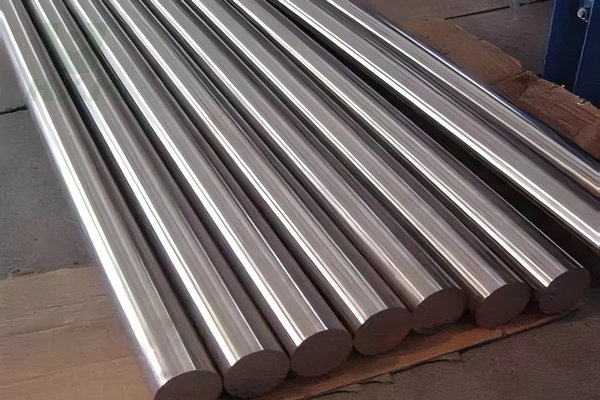
Inconel 625 (UNS N06625 / 2.4856) — The Corrosion Champion of Nickel Superalloys Best Seller — Best Corrosion Resistance Huaxiao Metal supplies Inconel 625 sheet,
13-8 Mo Stainless Steel
13-8 Mo Stainless Steel Bar, Plate & Forging Supplier AMS 5629 / UNS S13800 / 1.4534 High-Strength PH Stainless Steel Huaxiao Metal supplies high-performance 13-8
17-7PH Stainless Steel
Leading 17-7PH Stainless Steel Supplier | AISI 631 Sheet, Strip, Coil & Foil in Stock Certified AMS 5528 / ASTM A693 / UNS S17700 Precipitation
15-5PH Stainless Steel
15-5PH Stainless Steel Supplier | UNS S15500 Plate & Bar Stock 15-5 PH Stainless Steel – High Toughness PH Grade Huaxiao Metal supplies 15-5PH stainless
17-4 PH Stainless Steel
17-4PH Stainless Steel Supplier | UNS S17400 Plate, Bar, Sheet in Stock 17-4 PH Stainless Steel – Factory Supply, Fast Delivery 17-4 PH (also known
Incoloy Alloy 925
Incoloy Alloy 925 (UNS N09925) – Sheets, Plates, Bars, Pipes, Coils, Strips, Wires High-Strength Corrosion-Resistant Nickel Alloy Supplier & Manufacturer Incoloy 925 is a precipitation
Incoloy 825
Incoloy 825 Alloy (UNS N08825) – Sheets, Plates, Bars, Pipes, Coils, Strips, Wires Corrosion Resistant Nickel-Iron-Chromium Alloy Supplier & Manufacturer Incoloy 825 alloy (UNS N08825)
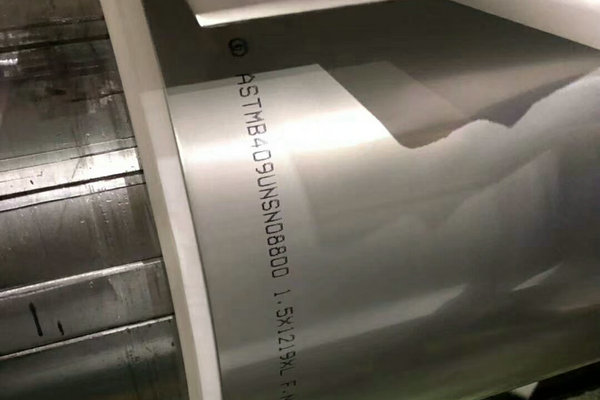
Incoloy 800
Incoloy 800 Alloy – Sheets, Plates, Bars, Pipes, Coils, Strips, Wires Incoloy 800 is part of our Incoloy alloy product range, which includes various nickel-iron-chromium

Molybdenum Metal & Alloys
Molybdenum Metal & Alloys Products – High-Quality Suppliers & Manufacturers | Huaxiao Metal Molybdenum-based materials—whether in the form of pure molybdenum metal, molybdenum alloys, or

Tungsten Alloy
Tungsten Alloy Supplier – Rods, Plates, Sheets, Tubes, Wires & Custom Parts Tungsten alloy, also known as tungsten heavy alloy (WHA), is a high-density engineering
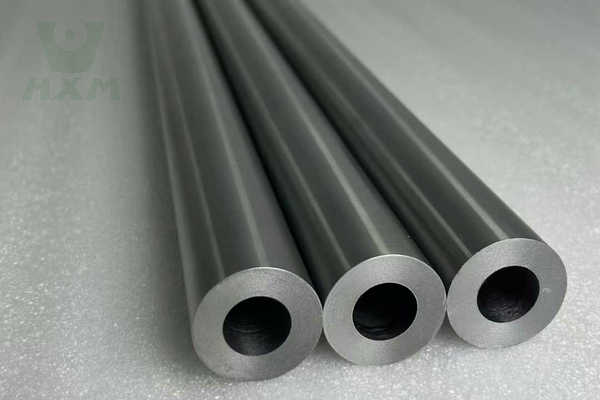
Molybdenum Tube
Molybdenum Tube / Tubing & Pipe Supplier & Manufacturer – Huaxiao Metal Molybdenum tube, also known as molybdenum tubing or molybdenum pipe, is a high-performance

Nimonic Alloy
Nimonic Alloy 75, 80A, 90, 105 & 263 Supplier & Manufacturer At Huaxiao Metal, we are a trusted global supplier and manufacturer of Nimonic Alloys,

Cobalt Alloy
Cobalt Alloys for High-Performance Applications | Global Supplier & Manufacturer Cobalt alloys are high-performance materials with exceptional strength, oxidation resistance, and corrosion resistance, even in
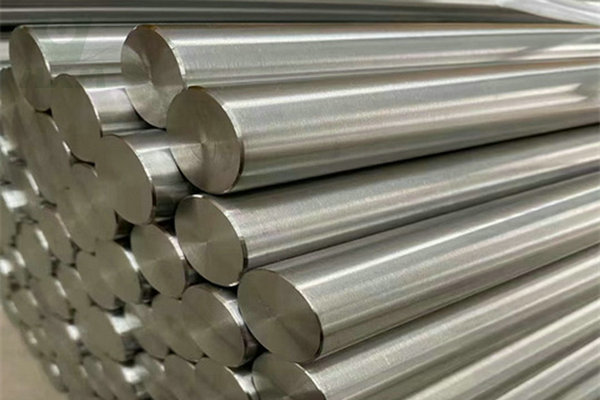
Incoloy Alloy
Incoloy Alloy Supplier and Manufacturer From China Incoloy alloys are a class of corrosion-resistant and high-temperature alloys widely used in petrochemical, chemical processing, seawater treatment,
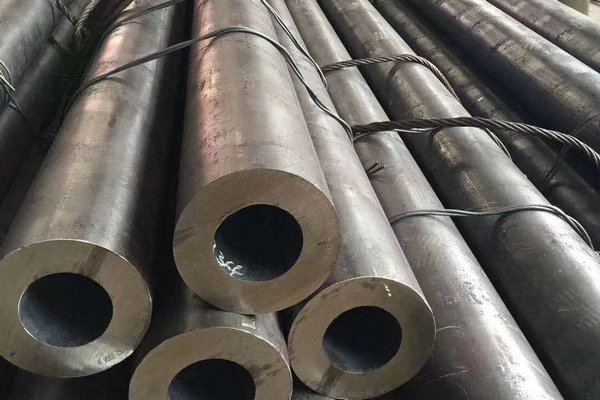
Monel Alloy
Monel Alloy Supplier and Manufacturer From China Huaxiao Metal is a professional Monel alloy supplier and manufacturer in China, specializing in Monel 400, Monel K-500,
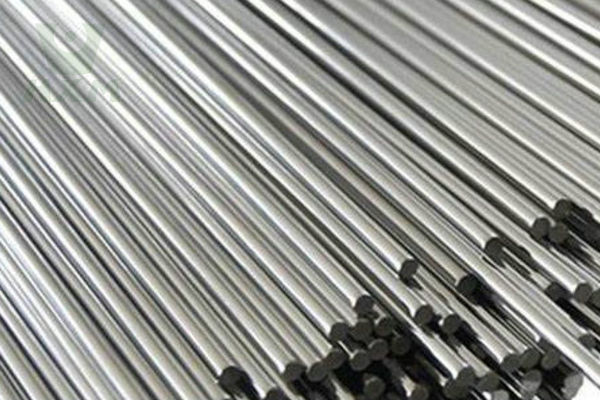
Inconel Alloy
Inconel Alloys — High-Performance Nickel-Based Superalloy Supplier | Huaxiao Metal We specialize in providing high-quality Inconel alloys to meet the needs of various industrial applications.
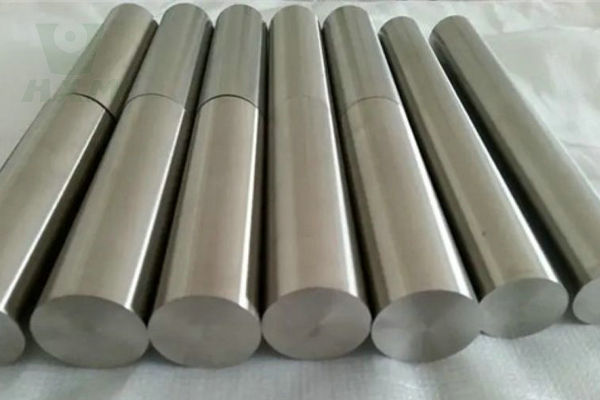
Titanium Alloy
Titanium Alloy Supplier: Grade 1-5 & Ti-6Al-4V Bars, Sheets, Plates | Huaxiao Metal Huaxiao Metal is a premier titanium alloy manufacturer and supplier with ISO9001
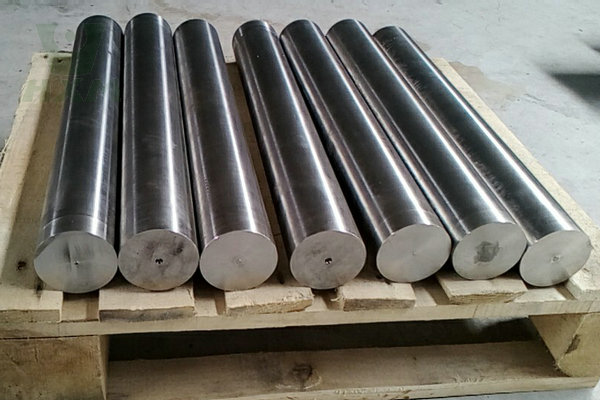
Precision Alloy
Precision Alloy Supplier | Invar, Kovar, Permalloy & Resistance Alloy Manufacturer Huaxiao Metal is a professional precision alloy manufacturer in China, providing high-performance functional alloys
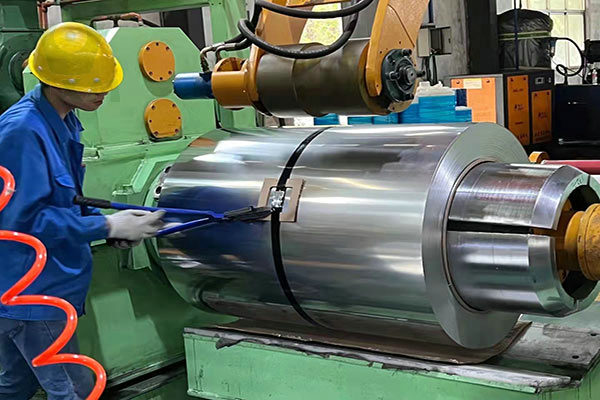
Hastelloy Alloy
Hastelloy Alloy – High Performance Nickel-Based Corrosion Resistant Alloy Supplier Reliable Hastelloy Alloy Manufacturer & Stockist | 15+ Years Global Export Experience When stainless steel
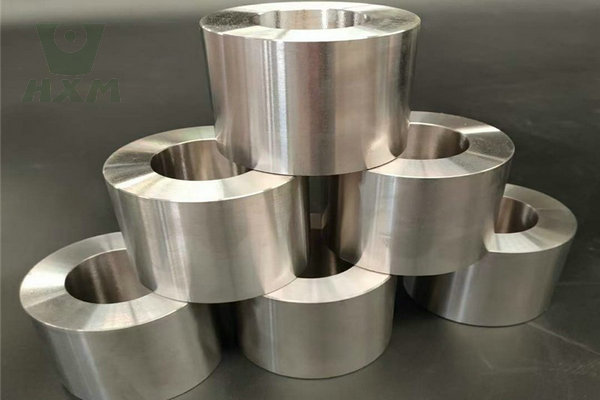
High Temperature Alloy
High Temperature Alloy (Nickel-Based Superalloy) Supplier | Inconel, Hastelloy, GH Series – Available in Sheets, Bars, Pipes Huaxiao Metal is a premium high-temperature alloy manufacturer
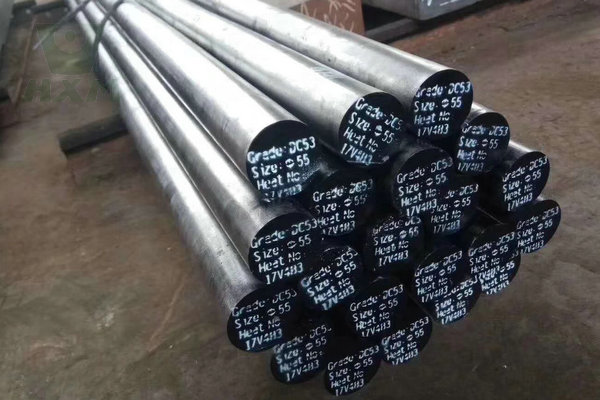
Precipitation Hardening Stainless Steel
17-4PH & 15-5PH Precipitation Hardening Stainless Steel Supplier | Factory Price & Stock Available Precipitation Hardening Stainless Steel (PH Stainless Steel)High Strength • Excellent Corrosion