In the world of coated steels, Galvanized and Galvalume steel are two of the most widely used materials for roofing, siding, and structural applications. Both are carbon steel sheets coated to prevent corrosion, but their coating compositions, performance, and ideal applications are very different.
At Huaxiao Metal, we supply both Galvanized steel and Galvalume steel with consistent quality and competitive prices. Understanding their differences can help you make a smarter purchasing decision and choose the right material for your project.
What is Galvanized Steel?
Galvanized steel is carbon steel that has been coated with a layer of zinc (Zn) through a hot-dip galvanizing process.
This coating acts as a barrier and provides sacrificial protection against corrosion — meaning that zinc corrodes first, protecting the underlying steel.
Key features of Galvanized steel:
- Coating composition: ~100% Zinc
- Typical coating designation: G30 to G90
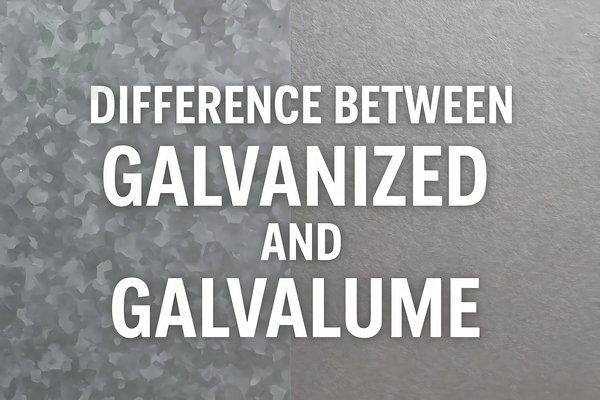
- Appearance: Bright silver, spangled surface
- Protection type: Sacrificial (zinc layer corrodes first)
- Ideal for: Structural framing, HVAC ducts, automotive panels, pipes, fences, and general fabrication.
Advantages:
- Excellent protection against rust in dry and mild environments
- Easy to weld, paint, or form
- Cost-effective corrosion protection
If you’re looking for reliable galvanized steel for your project, explore our Galvanized Sheet Metal page and request a quotation today from Huaxiao Metal.
What Is Galvalume Steel?
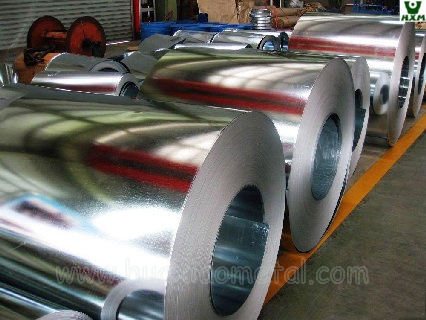
Galvalume steel is a carbon steel sheet coated with an alloy of 55% Aluminum, 43.4% Zinc, and 1.6% Silicon.
This special coating provides superior corrosion and heat resistance, combining the best properties of aluminum (barrier protection) and zinc (sacrificial protection).
Key features of Galvalume steel:
- Coating composition: 55% Al, 43.4% Zn, 1.6% Si
- Appearance: Smooth, matte silver surface
- Protection type: Both barrier and sacrificial
- Ideal for: Roofing, siding, metal buildings, and outdoor structures exposed to harsh environments.
Advantages:
- 2–4 times more corrosion resistant than galvanized steel in most environments
- Better heat reflectivity for energy-efficient buildings
- Longer service life in marine and industrial areas
Visit our Galvalume Steel product page to view specifications, coating thicknesses, and current pricing from Huaxiao Metal.
Galvanized vs Galvalume: Detailed Comparison Table
| Property | Galvanized Steel | Galvalume Steel |
|---|---|---|
| Coating Composition | 100% Zinc | 55% Aluminum, 43.4% Zinc, 1.6% Silicon |
| Appearance | Bright, spangled | Smooth, matte silver |
| Corrosion Resistance | Moderate | Excellent (2–4× higher) |
| Heat Reflectivity | Good | Superior (ideal for roofing) |
| Scratch Resistance | High | Moderate |
| Weldability | Excellent | Good |
| Paintability | Good | Excellent |
| Lifespan (Typical) | 15–25 years | 30–50 years |
| Cost | Lower | Slightly higher |
| Best Use | Indoor and mild outdoor environments | Coastal, industrial, and high-temperature areas |
Corrosion Resistance Difference Between Galvanized and Galvalume
| Property | Galvanized Steel Sheet | Galvalume Aluminum-Zinc Coated Steel Sheet | Winner |
| Overall Corrosion Protection | Generally. Protection relies mainly on sacrificial processes. Zinc is depleted more rapidly with prolonged exposure to acid rain or high humidity. | Excellent. The synergistic effect of aluminum’s barrier protection and zinc’s sacrificial protection makes it perform exceptionally well in most atmospheric environments. | Galvalume |
| Edge Protection | Excellent. Pure zinc provides strong sacrificial protection, effectively protecting cut edges and drilled areas. | Good. The sacrificial protection is relatively weak, and corrosion at the cut edges may result in “red rust” faster than in galvanized steel sheets. | Galvanized |
| High Temperature/Acidic Environment | It is easily corroded by acidic substances. | Aluminum barriers are more stable and have a stronger ability to resist high-temperature oxidation and certain acidic environments. | Galvalume |
The biggest difference between Galvanized and Galvalume steel lies in how they resist corrosion.
While Galvanized steel relies entirely on its zinc layer to protect the steel base, Galvalume steel benefits from dual protection — the aluminum forms a tough barrier, while zinc provides sacrificial defense at cut edges.
- In dry environments: Both perform well.
- In humid or salty environments: Galvalume performs much better.
- At cut edges or scratches: Galvanized offers faster sacrificial protection, but Galvalume lasts longer overall.
For example, in coastal regions or high-moisture areas, Galvalume steel roofs can last up to twice as long as galvanized roofs.
Looking for expert advice on Galvanized and Galvalume Steel
Contact Huaxiao Metal's team of steel experts now. We will provide customized professional advice based on your specific application environment (such as coastal, high-temperature, or structural requirements) and budget, and offer the most competitive instant quotes for the Galvanized or Galvalume steel sheets you need.
Contact Us TodayAppearance and Aesthetic Differences
The surface appearance also differs significantly:
Galvanized steel has a bright, shiny finish with visible spangles, often preferred for decorative or industrial look.
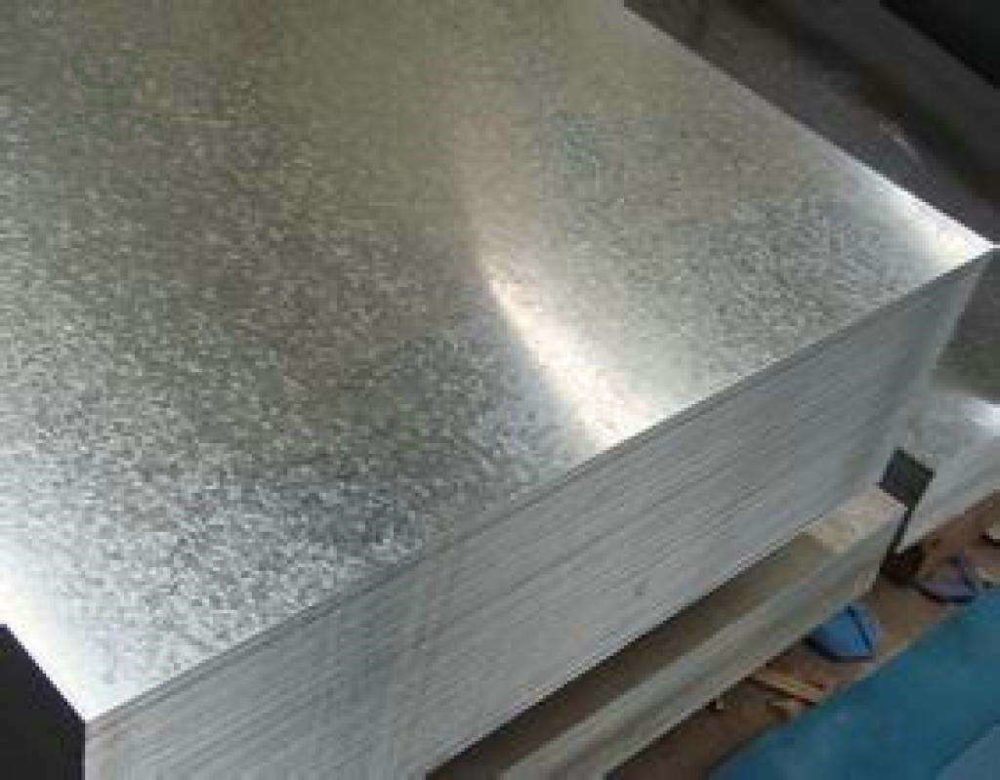
Galvalume has a smooth, matte finish, ideal for modern architectural applications.
If your project prioritizes aesthetic appeal and long-term performance, Galvalume is usually the better option.
Durability Difference Between Galvanized and Galvalume
Galvalume steel typically lasts 2 to 4 times longer than Galvanized steel.
The durability of Galvanized steel relies entirely on the sacrificial wear of the zinc coating. Once the zinc coating is depleted (especially in humid, acidic, or high-salt environments where wear is accelerated), the steel substrate is exposed and rusts.
Galvalume offers superior durability. The barrier effect of aluminum, combined with the sacrificial protection of zinc, results in a much slower corrosion rate under normal atmospheric conditions, providing long-term protection for 25 to 50 years.
Strength Difference Between Galvalume and Galvanized Steel
In summary, the coating has virtually no impact on the strength of the steel itself.
Whether it’s Galvanized or Galvalume, their strength (yield strength and tensile strength) depends primarily on the grade (e.g., SGCC, SGCH) and thickness of the underlying steel substrate, not on the surface coating. The coating only provides corrosion protection. When procuring, customers should select the appropriate substrate specification based on the project’s load requirements.
Weight Difference Between Galvalume and Galvanized Roofing
In summary, the weight difference between the two per unit area is minimal and negligible.
The weight of the roofing system is primarily determined by the thickness of the steel substrate. Although the two coating compositions differ, the weight of the coating required for corrosion protection accounts for a very small proportion of the total weight of the steel sheet (typically less than 2%). Therefore, both can be used for lightweight roofing structures.
Cost Comparison
In general, Galvalume steel costs 5–15% more than Galvanized steel, depending on market conditions.
However, considering its extended lifespan and lower maintenance costs, Galvalume is often more cost-effective in the long run.
Huaxiao Metal provides competitive prices for both materials — contact our sales team today for a custom quote based on your project requirements.
Applications Comparison
| Application | Preferred Material | Reason |
|---|---|---|
| Roofing & Wall Panels | Galvalume | Superior corrosion resistance |
| Structural Framing | Galvanized | Easier welding & lower cost |
| Agricultural Buildings | Galvalume | Long life under humidity |
| Automotive Parts | Galvanized | High forming performance |
| HVAC Systems | Galvanized | Clean finish and easy fabrication |
| Marine Environments | Galvalume | Best resistance to saltwater |
Ready to start your project?
Huaxiao Metal offers high-quality Galvanized and Galvalume steel plates.
Get a quick quote – receive the most competitive price within 24 hours!
Request A Quote NowHow Does Galvalume Compare to Galvanized Steel in Extreme Weather Conditions?
| Extreme Condition | Galvanized Steel (GI) | Galvalume Steel (GL) | Performance Winner |
| High Humidity/Rain | Performs well, but sustained moisture accelerates the sacrificial consumption of zinc. | Superior. The aluminum barrier effectively seals out moisture, providing stronger anti-corrosion protection. | Galvalume |
| High Salinity (Coastal) | Zinc consumes very rapidly in the presence of chloride ions, significantly reducing lifespan. | Better. Aluminum has better resistance to chloride ion corrosion than zinc, though coating reinforcement is still recommended. | Galvalume |
| Heavy Acid Rain (Pollution) | The coating is susceptible to acidic substances, leading to accelerated corrosion. | Better. The aluminum barrier offers superior resistance to certain acidic media. | Galvalume |
Which Material Handles Extreme Temperature Fluctuations Better: Galvalume or Galvanized Steel?
Summary: Galvalume is more stable in handling drastic temperature changes.
Galvalume’s 55% aluminum content provides excellent Heat Reflectivity. During hot weather exposure, it reflects more solar heat, which reduces thermal stress, warping, and expansion/contraction of the steel, thereby maintaining structural integrity.
Heat Resistance Difference Between Galvalume and Galvanized Steel
Summary: Galvalume is superior to Galvanized in both heat resistance and thermal reflectivity.
Galvalume: The aluminum component in the coating forms a stable aluminum oxide protective layer under high heat, significantly improving its resistance to high-temperature oxidation. The coating remains intact under continuous temperatures of up to 600°F (315°C), making it ideal for applications like industrial ventilation.
Galvanized: The pure zinc coating may soften or degrade under sustained high temperatures, reducing its protective effectiveness.
Which One Should You Choose?
If your project involves indoor or low-humidity environments, galvanized steel is an economical and practical choice.
If your project is in coastal, humid, or outdoor environments, Galvalume steel will provide a longer lifespan, less maintenance, and better energy efficiency.
Huaxiao Metal offers both materials in coils, sheets, and custom-cut sizes — we can recommend the right material according to your application and budget.
How to Tell If Metal Is Galvanized?
Without specialized equipment, preliminary identification can be performed using the following methods:
Visual Inspection: Traditional Galvanized steel sheets typically have visible, hexagonal “spangle” patterns on their surface. Galvalume steel sheets have a smoother, more uniform surface with a matte silver finish.
Gloss: The aluminum content in the Galvalume coating makes its surface more reflective and brighter.
Scratches or Edge Corrosion: Observe the cut edges of the steel sheet. If scratches or edge corrosion are present, the corrosion products of galvanized steel sheets are usually a white powder (zinc oxide), while Galvalume corrosion may show red rust (corrosion of the steel substrate) more quickly at the cut edges.
Why Choose Huaxiao Metal?
At Huaxiao Metal, we are a trusted manufacturer and global supplier of carbon steel, stainless steel, and aluminum products.
We maintain a large stock of both Galvanized and Galvalume steel in various grades, thicknesses, and surface finishes.
High-Quality Galvanized Sheet Metal: We offer a variety of zinc coating thicknesses (such as Z60, Z100, Z275) and zinc spangle types to meet your stringent requirements for structural strength and sacrificial protection.
High-Performance Galvalume Steel: Offering a full range of AZ-coated weight products from AZ50 to AZ200, specifically designed for roofing and cladding applications in harsh environments, providing exceptional durability.
What we offer:
ISO-certified quality control
Customized sizes and coating weights
Fast delivery and global shipping
Competitive factory-direct prices
Free consultation and quotation service
Huaxiao Metal promises: Whether you choose Galvanized or Galvalume, we will provide products with full quality certification and traceability. Our technical team is ready to assist you in assessing project needs, selecting the best steel specifications, and providing rapid product quotes.
Contact Huaxiao Metal today to learn more or get your Galvalume and Galvanized steel price list.
FAQ: Galvanized vs Galvalume
Which is more durable, Galvanized or Galvalume steel sheet?
Galvalume steel sheet is generally more durable. With the same coating thickness, Galvalume (aluminized zinc) steel sheet typically lasts 2 to 4 times longer than Galvanized (galvanized) steel sheet because it relies on a more stable aluminum barrier for protection.
Why is Galvanized steel sheet superior to Galvalume steel sheet in edge protection?
Galvanized steel sheet has a pure zinc coating, which has extremely strong sacrificial anode protection properties. When the steel sheet is cut or drilled, the surrounding zinc coating quickly sacrifices itself to protect the exposed steel substrate. This “self-healing” ability is stronger than the aluminum-zinc alloy coating of Galvalume steel sheet.
Can Galvalume steel sheet be used underground or in areas with long-term water exposure?
Not recommended. Galvalume steel sheet is best suited for atmospheric exposure environments, especially roofing and walls. In harsh, humid environments such as prolonged contact with water or underground burial, sacrificial protection is insufficient and may lead to accelerated edge corrosion. In these cases, galvanized steel sheets (or more specialized coatings) with stronger sacrificial protection may be a better choice.
Is Galvalume better than Galvanized steel?
Yes. In most outdoor and humid conditions, Galvalume lasts 2–4 times longer due to its aluminum-zinc coating.
Can Galvalume be painted?
Yes. Galvalume has excellent paint adhesion properties when properly pre-treated.
Can I weld Galvalume steel?
Yes, but welding may slightly reduce corrosion resistance near the weld zone. Protective coating or paint is recommended afterward.
Which material is more cost-effective?
Galvanized steel is cheaper initially, but Galvalume offers longer service life and lower maintenance cost over time.
Does Galvalume rust?
It resists rust very effectively, but at cut edges or when coating is damaged, limited corrosion can occur over time.
What is the lifespan difference?
Galvanized steel lasts about 15–25 years, while Galvalume can last 30–50 years depending on conditions.
How to Choose the Right Roofing Material: Galvalume or Galvanized Steel?
When making your choice, consider these three key factors:
Project Budget and Expected Lifespan: If your project requires an exceptionally long lifespan of 25 years or more and your budget allows for a slightly higher initial cost, Galvalume is the best choice. If your budget is tight and your project lifespan is 10-20 years, Galvanized is economical and reliable.
Environmental Factors:
High salt spray or acid rain environments: Choose Galvalume to take advantage of the barrier protection provided by aluminum.
Frequency requiring cutting or drilling (many cut edges): Choose Galvanized to take advantage of its stronger cut-edge sacrificial protection.
Aesthetics and Energy Efficiency: If you require a smoother surface, superior paint adhesion (e.g., for corrugated steel sheets), or better heat reflection and energy efficiency, choose Galvalume.
Conclusion: Choose the Right Coated Steel with Huaxiao Metal
Both Galvanized and Galvalume steels have their unique advantages.
Choosing the right one depends on your environmental conditions, appearance preferences, and budget.
For expert guidance and the best factory prices, contact Huaxiao Metal — your reliable supplier of high-quality coated carbon steel products.