
Nickel Export Policy Fights EU: Why the Global Metal Industry Is Paying Attention
Indonesia’s nickel export policy has become one of the most influential factors in the global stainless steel and electric vehicle (EV) battery industries in 2026. The ongoing dispute between Indonesia and the European Union (EU) over export restrictions is no longer just a trade issue—it is reshaping global supply chains, stainless steel pricing benchmarks, and long-term procurement strategies.
As the world’s largest nickel resource holder, Indonesia’s move to prioritize domestic processing has tightened global raw material supply. For global buyers of stainless steel sheets, nickel alloys, and industrial materials, this policy conflict creates a volatile market environment where understanding the balance of power is key to securing stable pricing.
Secure Your Supply Chain Amid Market Volatility
Nickel prices are fluctuating due to Indonesian policy shifts. Get a real-time quote and professional supply chain consultation from Huaxiao Metal’s experts.
Decoding Indonesia’s Nickel Export Strategy
Indonesia’s decision to ban unprocessed nickel ore exports is not a temporary measure but a long-term “Downstreaming” (Hilirisasi) initiative. By restricting raw ore exports, the government has successfully forced a global shift in metal manufacturing, moving the industry from simple mining to high-value refining within its borders.
Core Objectives of the Policy:
- Vertical Integration: Building a complete ecosystem from mining to finished products like 300-series stainless steel.
- EV Battery Leadership: Position Indonesia as the primary hub for Class 1 Nickel (High-purity nickel) required for NCM (Nickel-Cobalt-Manganese) battery cathodes.
- Supply Chain Control: Leveraging its control over nearly 50% of global nickel production to influence international market pricing.
- Industrial Upgrading: Moving away from low-margin ore sales to high-margin Nickel Pig Iron (NPI) and Stainless Steel Cold-Rolled Coils.
The 2026 Impact: Why Supply Is Tightening
In 2026, the policy has entered a more aggressive phase. The Indonesian government has tightened the RKAB (Mining Quota) approval process, limiting the volume of nickel ore available even for domestic smelters. This has created a “supply squeeze” that directly impacts the global cost of stainless steel production.
Critical Role in Global Supply Chains:
Today, Indonesian nickel is the lifeblood of several high-growth industries. Global procurement managers now look to Indonesia-linked supply chains for:
- 300 Series Stainless Steel: Essential for construction, kitchenware, and medical equipment.
- Energy Storage & EV Batteries: Powering the next generation of sustainable transport.
- High-Temperature Alloys: Crucial for aerospace and power plant components.
- Corrosion-Resistant Equipment: Used extensively in chemical processing and marine environments.
Why Did the EU Oppose the Nickel Export Ban?
The EU challenged Indonesia’s export restrictions through international trade mechanisms, arguing that the policy unfairly restricted European manufacturers’ access to raw nickel materials.
European industries rely heavily on imported nickel for:
- Stainless steel manufacturing
- Automotive production
- Energy infrastructure
- Battery technology
The EU’s concerns mainly focused on:
1. Rising Raw Material Costs
Reduced nickel ore exports tightened global supply, contributing to price volatility.
2. Supply Chain Dependency
European manufacturers became increasingly dependent on processed nickel from Asia.
3. Strategic Competition
Nickel has become a critical resource in the global transition toward electric vehicles and renewable energy technologies.
As a result, the nickel export dispute evolved into a broader geopolitical and industrial competition issue.
How the Nickel Export Policy Impacts Global Stainless Steel Prices
As a critical alloying element, nickel directly dictates the cost structure of austenitic stainless steel. Indonesia’s export restrictions have created a ripple effect, causing significant volatility in the LME (London Metal Exchange) nickel prices, which in turn affects the stainless steel surcharge global buyers pay.
Grades most sensitive to these fluctuations include:
304 Stainless Steel: Contains approx. 8-10.5% nickel.
316 Stainless Steel: Requires 10-14% nickel, making it highly susceptible to price swings.
321 Stainless Steel & High-Nickel Alloys: Specialized materials for high-temperature and corrosive environments.
Market Consequences for Manufacturers & Buyers:
When Indonesian nickel supply tightens, the stainless steel market experiences:
Direct Cost Inflation: Raw material price hikes are passed down to finished products like cold-rolled coils and stainless steel plates.
Surcharge Volatility: Frequent updates to nickel surcharges, making long-term budgeting difficult for procurement managers.
Extended Lead Times: Supply chain bottlenecks often lead to production delays for high-grade alloys.
Inventory Risks: Stock instability forces buyers to balance between “just-in-time” and “just-in-case” strategies.
How Proactive Buyers Are Adapting in 2026:
To mitigate these risks, international buyers are shifting their focus toward strategic sourcing partners like Huaxiao Metal. Key procurement trends now include:
Securing Stable Pricing: Leveraging suppliers with strong raw material reserves.
Verifying International Export Expertise: Ensuring seamless logistics despite global trade tensions.
Flexible Inventory Solutions: Partnering with distributors that offer localized stock or rapid production cycles.
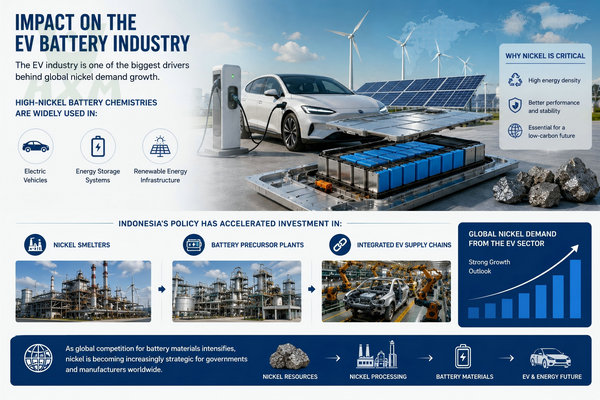
Impact on the EV Battery Industry
The EV industry is one of the biggest drivers behind global nickel demand growth.
High-nickel battery chemistries are widely used in:
- Electric vehicles
- Energy storage systems
- Renewable energy infrastructure
Indonesia’s policy has accelerated investment in:
- Nickel smelters
- Battery precursor plants
- Integrated EV supply chains
As global competition for battery materials intensifies, nickel is becoming increasingly strategic for governments and manufacturers worldwide.
How Global Steel Buyers Should Respond
For steel importers and industrial buyers, market volatility makes supplier selection more important than ever.
Buyers should consider:
Stable Raw Material Sources
Suppliers with strong upstream supply chain partnerships are better positioned to manage nickel price fluctuations.
Inventory Availability
Large stock availability can reduce procurement risks during periods of market instability.
Export Experience
Experienced international exporters can better handle customs regulations, certifications, and delivery timelines.
Flexible Material Alternatives
In some applications, ferritic stainless steels or low-nickel grades may help reduce procurement costs.
Stainless Steel Products Affected by Nickel Price Changes
The following products are especially sensitive to nickel market fluctuations:
Austenitic Stainless Steel
- 304 Stainless Steel Coil
- 316 Stainless Steel Plate
- 321 Stainless Steel Pipe
Nickel Alloys
Battery & Energy Materials
- Nickel-based alloy strip
- Precision alloy materials
- High-temperature alloy sheets
Why Global Buyers Choose Reliable Stainless Steel Suppliers
In an increasingly uncertain global trade environment, working with an experienced supplier is critical.
At Huaxiao Metal, we supply a wide range of stainless steel, nickel alloy, carbon steel, and aluminum products for customers across Europe, South America, Southeast Asia, and the Middle East.
Our advantages include:
- Stable export supply chain
- Large inventory availability
- International quality standards
- Custom processing services
- Fast quotation support
- Global shipping experience
We help industrial buyers reduce procurement risks while maintaining competitive pricing and reliable delivery schedules.
FAQ
Why is nickel important in stainless steel?
Nickel improves corrosion resistance, toughness, and high-temperature performance, especially in 300 series stainless steel grades.
How does Indonesia’s nickel policy affect steel prices?
Export restrictions can reduce global nickel supply, leading to higher raw material costs and stainless steel price fluctuations.
Which industries are most affected?
Industries including stainless steel manufacturing, EV batteries, aerospace, energy, and chemical processing are highly affected by nickel market changes.
Can buyers reduce dependence on nickel-heavy materials?
Yes. In some applications, ferritic stainless steels or alternative alloy grades may help lower costs.
In Conclusion
The conflict between Indonesia’s nickel export policy and the EU reflects a much larger transformation in the global metals industry.
Nickel is no longer just a commodity — it is now a strategic industrial resource influencing:
- Stainless steel manufacturing
- EV battery production
- Global trade policies
- International supply chains
For global buyers, understanding nickel market trends is becoming essential for long-term procurement planning and cost control.
Companies that build stable supply partnerships and diversify sourcing strategies will be better positioned in the evolving global metal market.